
 Back to all posts

Ahrefs sells one platform that covers keyword research, site audits, rank tracking and backlink reports. Majestic sells link data: two link indexes and its own Flow Metrics. Which of the two fits depends on the job you need done.
This page adds the documents behind that choice. Each vendor says its link data comes from its own crawler, and we quote both statements. The two dated comparisons of the indexes quoted here come from 2013 and 2015, and we give their samples and results in their own words.
Entry prices in US dollars are $29 a month for Ahrefs Starter and $49.99 a month for Majestic Lite, read on 4 October 2026. If you are reading your own backlink profile in either tool, the metrics section below explains what each score measures and whose scale it sits on.
Ahrefs vs Majestic at a glance
This table puts the two products side by side in each vendor's own product names.
Ahrefs | Majestic | |
|---|---|---|
Sold as | One platform: Site Explorer, Keywords Explorer, Site Audit, Rank Tracker | Link data: Site Explorer, Link Graph, Link Context, Bulk Backlink Checker |
Link metrics | Domain Rating (DR), URL Rating (UR) | Trust Flow, Citation Flow, Topical Trust Flow |
Link index | One backlink index; Ahrefs says it is updated with fresh data every 15–30 minutes | Fresh Index (the previous 120 days) and Historic Index (from 2006) |
Crawler | AhrefsBot | MJ12bot |
Keyword tools | Keywords Explorer | Keyword Checker, Search Explorer |
Free access | Ahrefs Free, on websites you verify | Free registration and a free version of the Backlink Checker |
Lowest paid plan, US dollars a month | Starter, $29 | Lite, $49.99 |
Every cell is from the vendor's own pages, read on 4 October 2026.
What each tool is built for
Ahrefs is built as one platform for search work. Its pricing page lists Site Explorer, Keywords Explorer, Site Audit, Rank Tracker, Competitive Analysis, Web Analytics and Report Builder from the Lite plan, with API and MCP access also on Lite. Content Explorer, Batch Analysis and keyword clusters start at Standard, and the product menu also lists Brand Radar.
The Site Audit page lists two headline figures: "Scans for 170+ issues." and "Up to 170k URLs crawled each minute." Keywords Explorer's page prints 28.7 billion keywords filtered from 110 billion discovered, with 2.7 billion keywords in the US. These figures are from Ahrefs' own pages, read on 4 October 2026.
For a team whose week mixes keyword research, site audits and using Ahrefs for link building, that breadth is the product.
Majestic is built around link data, and Majestic SEO, the name the 2013 comparison below uses, is one of its trade marks. Its Lite plan lists the Fresh Index, Site Explorer, Link Graph, Link Context, Trust Flow, Topical Trust Flow, Referring Domains, Referring IPs, Referring Subnets, Backlink Campaigns, Bulk Backlink Checker, Keyword Checker and N-grams Near Links. Pro adds the Historic Index, Raw Data Exports, Compare Sites, Flow Metric History, Clique Hunter, Backlink History, Search Explorer and Network Neighbourhood.
Our guide to link velocity covers what the Backlink History charts show. Majestic says Keyword Checker searches its index for a keyword or phrase, shows how many times it appears and gives the search volume for each keyword.
The split in one line: Ahrefs sells many SEO jobs in a single subscription, and Majestic sells link data.
Where each tool's link data comes from
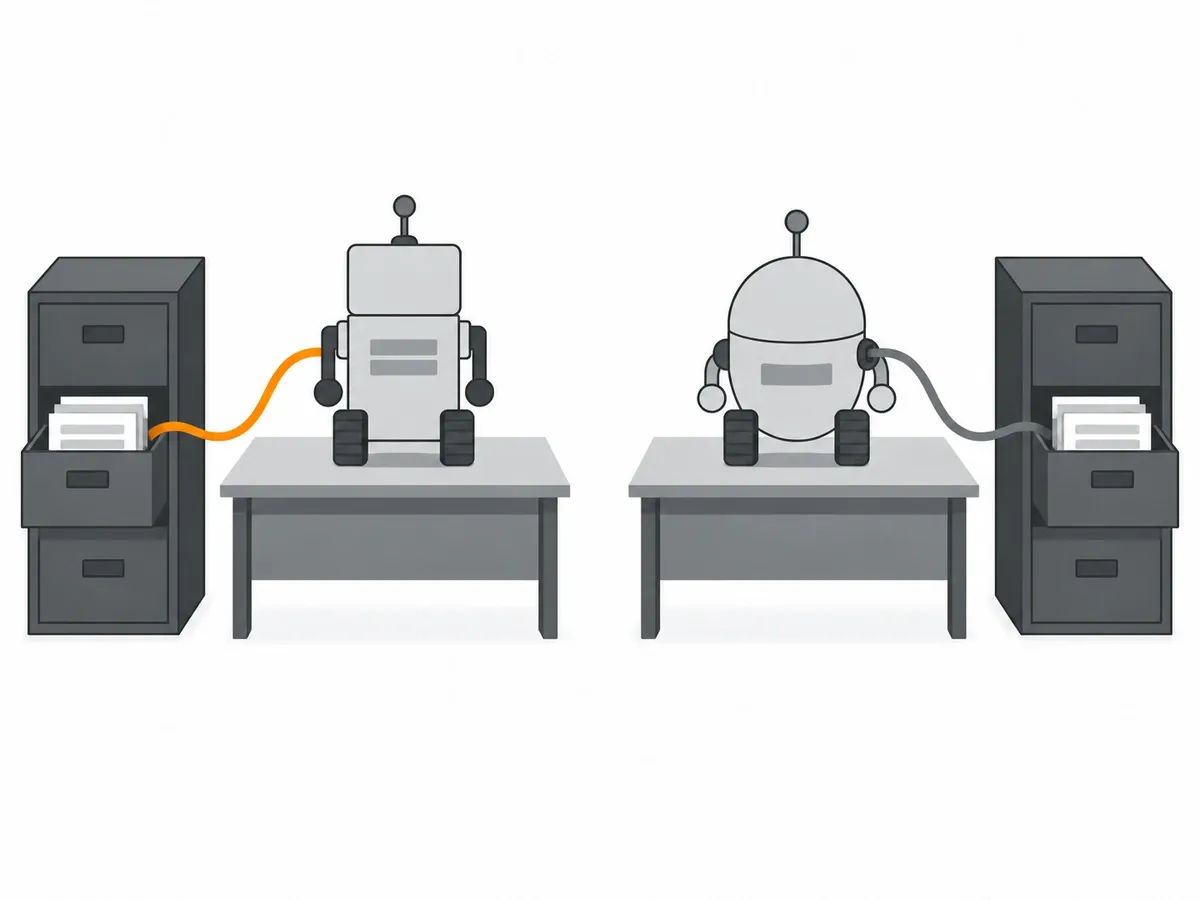
One question searchers bring to this page is whether Ahrefs gets its backlinks from Majestic. Each vendor's own page says its link data comes from its own crawler.
Ahrefs answers in a Help Center article, "Where do you get the data from?", dated 3 September 2026: "We have our own search crawlers: AhrefsBot and AhrefsSiteAudit that work 24/7. As such, we have been collecting our own website and backlink data since 2013 and are not affiliated with third-party search engines or similar services (we do not use data from Alexa, Altavista, Google, Webalta, etc)." Its keyword data is different. The same article says: "We blend in data from Google keywords planner, Google trends, Google Search Console data, and other third party data sources to find keywords, estimate their search volumes and click-through rates."
Majestic says its index is built by MJ12bot. On its crawler's page, Majestic states: "Crawled data (currently only a web graph of links) is added to the largest public backlinks search engine index that we maintain as a dedicated tool called Site Explorer." The "largest" is Majestic's own word for its index. The same page calls MJ12bot "a community based distributed crawler" and says people with broadband connections can download it to help contribute. Majestic's company page dates that community project, Majestic-12, to 2004.
Both vendors publish how their bots behave. Ahrefs' robot page lists "Obeys robots.txt: Yes" and "Obeys crawl delay: Yes". Majestic's page says "MJ12bot adheres to the robots.txt standard." and supports a crawl delay of up to 20 seconds.
One non-vendor count that names both bots is the Web Almanac 2025 SEO chapter. Published on 15 January 2026, it counted how many sites name each bot in robots.txt: "ahrefsbot appears in 9.29% of desktop sites and 9.50% of mobile sites. mj12bot appears in 7.31% of desktop sites and 7.28% of mobile sites." That is a count of sites naming the bot in robots.txt, not a measure of how much each bot crawls.
The link indexes, as each vendor counts them
Ahrefs prints its index figures on a data page with no date beside them; we read it on 4 October 2026. It lists 493.9 billion pages in index, 5 million pages crawled every minute and 35.0 trillion records of external backlink history. On freshness, Ahrefs' Help Center article of 3 September 2026 says the index is "updated with fresh data every 15–30 minutes", and it describes a full refresh: "The complete database update - refreshing the info on the whole Internet backlinks - takes about two months. Within this time, some pages will be updated 60 times, others only once, depending on their rating."
Majestic keeps two indexes. The Fresh Index is the recent window: "The Majestic Fresh Index stands out for its real-time data, containing all URLs and links seen in the previous 120 days." When we read it on 4 October 2026, the Fresh Index showed 184,091,261,957 unique URLs crawled and 543,895,957,971 unique URLs found, covering 06 Jun 2026 to 04 Oct 2026.
The window rolls forward, so those figures change daily. The Historic Index is the long archive: 4,502,566,935,407 unique URLs crawled and 21,743,308,221,308 unique URLs found, covering 06 Jun 2006 to 26 Mar 2024, last updated 03 May 2024. Access to the Historic Index sits on the Pro plan.
One caution on the numbers. "Pages in index" is Ahrefs' unit and "Unique URLs crawled" is Majestic's unit. They measure different things, so the two sets of figures are not a like-for-like count of the two indexes.
Domain Rating and Trust Flow: the metrics side by side
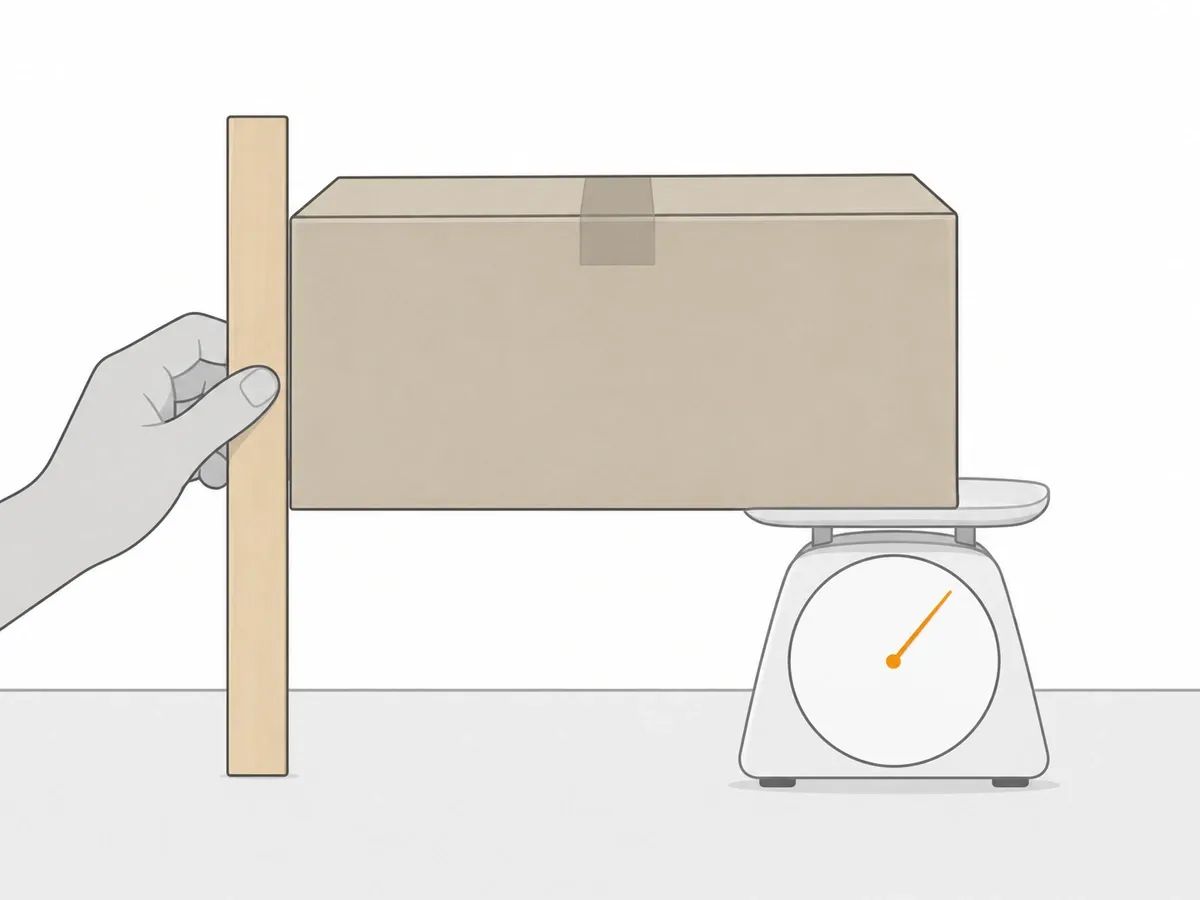
Domain Rating and URL Rating are Ahrefs' scores. Its glossary defines the domain-level one: "Domain Rating (DR) is a proprietary SEO metric by Ahrefs. It represents the strength of the website’s backlink profile on a logarithmic scale from 0 to 100, with the latter being the strongest." The page-level equivalent, from Ahrefs' Help Center article of 3 September 2026: "URL Rating (UR) shows the strength of a page's link profile on a 100-point scale." DR is worked out against the other sites in Ahrefs' own database, and Ahrefs' help article calls it a relative metric.
Trust Flow, Citation Flow and Topical Trust Flow are Majestic's scores, which Majestic groups as Flow Metric scores. Trust Flow is Majestic's quality-based score from 0 to 100, Citation Flow reflects the quantity of links pointing to a site, and Topical Trust Flow shows the relative influence of a page, subdomain or root domain within a topic. Majestic's own definitions are quoted in our guide to Trust Flow and Citation Flow.
The two sets come from different indexes and different formulas. A DR and a Trust Flow for the same site are two separate readings, not two points on one scale.
On topic, the Ahrefs pages we read name DR and UR as its link metrics: "At Ahrefs, we use two metrics to estimate the link popularity: Domain Rating (DR) for domains and URL Rating (UR) for individual pages." The same glossary entry ties link value to subject matter: "Your website gets more topical authority if it’s linked from sites and webpages on a relevant topic."
Topical Trust Flow is Majestic's name for its by-topic score. Readers also meet Moz's Domain Authority, the third score in this group; our guide to Domain Authority and Domain Rating covers why the two scores disagree.
What two dated comparisons of the indexes found

The two comparisons of the indexes quoted here each state a sample and a method, and both are old. Later tests exist, mostly from tool vendors and review sites, and we do not carry their figures.
The earlier one is Authoritas, 13 June 2013, by Laurence O'Toole. The sample: "we analysed the backlinks of 100 sites (maximum of 50K links per site). Please note, when we talk about Majestic SEO we were only analysing its Fresh Index." The result, in root domains found for those 100 sites in 2013: "In terms of root domain numbers it’s a similar story with MajesticSEO having the majority of Domains (76,033) and again, Ahrefs with the second highest number (65,798). Moz has fared much better this time round and has a total of (52,174) domains."
Authoritas sells SEO software, had licensed Majestic's link data in 2010, and the three vendors supplied the API access for the study. The same 2013 study found that about two thirds of the URLs each of Majestic and Ahrefs reported were unique to that tool, 66% and 64% respectively, a figure its author said was hard to believe.
The later one ran on the Moz blog on 30 June 2015: "Big Data, Big Problems: 4 Major Link Indexes Compared", under the byline Hive Digital. Its method took the referring domains Google Search Console reported for more than 100 sites and set them against what Moz, Ahrefs, Majestic Fresh, Majestic Historic and SEMrush each reported for the same sites.
Its first reading of the 2015 results: "Moz, Ahrefs and SEMrush seem to be far better than Majestic Fresh and Majestic Historic." The authors then asked whether that was really the case, and tied the gap to index size. Later, on which index to use: "You won't get the most proportional data without Moz, the broadest data without Majestic, or everything in-between without Ahrefs." Moz sells one of the indexes compared, and the four vendors answered the authors' questions.
The two results point in different directions because they measured different things: domains found, in the 2013 sample, against how closely each index's referring domain counts matched Search Console's proportions, in the 2015 sample. Both indexes have changed since either test ran; Majestic's Fresh Index, for example, is a rolling 120-day window, so its links today are not the ones tested.
What Ahrefs and Majestic cost
These are list prices in US dollars, read on 4 October 2026 on each vendor's pricing page. Both pages show other currencies by region.
Plan | Price a month | What the pricing page says |
|---|---|---|
Ahrefs Starter | $29 | "See what people search and spy on competitors." |
Ahrefs Lite | $129 | 5 projects, 6 months of historical data, 1 user |
Ahrefs Standard | $249 | 20 projects, 2 years of historical data |
Ahrefs Advanced | $449 | 50 projects, 5 years of historical data |
Ahrefs Enterprise | $1,499 | Annual commitment required |
Majestic Lite | $49.99 | Fresh Index, 1 user, 1 million analysis units |
Majestic Pro | $99.99 | Adds the Historic Index, 20 million analysis units |
Majestic API | $399.99 | Full API, 5 users, 100 million analysis units |
Ahrefs' pricing page offers a saving of up to 17% for paying annually. Majestic's annual prices are $499.99 for Lite, $999.99 for Pro and $3,999.90 for API, and Majestic's pricing page states that prices exclude VAT and that Lite and Pro carry a 7-day money-back guarantee for new customers.
Free access exists on both sides. Ahrefs Webmaster Tools is now called Ahrefs Free, and it gives Web Analytics, Site Audit and Site Explorer on websites you verify. Majestic offers a free registration and a free version of its Backlink Checker.
Which is cheaper depends on the plans compared. Ahrefs Starter at $29 a month sits below Majestic Lite at $49.99 a month. Majestic Lite at $49.99 and Majestic Pro at $99.99 a month sit below Ahrefs Lite at $129 and Ahrefs Standard at $249 a month.
Which tools we read on an order
We do not use one tool for everything. On Curated Links, the referring domains tier of each site is measured with Majestic. On Visual Links, we read referring domains in Majestic, and where a higher-grade link includes a traffic threshold, that threshold is measured with Ahrefs. On Guest Posts, each site is measured with Moz Domain Authority and cross-checked against Ahrefs Domain Rating and live traffic. Our free DA and DR checker shows a site's Moz DA and Ahrefs DR side by side.
So the tool we read depends on the product and the figure: referring domains in Majestic, traffic thresholds and Domain Rating in Ahrefs, Domain Authority in Moz. That is what our product pages state, not a verdict on either tool.
Which tool fits which job
The fit question is answered by the plan lists, not by a verdict from us. If the work is keyword research, site audits, rank tracking and backlink reports in one subscription, those reports are on Ahrefs' plan list, from Lite upwards. If the work is link data on its own, meaning two indexes, Flow Metrics, Link Graph, Link Context and bulk checks, those are on Majestic's plan list, at a lower entry price than Ahrefs Lite; Majestic pitches Lite at audit and prospecting of a small group of sites.
Some teams hold both subscriptions. In that 2013 sample, Authoritas found each tool reporting URLs the others did not, though its author doubted a gap that large, and both indexes have changed since.
Frequently asked questions
Is Ahrefs better than Majestic?
It depends on the job. Ahrefs' plan list covers keyword research, site audits, rank tracking, competitor analysis and backlink reports in one subscription. Majestic's plan list covers two link indexes, Flow Metrics, Link Graph, Link Context and bulk backlink checks. The fit follows from which of those report sets the work needs, and some teams hold both subscriptions.
Does Ahrefs get its backlinks from Majestic?
Each vendor says its link data is its own. Ahrefs says its crawlers, AhrefsBot and AhrefsSiteAudit, have collected its website and backlink data since 2013. Majestic says its index is built by its own crawler, MJ12bot. Ahrefs adds that it is not affiliated with third-party search engines or similar services.
Is there anything in Ahrefs that measures Topical Trust Flow?
Topical Trust Flow is Majestic's by-topic score, documented on Majestic's own pages. The Ahrefs pages we read name Domain Rating and URL Rating as its two link metrics. Ahrefs' glossary also says a website gets more topical authority when it is linked from sites and webpages on a relevant topic.
What is the difference between Domain Rating and Trust Flow?
Domain Rating is Ahrefs' score for the strength of a website's backlink profile on a logarithmic scale from 0 to 100, worked out against the other sites in Ahrefs' database. Trust Flow is Majestic's quality-based score from 0 to 100. They come from different indexes and different formulas, so the two numbers for one site are separate readings, not one scale.
Which is cheaper, Ahrefs or Majestic?
On list prices in US dollars, read on 4 October 2026: Ahrefs Starter is $29 a month, below Majestic Lite at $49.99. Majestic Lite at $49.99 and Majestic Pro at $99.99 a month sit below Ahrefs Lite at $129 and Ahrefs Standard at $249 a month. Which is cheaper depends on which two plans are compared.
What did the 2015 Ahrefs vs Majestic comparison find?
It ran on the Moz blog on 30 June 2015, under the byline Hive Digital. It set what Moz, Ahrefs, both Majestic indexes and SEMrush reported against Google Search Console's referring domains for more than 100 sites. At first reading, Moz, Ahrefs and SEMrush looked far ahead of Majestic; the authors tied that to index size and called Majestic the broadest data. Moz sells one of the indexes compared.
related Blog Posts



Join 7,000+ Clients Growing with Rhino Rank
Sign Up



Stay ahead of the SEO curve
Get the latest link building strategies, SEO tips and industry insights delivered straight to your inbox.