
 Back to all posts

Link velocity is the rate at which a site or a page gains backlinks or referring domains over a period, counted per week or per month. Backlink velocity is the same measure under another name.
This page covers four definitions of link velocity and the unit each one uses, and the reports that chart it in Ahrefs, Semrush, Majestic and Google Search Console. It then explains why two tools draw different lines for one site, what two dated studies measured, how quickly a new link is picked up, and how delivery targets work on Curated Links and Guest Posts.
What link velocity means: four definitions, four units
Link velocity has no single agreed definition. Four named sources define it, each in a different unit, so the first thing to check in any link velocity figure is the unit it is counted in.
Ahrefs' glossary entry (undated, read on 4 October 2026) defines link velocity as a count of gains: "Link velocity in SEO is the rate at which a website or a page is gaining backlinks. It is usually measured in links per month or referring domains per month." Ahrefs' unit is links or referring domains gained, per month.
Sitechecker's definition, written by Ivan Palii for the site-audit tool vendor's wiki and dated 16 May 2023, describes link velocity as the rate at which new backlinks to a website or a web page are created over a given period. Sitechecker's unit is new backlinks over a period the reader chooses.
Metabase, a business-intelligence software company, defines it as a net figure on its metric page (undated, read on 4 October 2026): "Backlink velocity is the net rate of referring-domain acquisition — domains gained minus domains lost per week or month." Metabase's unit is referring domains gained minus referring domains lost, per week or per month, and Metabase is the source that calls the measure backlink velocity.
WebFX, a digital marketing agency, uses a fourth unit in a study published on 8 April 2026: "Link velocity (average new referring domains per month over a 3-month period)." WebFX's unit is an average across a three-month window rather than a single month's count.
The unit, then, is a choice: links or referring domains; gains only, or gains minus losses; per week, per month, or averaged over a window. Two figures that are both called link velocity can only be compared when the unit matches. A gross count and a net count of the same month will differ whenever links were lost as well as gained, and a single month will differ from an average that spreads several months into one number. Every one of these definitions measures a change in the same thing: the set of links pointing at a site or a page, its backlink profile.
As for where the idea comes from, Ahrefs traces it to a patent filed in 2003, titled "Information retrieval based on historical data". In the glossary's words: "That’s where this idea of “link velocity” originated, even though the patent doesn’t explicitly mention the term anywhere."
The practical reading: when a report, a study or an article gives a link velocity figure, the figure says little until its unit is known. A figure quoted without its unit, its direction and its window cannot be checked against any of the four definitions above.
Where each tool shows link velocity

Each tool charts the counts behind link velocity under its own report name: the Overview and Calendar reports in Ahrefs, the Backlinks Overview report in Semrush, Backlink History in Majestic, and the Links report in Google Search Console.
Ahrefs
Ahrefs' glossary points to Site Explorer's Overview report: "Among other data, you will get graphs showing the number of referring pages and referring domains over time." The same entry gives the arithmetic: "The difference in the number of backlinks between two consecutive months would be your site’s link velocity." In Ahrefs, then, the monthly figure is the month-on-month difference read off the Overview graph, and the Overview graph is the starting point for a trend over months.
For day-by-day counts, Ahrefs' Help Center article dated 3 September 2026 describes the Calendar report: "The Referring domains report lets you visualise all the day-to-day changes for new and lost referring domains in a calendar format." The same article states: "Calendar report is the replacement of the New/Loss and Movements legacy reports we used to have." Access depends on the plan: "The full Calendar report is available from the Standard plan onwards. Lite plan users have a limited version of this report."
(empty: delete)### Semrush
Semrush's manual page for its Backlinks Overview report describes the Referring Domains chart: "This chart displays new, lost, and the total number of referring domains linking to an analyzed domain." The same page explains the chart's two views: "You can see how many new domains put a link to your competitors recently if you select the “New” checkbox. With the “Lost” checkbox, you can find out from how many domains all backlinks were lost."
In Semrush, then, the Referring Domains chart on the Backlinks Overview report tracks new referring domains over time, and the New and Lost views separate gains from losses, so a net count can be worked out from the same chart.
Majestic
Majestic's report is Backlink History: "The graph provides an overview of a website's new backlinks and growth rate." Backlink History offers daily, cumulative and normalised views, so the same site can be charted as day-by-day counts, as a running total, or as a count adjusted for Majestic's crawl.
Google Search Console
Google Search Console's Links report comes from Google itself, and its help page is plain about what the report holds: "This report isn't a comprehensive list of every link on your site. It shows a sample of internal and external links to help you understand your site’s overall link profile."
Of the report's two export slices, "Latest links" is described as: "The most recently discovered links to your site (up to 100,000 rows), sorted by discovery date." Because the Links report is a sample, a count from it is a count of that sample.
Why two tools draw different lines for the same site
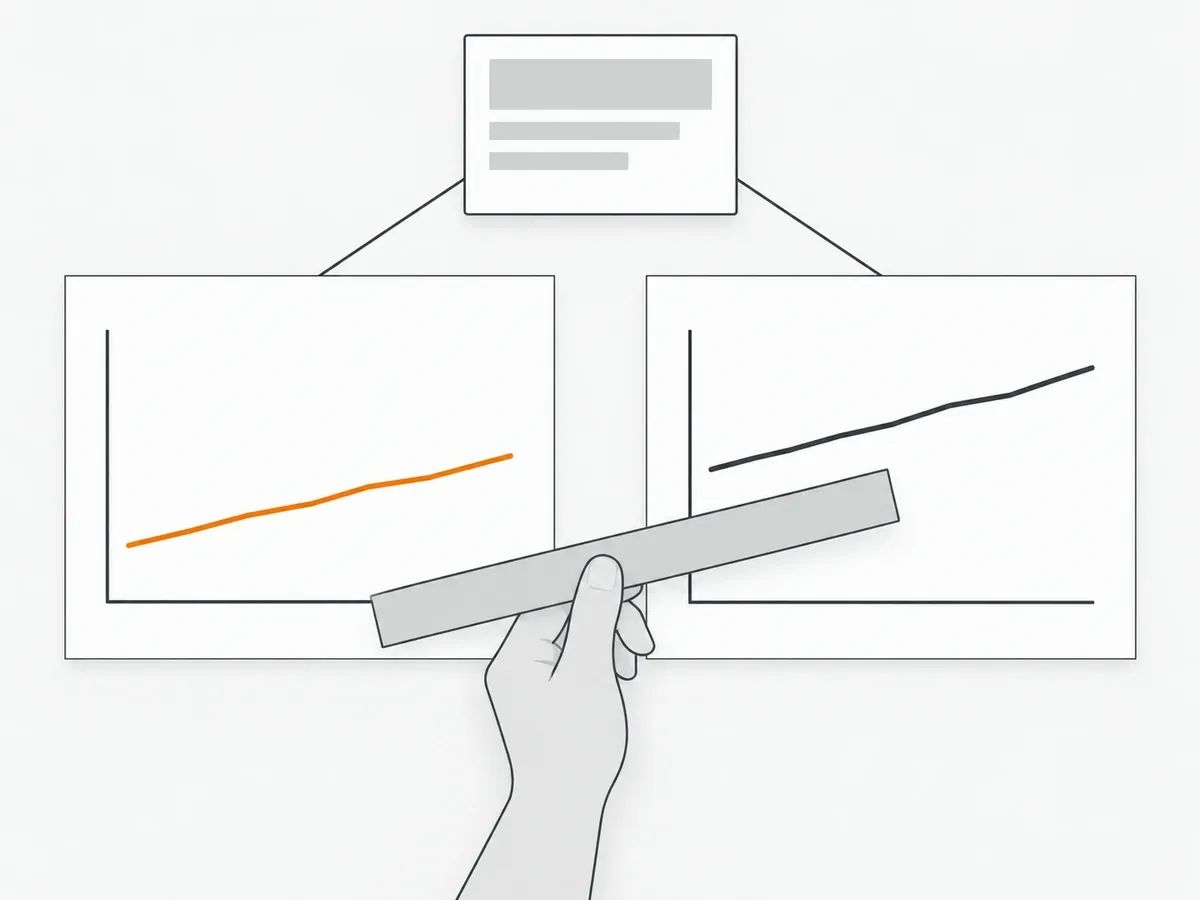
Two tools draw different lines for the same site because each tool charts the links its own crawler has found.
Majestic says as much of its own normalised view: "Normalised view mode eliminates the impact of crawl rate variability, which could otherwise inflate the backlinks found in each index build." Even inside Majestic's own reports, a raw count can rise because Majestic crawled more pages in that index build; the normalised view exists to strip that effect out.
Ahrefs' Help Center makes a related point about the change figure on its dashboard: "Please note that the actual number of discovered referring domains during that period may be higher." The dashboard figure is a difference between two totals, so the discoveries behind it can outnumber the change shown. Ahrefs' Help Center also lists reasons a link can be reported as lost while still visible on the page, including its crawler being blocked by the website.
Metabase's metric page advises how to read any such number: "Direction and acceleration are the signals; the absolute number is site-specific and only comparable to your own history."
A movement on one tool's chart can come from the site gaining or losing links, or from the tool crawling more or less of the web in that period; the line alone does not say which. The working rule: read one tool's line against the same tool's line for an earlier period, or against the same tool's line for the pages that rank beside you (checking a competitor's backlinks keeps the comparison inside one index). Setting one tool's count against another tool's count does not work, because the gap between the two lines says something about the two crawlers rather than about the site.
What two dated studies measured
Two dated studies have put figures on new referring domains for pages and domains that already rank. They measured different things, in different units, in different years, and each result belongs to its own sample.
The first is by Tim Soulo of Ahrefs, published on 18 September 2018. The study took 10,000 non-branded keywords with 2,000 to 5,000 monthly searches and pulled the top 20 pages in the US for each keyword. Across the resulting 200,000 pages, it counted the followed referring domains each page had gained in the previous three months. In that 2018 sample, the finding was: "It turns out that most of the #1 ranking pages tend to get followed backlinks (from new referring domains) at a pace of between +5% and +14.5% per month." That figure is a percentage of each page's own referring domains, measured in that sample, in 2018, and Ahrefs states it as a correlation inside the sample. Because it is a percentage, a page with a large profile and a page with a small one can sit inside the same range while gaining very different counts of domains.
The second is by WebFX, published on 8 April 2026 from data gathered in March 2026. WebFX analysed 1,462 domains ranking on page one for 150 service-intent keywords across 15 industries, using US desktop results from a third-party provider, with each domain analysed through the Ahrefs API and directories, social media, news publishers and marketplaces excluded from the sample. In that March 2026 sample, the three-month average was 48 new referring domains per month across all industries, 101 in finance and insurance, and 15 in apparel. That is a count for whole domains that already rank on page one, measured in one quarter. WebFX adds that seasons may affect these figures and that a longer lookback could give different averages.
The two studies differ in unit (a percentage of a page's own profile against a count of domains), in what was measured (pages against whole domains) and in year (2018 against 2026). Neither converts into the other, and each describes its own sample. How counts of links relate to positions is a separate question, covered in our guide to how many backlinks you need to rank.
How quickly a new link is picked up
A link appears on any chart only after the page carrying it has been crawled.
John Mueller of Google, in a post on X on 17 October 2020, as embedded by Search Engine Roundtable: "Depending on many factors, we may crawl & index content within minutes. Sometimes days, sometimes weeks, sometimes months. There's no fixed "30-60 days"."
Mueller's sentence is about crawling and indexing time. For link velocity, the point is narrower: the date a link was placed and the date it shows on a chart are two different dates, and a month-by-month count plots the second one. Ahrefs' Help Center says of its calendar of new and lost backlinks: "The calendar shows for each date how many new backlinks were found, and how many backlinks were lost." Found, not placed. Search Console's Latest links export is likewise sorted by discovery date. A link placed in one month can surface on a chart in a later month, and the chart records it in the month it was found. The same gap applies to every tool named in this guide, because every chart is built from a crawl.
What sets the pace when you order links from us
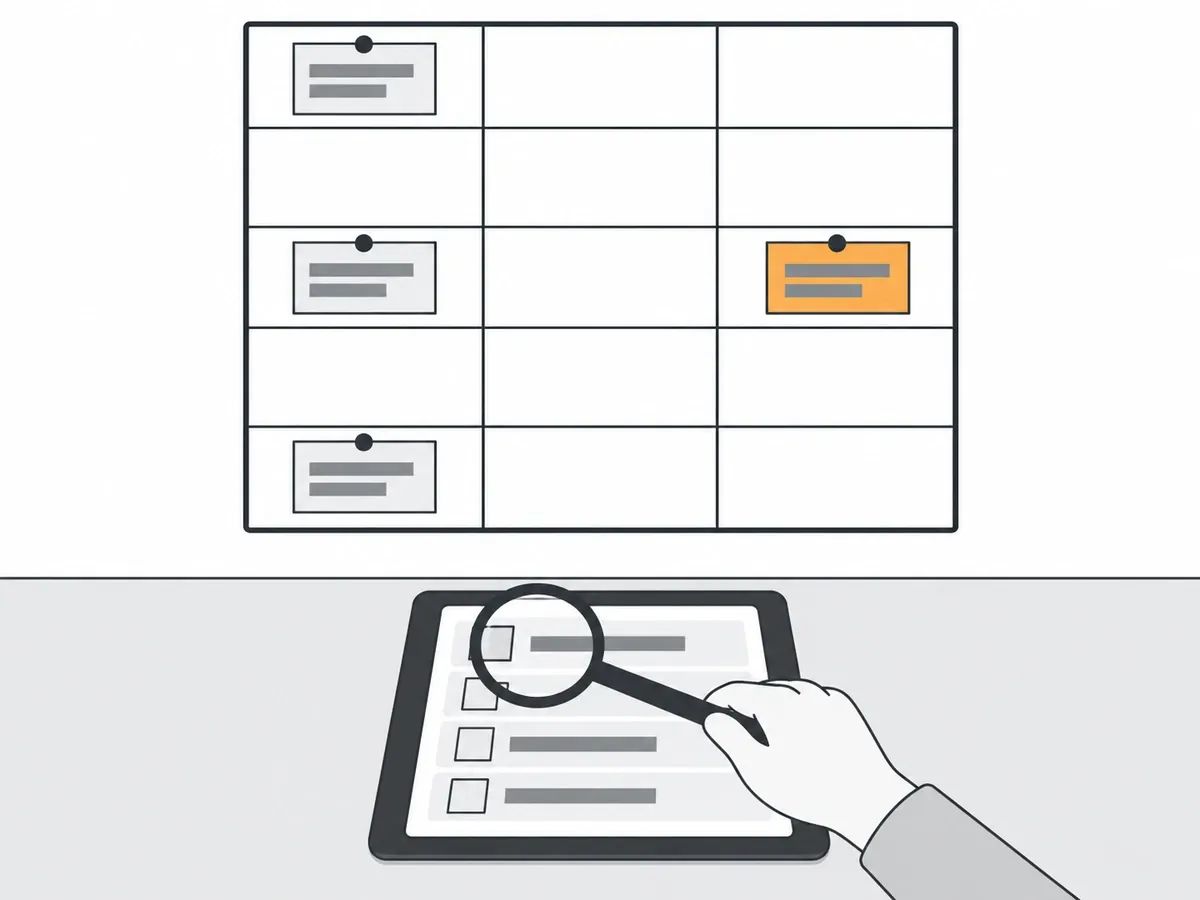
When you order links from us, you set the pace: what to order, and when. Our part is a published delivery target for Curated Links and for Guest Posts, and a fixed order of checks around every placement.
A Rhino Rank Curated Link has a delivery target of 14–21 days, and a Guest Post has a target of 7–14 days. For both products you supply the target URL and the anchor text, and for a Guest Post you also choose the DA tier at checkout. On our Managed Service, the account manager sends a custom proposal within 48 hours, the proposal outlines the target URLs and anchor text strategy, and the order can be approved before it is built.
Before a placement goes out, we check the HTTP status code the target URL returns, so links are not pointed at dead pages or redirect chains. Once the page is live, we open it and check that the article is published, that the link sits in the body copy, and that the anchor and target URL match the order. Only then is the URL reported to the dashboard. That sequence is part of our quality assurance checks. Every delivered link carries 12-month replacement cover.
So by the time a URL reaches the dashboard, the link is already live and checked; its placement is the first of the two dates in the section above. The second date, the one a tool's chart plots, is set by the tool's crawl rather than by us or by the buyer.
Frequently asked questions
What is link velocity in SEO?
Link velocity is the rate at which a site or a page gains backlinks or referring domains over a period, counted per week or per month. Some sources count gains only, while others count gains minus losses, so a link velocity figure always needs its unit stated beside it. Backlink velocity is the same measure under another name.
How do I check link velocity in Ahrefs?
Ahrefs' Site Explorer Overview graphs show referring pages and referring domains over time, and the difference between two consecutive months is the figure Ahrefs' glossary describes. For day-by-day counts, Ahrefs' Calendar report shows new and lost referring domains for each date, with the full report available from the Standard plan onwards.
Is backlink velocity the same as link velocity?
Yes, the two names refer to the same measure. Metabase's metric page uses backlink velocity for the net change in referring domains per week or month, while Ahrefs' glossary uses link velocity for links or referring domains gained per month.
Is there a right number for link velocity?
The sources on this page give a measure and its unit. The two dated studies report figures for their own samples: for most number-one pages in Ahrefs' 2018 sample, 5% to 14.5% more followed referring domains per month, and in WebFX's March 2026 sample, an average of 48 new referring domains per month across 1,462 page-one domains. Metabase's page says the number is comparable only to a site's own history.
What does a sudden rise or drop in link velocity mean?
A sudden rise or drop on a link velocity chart can come from the site gaining or losing links, or from the tool crawling more or less of the web in that period. Majestic offers a normalised view of Backlink History to take out the effect of its own crawl rate, and Ahrefs lists reasons a link can show as lost while it is still on the page. Compare the change with the same tool's line for an earlier period before drawing a conclusion.
How long do Curated Links and Guest Posts take to deliver?
Our delivery target is 14–21 days for a Curated Link and 7–14 days for a Guest Post. You supply the target URL and anchor text, and each delivered link is checked on the live page before its URL is reported to the dashboard.
related Blog Posts



Join 7,000+ Clients Growing with Rhino Rank
Sign Up


Stay ahead of the SEO curve
Get the latest link building strategies, SEO tips and industry insights delivered straight to your inbox.