
 Back to all posts

How many backlinks do I need to rank? There is no single number. The number is set by the pages that already rank for the query you want. Count the referring domains each of those pages has, compare that with the referring domains pointing at your own page, and the difference is the number of new links to build. That gap, not a universal figure, is your answer.
This page works through the count in order. First, which number to count, because a backlink total and a referring domain total are different measures, and the difference changes your answer. Second, what a keyword difficulty score says about the number, and where that estimate comes from. Third, what dated studies report, each on its own sample, its own unit and its own date. Fourth, how to run the count against your competitors, step by step. Fifth, what the gap costs to close, as a sum you can do yourself. Last, what we check before a link counts at all.
Backlinks or referring domains: which number to count
Count referring domains, not backlinks. The two measures sound similar and behave very differently, and this whole page depends on keeping them apart. Ahrefs defines the pair on its own metric page: "The backlinks metric is a total count of all backlinks pointing at a target, while referring domains is the count of unique websites that point at a target."
Put the difference in plain terms. Ten links from one site are ten backlinks and one referring domain; ten links from ten different sites are ten backlinks and ten referring domains. The studies and the difficulty scale below all count referring domains, so that is the number to compare when you size up your own gap. Our guide to the different types of backlinks covers what each link is, and our explainer on the backlink profile looks at the full set of links pointing at one site.
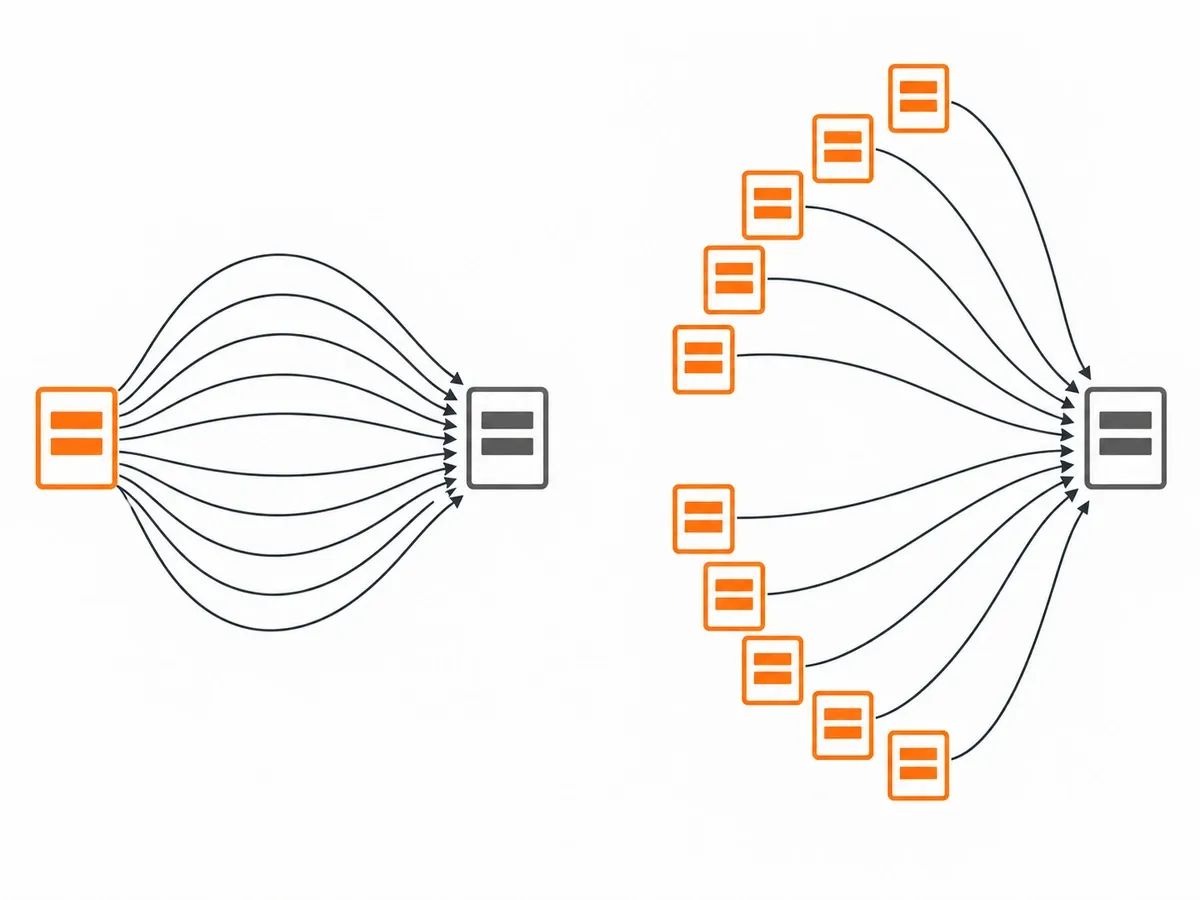
Two tools can show two different counts for the same page, and the reason sits in how each tool crawls and what it records. Majestic's glossary defines the term this way: "Referring domain, also known as "ref domain", is a website which has a backlink pointing to a page, or link, to the site you are analysing." Sistrix's backlink check describes its own data in these terms: "Our own link crawler scans over 10 billion web pages every month." and "The data in this link database is updated on average once a month." Ahrefs addresses the difference between tools directly: "it’s perfectly normal for our backlinks and referring domains metrics to be different from other tools since we all crawl the web differently."
So pick one tool and use it for every page you compare, yours included. A gap measured inside one index is built from like-for-like numbers; a gap measured across two indexes mixes two different crawls of the web, and the subtraction stops meaning anything.
How many backlinks by keyword difficulty
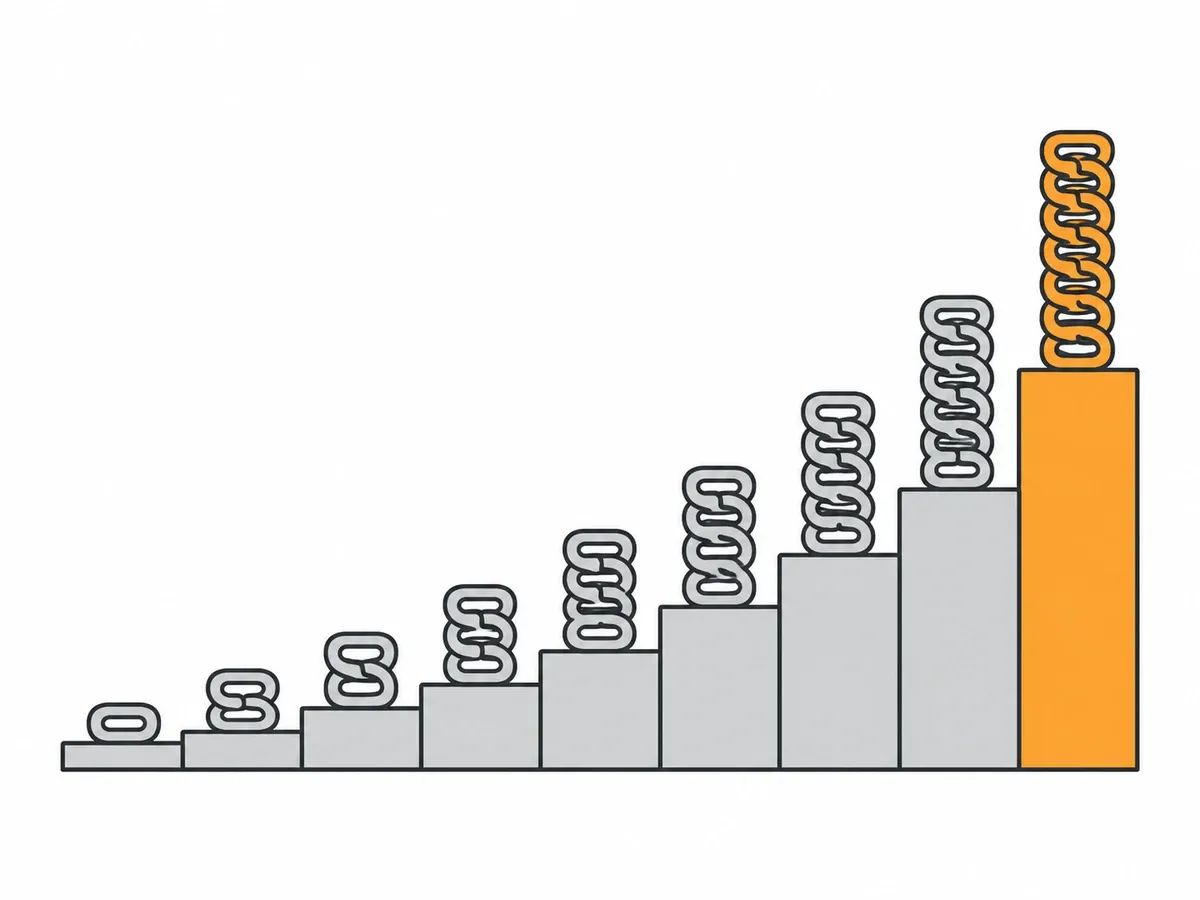
Keyword difficulty gives you a starting estimate before you count anything yourself. On the scale Ahrefs publishes, a low score maps to about ten referring domains, and the highest scores map to several hundred.
The score is built from this count. Ahrefs states on its help page: "KD is calculated using our own unique algorithm, and it is based on the number of referring domains (RDs) the Top 10 ranking pages ( organic search results only ) for a given keyword have." Its checker page, which we read on 3 October 2026, maps each score to an estimate: "Each value on it corresponds to the estimated number of referring domains (RDs) a page needs in order to get to the first page of search results."
The scale runs like this:
- KD 10: about 10 referring domains
- KD 20: 22 referring domains
- KD 30: 36 referring domains
- KD 40: 56 referring domains
- KD 50: 84 referring domains
- KD 60: 129 referring domains
- KD 70: 202 referring domains
- KD 80: 353 referring domains
- KD 90: 756 referring domains
The page's own worked example reads: "If you’re aiming for a keyword with KD 40, you’re likely to need approximately 56 RDs to get into the top 10 search results."
These are Ahrefs' estimates for reaching the first page, and the page marks the target as "(not top 3 or top 1)". The scale is not linear, so each step up costs more links than the step before it. To use it, look up the difficulty score your target query carries and read across to the estimate. Treat a difficulty score as a starting estimate, because the count in the competitor section below is the number for your query.
What dated studies report
Four dated studies put figures on this page's question, and they do not land on the same number, because each one measures something different. The four are an agency's study of page-one domains, a research dataset built from search results at scale, one agency's client medians and one agency's read of this page's own question. Here is each study on its own terms: its sample, its unit and its date.
Our link building statistics report carries the full set of page-one link counts, each with its sample and the day we checked it.
WebFX, an agency, published its study on 8 April 2026, and the research was run in March 2026. In its words: "We analyzed the backlink profiles of 1,462 domains ranking on page one across 15 industries and 150 service-intent keywords (10 keywords per industry)." Its headline finding: "websites ranking on page one have a median of 907 referring domains, though this varies dramatically by industry from 76 in Apparel to 3,027 in Finance & Insurance." Read that figure with its unit attached: it counts referring domains to the whole domain, on US desktop results, so it describes the sites on page one, not the links any single page needs.
Backlinko worked from a dataset of 11.8 million search results pulled in January 2020. It reports: "In fact, the #1 result in Google has an average of 3.8x more backlinks than positions #2-#10." Note the unit: that is backlinks, not referring domains, and it is a correlation measured inside that dataset.
Marko Ristic, chief executive of LinkGathering, an agency, wrote on 10 May 2026 from his own client base: "Across 47 client domains spanning SaaS, e-commerce, healthcare, fintech, legal, and B2B services (January 2024 to December 2025), the median referring-domain count needed to rank top-3 was:" His four medians, grouped by the size of the query:
- Long-tail informational queries under 1,000 monthly searches: 8
- Mid-tail commercial queries of 1,000 to 10,000 monthly searches: 32
- Head commercial terms of 10,000 to 100,000 monthly searches: 124
- The most competitive terms, above 100,000 monthly searches: 380 or more
Marko Ristic is explicit about the unit: "These are page-level referring domains (unique domains linking to the specific URL), not domain-level." Keep the sample in mind as you read the figures: one agency's 47 client domains.
Sabahat Ali of SERPreach, a link building agency, looked at this page's own question with data pulled in March 2026: "We analyzed “how many backlinks do I need” (KD 1, 400/mo search volume). Top-ranking articles averaged just 9 referring domains. One page ranked #4 with a single referring domain." That is one keyword.
The unit, the range and the kind of query differ in every one of these studies, which is why the next step is to count your own results page rather than borrow a figure from someone else's sample.
Competitor analysis: how many backlinks do they have?
Your target comes from the pages that rank for your query right now, and you can work it out yourself. The gap between their referring domains and yours is the number of new links to plan for.
Run the count in these steps:
- Search your target query and list the pages on the first page.
- Put each URL into one backlink tool and note the referring domains to that page, not to the whole site.
- Note the referring domains to your own page for the same query.
- Take the middle of the ranking pages' counts, or the weakest page on the first page if you want the lowest bar, and subtract your own count.
- The result is your link gap: the number of new referring domains to plan for.
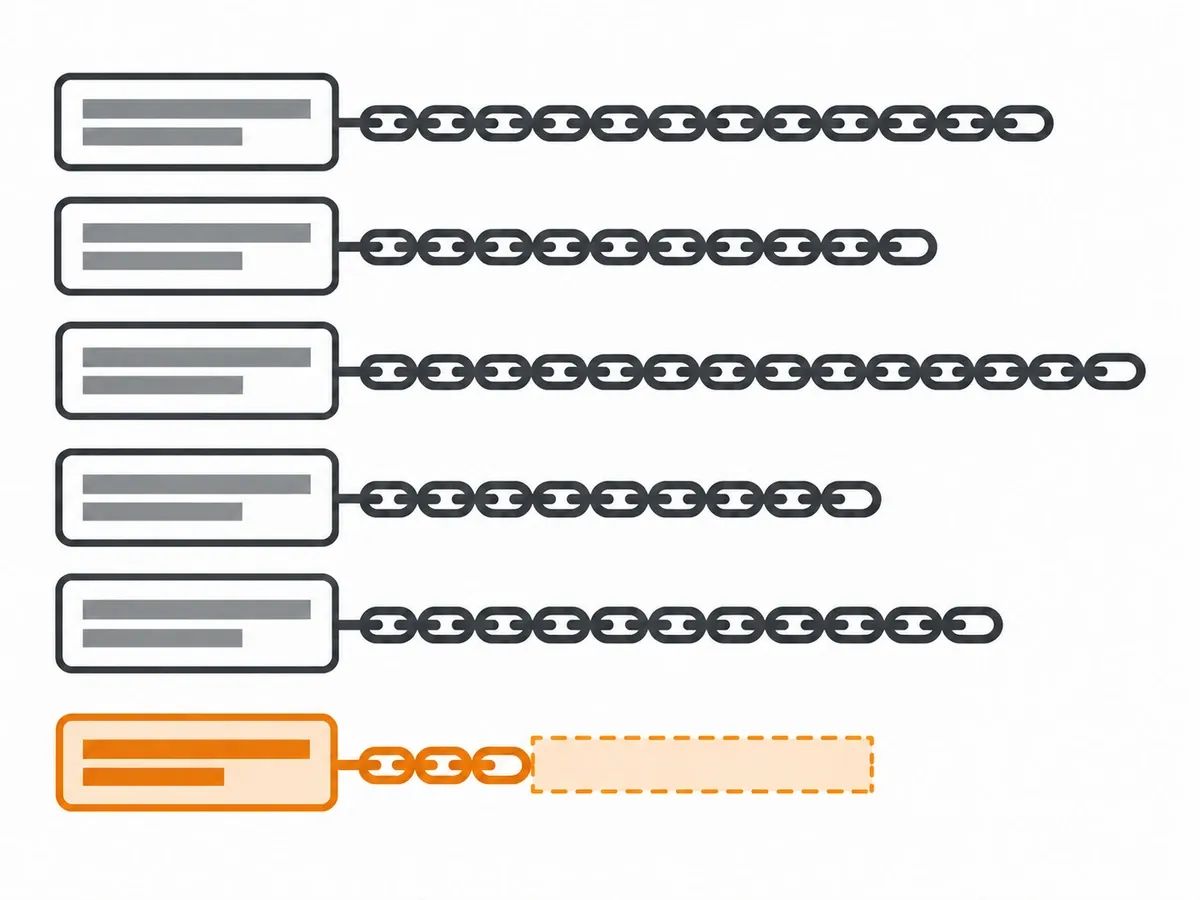
If a result on the first page is a video or a forum thread, leave it out and compare articles with articles. Write the numbers down as you go. The point of the exercise is a plan with a figure at the end of it, not a vague sense that the pages above you have more links.
Jan Suski, a link builder, put his own version of this count on record on his blog on 16 July 2026. He pulls the top 10 pages for a target keyword, checks how many referring domains each one has through Ahrefs or Semrush, and works out "what I call the link gap: the difference between what those pages have and what my client's page has."
Here is an illustration, not data. If the weakest page on the first page has 30 referring domains and your page has 4, the gap is 26. That 26 is the number of new referring domains your plan has to find, and it comes from your own results page, not from a study. Run the same subtraction against the middle of the first page and the figure grows; run it against the weakest page and it shrinks. Which bar you plan from is your choice, and the weakest page is the lower one.
We have a fuller walkthrough of how to check your competitors' backlinks, and the planning side of the subtraction is covered in our guide to backlink gap analysis.
One more thing shapes the count: relevance. Count links from relevant sites. A site that writes about a subject close to yours is a relevant referring domain, so match like with like when you plan which sites to approach. Our position is that followed links from relevant, indexed, read publications are one of the strongest ranking levers.
Turning the link gap into a budget
Once you have the gap, the budget is one sum: the links you need multiplied by the price per link at the tier you choose. The gap tells you how many links to buy, and the tier tells you what each one costs.
Our published prices, as read on our product pages on 3 October 2026: Rhino Rank Curated Links start from $60 per link, Guest Posts start from $75, and the Managed Service starts at $250 per month, with no contracts.
As arithmetic, and not as a client figure: 10 links at $60 is $600. The price band reflects the placement site, not the size of your gap. A bigger gap does not push you into a higher tier; it means more links at the tier you pick. The full tier breakdown sits in our guide to link building cost.
The other decision is who does the work. You can run the prospecting and outreach in-house, or you can outsource link building to a team that places links for a living. Pace is its own question, and we cover it in our piece on how long link building takes to work.
What we check before a link counts
A link only closes your gap when it is live on a page that can be indexed, so our work does not stop at placement. This is what we check.
Before a placement goes out, we check the HTTP status code the target URL returns. The check is there so that no link points at a dead page or a redirect chain.
When we choose a publication, we look at indexed pages, organic traffic and its trend, Moz DA, Ahrefs DR and referring domains, weighed together. We turn away sites whose metrics look impressive but whose traffic does not hold up. A high DA figure on an empty site is still an empty site.
A Curated Link is a link placed in an article that already exists, so the article is already published when your link arrives. After publication, we check that the page is live, that the link sits in the body copy, that the anchor and target URL match the order and that the page is indexable. Only then is the URL reported to the dashboard. That sequence is our quality assurance step, and every link we deliver goes through it.
A delivered link carries 12-month replacement cover: if the link is removed or its page is taken down within that period, we replace it like for like. The cover matters to your count as well, because a link that disappears can take its referring domain with it.
In our view, this is the step of the count that gets skipped. A gap is only closed by links that are live and on indexable pages, so the check is the last step of the count.
Frequently asked questions
Are 100 backlinks enough to rank on Google?
It depends on the query. The number to count is referring domains, not backlinks. On the Ahrefs scale, a KD 50 keyword maps to an estimated 84 referring domains for the first page, so 100 links from 100 different sites clears that estimate, while 100 links from a handful of sites does not.
Are 1000 backlinks good for SEO?
The count that matters is how many different sites the links come from. 1000 backlinks from 20 sites are 20 referring domains, and 20 is the number you would compare with the pages that rank for your query. The same backlink total can describe very different profiles, and the raw total on its own tells you little.
How many referring domains do I need to rank, according to Ahrefs?
On the Ahrefs scale, a KD 20 keyword calls for about 22 referring domains, KD 40 for about 56 and KD 60 for about 129, in each case to reach the first page. Ahrefs presents the figures as estimates, so treat them as a starting point rather than a target.
What decides how many backlinks I need?
Two things: the referring domains of the pages that rank for your query now, and how many referring domains your page already has. The difference between the two is your gap, and that gap is the number of new links to plan for. Both figures come out of the count described on this page.
Should I build links myself or outsource it?
The count is the same either way; what changes is who does the outreach and the placement. If you run it yourself, you own the prospecting, the pitching and the follow-up. If you hand the work to us, we take on the outreach, the placement and the checks that come before a link is reported to your dashboard.
related Blog Posts



Join 7,000+ Clients Growing with Rhino Rank
Sign Up


Stay ahead of the SEO curve
Get the latest link building strategies, SEO tips and industry insights delivered straight to your inbox.