
 Back to all posts

To outsource link building is to pay a specialist provider to find publications, run the outreach and place the links, instead of hiring someone to do that work in-house. The choice between the two routes comes down to what each one costs, how much of the planning you keep, and how you will check the work when it is delivered.
This page covers the decision and how to outsource link building, in this order: what gets handed over, what an in-house hire and the tools cost, what the outreach side of the job takes, what teams report doing, the choice between full outsourcing and a hybrid setup, how to choose and brief a provider, how an order with us works, how to measure the work, and what changes if you resell.
What outsourcing link building means
Outsourcing link building means paying a specialist provider to handle the practical work of earning links. What gets handed over: finding relevant publications, running outreach to their editors, writing the article where one is needed, getting the link placed, and reporting the live URLs back to you. You should finish each order knowing exactly which URLs went live.
What usually stays with you is the direction. You decide which pages you want links to and which anchor text each link should use, because those two choices tie the campaign to the pages that pay. Some teams call the same job backlink outsourcing. Others ask how to outsource backlink building without losing sight of their own strategy. The label matters less than the split of decisions.
The links themselves come in several types of backlinks, from links placed in existing articles to links inside newly written content. Link building is also one part of a wider decision: some businesses outsource SEO as a whole, while others hand over only the link work. Either way, our position is that followed links from relevant, indexed, read publications are one of the strongest ranking levers, and the one an agency can move fastest once the page is ready.
What an in-house link builder costs
The salary figures below are for the role SEO specialist. Indeed's UK salary page reports: "The average salary for a seo specialist is £35,304 per year in United Kingdom. 430 salaries reported, updated at 11 July 2026". The same page lists a junior SEO specialist at an average of £24,498 a year and a senior SEO specialist at £40,230.
For the United States, Indeed reports: "The average salary for a SEO Specialist is $81,971 per year in the United States. This figure is based on 904 salaries taken from job postings on Indeed in the past 36 months, last updated on September 28, 2026."
These are base salaries for a role broader than link building alone, and they come before the tools the person needs. The tools carry their own monthly costs, each read from the vendor's own pricing page on 3 October 2026. For outreach software, Pitchbox's pricing page describes its Pro plan as "For link builders with a single website": $210 a month billed annually or $300 a month billed monthly, with 2 users and 2,000 outreach emails. For backlink and SEO data, Moz Pro's Standard plan is "$79/mo when you pay yearly", with 1 user included.
These salary and tool lines are not added into one figure here. They are the lines an in-house budget has to carry every month, whether or not any links are placed that month, and they are the comparison point for the per-link and per-month prices later on this page.
What the outreach side takes
BuzzStream, an outreach software company, reports in a study its page dates 6 May 2025: "In this analysis, the overall reply rate for link builders is 3.59%, meaning almost 1 in 28 emails gets a reply." Across the whole study, which also covers digital PR outreach, BuzzStream notes: "This included over 51 million emails."
That is a reply rate for first pitches sent by BuzzStream's customers, not a rate of links won. Whoever does the work, in-house team or provider, is doing this part of it. Outsourcing moves the outreach to a team that already does it every day. How long the results take to show is a separate question; our guide to how long link building takes to work covers it.
What teams report about outsourcing
Editorial.Link, a link building company, published statistics dated 25 March 2026: "56% of respondents outsource at least part of their link-building tasks, while 44% handle everything in-house." The sample behind that figure was 518 SEO professionals: in-house experts (29.9%), freelancers (24.9%), agency specialists or executives (44.4%) and others (0.8%). So it is a survey of SEO professionals, close to half of them working at agencies, rather than a survey of businesses in general.
BuzzStream with Citation Labs, on a page last updated 17 April 2025, reports: "For those we surveyed who work in-house at an organization (~150 respondents), most organizations (61%) manage their link building entirely in-house." The same page adds: "Almost a third do some sort of mix between agencies/freelancers and in-house teams." That mix is the hybrid model the next section describes.
Full outsource or hybrid?
Full outsourcing means the provider plans and delivers the campaign. It suits a business with no internal SEO lead: within the goals and budget you set, the provider chooses the target pages, the anchors and the pace. Hybrid outsourcing keeps those choices in-house. Your team picks the target pages, the anchor text and the pace, and the provider handles prospecting, outreach, placement and reporting.
Who decides what in each model:
Model | You decide | The provider does |
|---|---|---|
Full outsource | The goals, the budget and how often the plan is reviewed | The campaign plan, prospecting, outreach, placement and reporting |
Hybrid | The target pages, the anchor text and the pace | Prospecting, outreach, placement and reporting |
The difference is where the planning sits. A full model asks you to judge the plan at review points. A hybrid model asks you to write the plan and judge the delivery.
Neither model is permanent. A team can start hybrid and hand over more planning as the provider proves its judgement, or start with a managed campaign and pull decisions back in-house as it hires. What matters is that the split is written down, so both sides know which decisions belong to whom.
Our Managed Service is the full model: "a dedicated account manager, competitor research, manual outreach and monthly white-label reporting. No contract." A pay-per-link order is the hybrid one: the plan stays with you, and we run the fulfilment.
How to choose a link building provider
Price sheets tell you what a provider charges. The questions below tell you how it works. Ask them of any provider, us included.
- Which publications will my links sit on, and how are they chosen? The placement is the product, so a provider should be able to explain its vetting in plain terms.
- Can I supply the anchor text and target URL? Keeping those two inputs with you keeps the campaign pointed at the pages that matter.
- What is checked after a link goes live? A post-publication check confirms that the page is live and that the anchor and target match the order.
- What report do I get, and does it list every live URL? The report is how you check the work without doing it again yourself.
- What happens if a link is removed? Replacement terms say what happens to a link after it is delivered.
- What does it cost per link, and is there a contract or a minimum order? Published prices let you budget before you commit.
Ask for the answers in writing, so you can compare providers on the same points. If you are weighing several of them, our guide to comparing link building services sets out the proof to ask for.
How to brief a provider
ISBA, the UK advertisers' trade body, publishes a guide to briefing an agency, produced by Ingenuity in partnership with ISBA and updated in March 2023. It puts the case plainly: "A good brief (and process) saves time, money and headaches." The guide is written about agencies in general rather than link building, and the point travels well.
A link building brief does not need to be long. It needs to hold, in writing:
- the target URLs you want links to
- the anchor text for each target
- the DA band or referring-domain band you want to buy at
- any publication types you want, or do not want
- who approves what, and how quickly
With that written down, a provider can price the work and deliver against it. You can then measure what arrives against the brief itself, rather than against what you assumed you had asked for.
How an order with us works
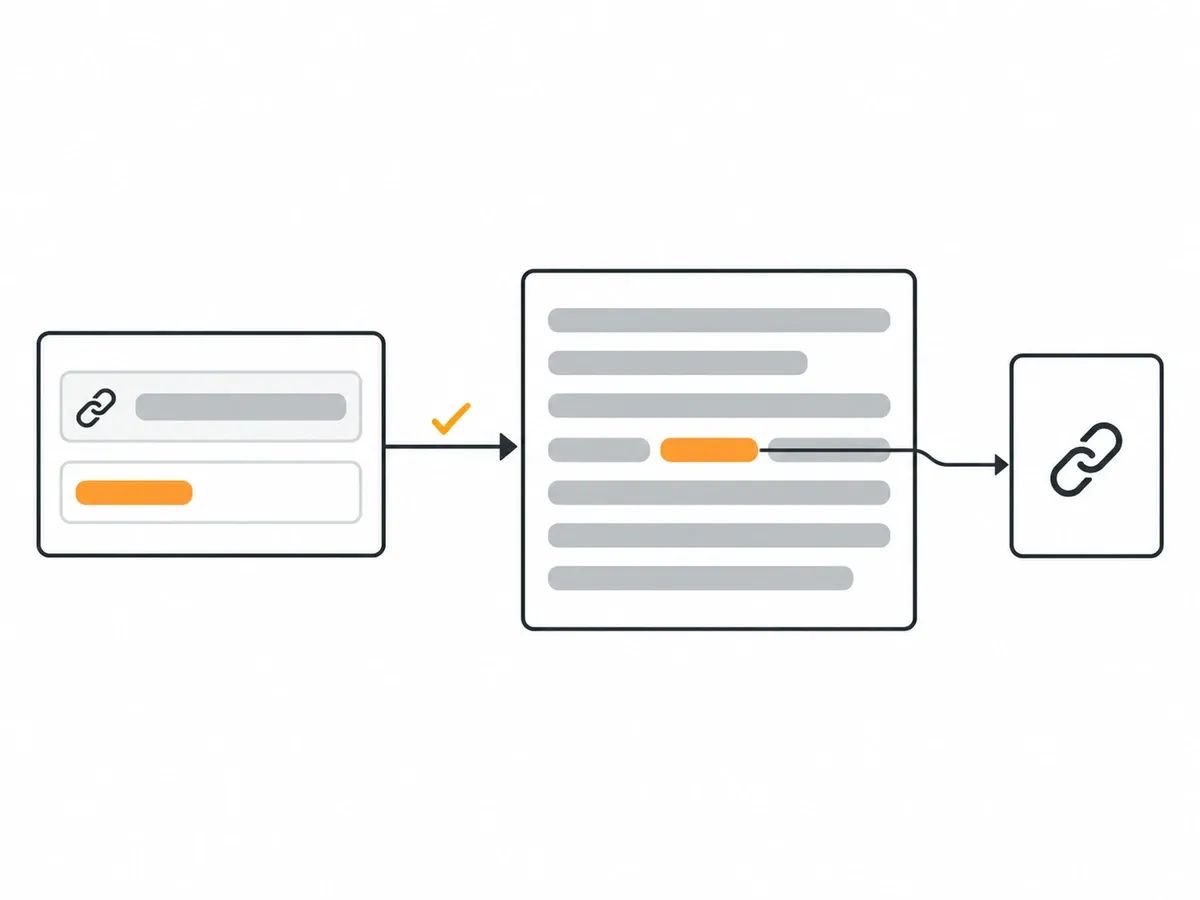
On a Rhino Rank Curated Links order, the buyer supplies the anchor text and the target URL. On a Guest Posts order, the buyer supplies the target URL, the anchor text and the DA band. A Curated Link is a link placed in an existing article, while each Guest Post is a 750+ word article. If you want to approve the site before a Curated Link is placed, ask us first and we will set that up for your orders.
Before a placement goes out, we check the HTTP status code the target URL returns, so no order points at a dead page or a redirect chain. On the publication side, we weigh indexed pages, organic traffic and its trend, Moz DA, Ahrefs DR and referring domains together. Our guest post page puts the bar plainly: "We turn away sites whose metrics look impressive but whose traffic doesn't hold up. A high DA figure on an empty site is still an empty site." We also turn down PBN and link farm footprints, manipulated traffic or metrics, expired-domain abuse, and thin, spun or low-quality content. After publication, we check that the page is live, the link is in the body copy, the anchor and target URL match the order and the page is indexable. Only then is the URL reported to the dashboard; our quality assurance page sets out the same checks.
Our view, and it is only our view: the order is the brief. When the target and the anchor come from the buyer, there is nothing for the work to drift from.
Because this page is about cost, here are our prices. Curated Links start at $60 per link and Guest Posts at $75 per post. The Managed Service starts at $250 per month. There are no contracts and no minimums. A delivered link carries 12-month replacement cover if it is removed or its page is taken down, and a first order is eligible for a refund of up to $550. The full price tables are in the Rhino Rank guide to link building cost.
How to measure outsourced link building
Start with delivery. Every reported URL should be live, the link should sit in the body copy of the page, and the anchor text and target URL should match what you asked for. If a reported URL does not match the order, raise it with the provider before the next batch goes out.
Then track the pages the links point at. Watch organic traffic and rankings for those pages over the months that follow, and compare them with the months before the links went live. Movement across a group of linked pages tells you more than any single placement does.
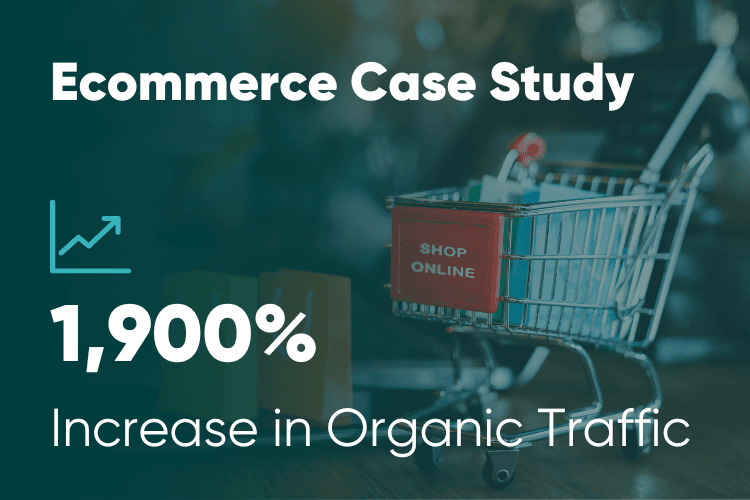
Our published case studies show the shape of this. In our ecommerce case study, our client's organic traffic rose 1,900% over six months on a monthly budget of $2,600, using Curated Links. In our FinTech case study, our client's organic traffic rose 374% over twelve months on a monthly budget of $3,600, using Curated Links and then Curated Links with Guest Posts, with page-one rankings for 16 of its 25 target keywords. Those are two clients' results, not a forecast for another site.

Where agencies add white-label controls
An agency reselling link building has one extra need: a report it can pass straight to its client, and terms it can explain without translation. The client judges the agency on what the agency shows them, so supplier branding inside a report means a rewrite before every client update.
We build the reporting side for that. Each live URL appears in the dashboard and can be exported as an unbranded file, ready to carry your branding rather than ours. Every Curated Links order comes with what our product page describes as "a fully transparent, white-label report with every order". For agencies that refer clients to us instead, our reseller programme pays "10% commission on every order for the lifetime of each referred customer."
We have written separately about SEO reseller services as a model, and compared white label link building services for agencies weighing providers.
Frequently asked questions
What does it mean to outsource link building?
It means paying a specialist provider to find publications, run the outreach and place links to your pages, instead of hiring someone to do that work in-house. You normally keep the choice of which pages get links and which anchor text they use.
How much does it cost to outsource link building?
It depends on the provider and the model. Our own published starting prices are $60 per Curated Link, $75 per Guest Post and $250 per month for the Managed Service. Those are our prices; other providers set their own.
Is it better to outsource link building or do it in-house?
Neither route wins in every case. In-house means carrying a salary and tool subscriptions every month and keeping every decision internal. Outsourcing means paying per link or per month while a team that does the work every day handles prospecting, outreach and placement, and you keep as much of the planning as you want.
What should a link building brief include?
The target URLs, the anchor text for each one, the DA band or referring-domain band you want, any publication types you do or do not want, and who approves what. A short brief with those points written down gives a provider enough to price the work and deliver against it.
How do you measure an outsourced link building campaign?
On delivery, check that every reported URL is live and that the anchor text and target URL match your order. Over the months that follow, track organic traffic and rankings for the pages the links point at, measured against the months before.
related Blog Posts




Join 7,000+ Clients Growing with Rhino Rank
Sign Up


Stay ahead of the SEO curve
Get the latest link building strategies, SEO tips and industry insights delivered straight to your inbox.