
 Back to all posts
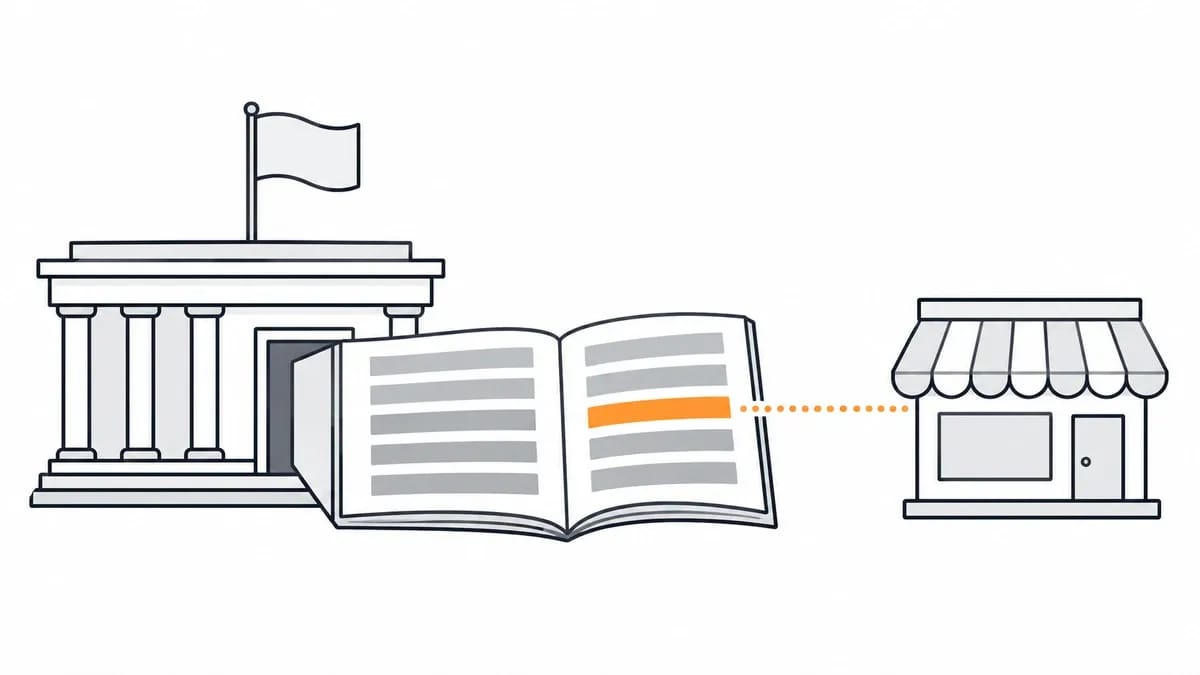
Gov backlinks are links to your site from websites on government domains: .gov in the United States and .gov.uk in the United Kingdom. Only government bodies can register those domains, so the way in is through the pages where a government body lists outside businesses.
This page sets out who holds the domains, how to find government sites that fit your business, and seven kinds of government page that take entries from businesses, each with a named page and what it asks for. It ends with the checks to run on the page you send them to.
What are gov backlinks?
A gov backlink is a link from a site on a government domain, and those domains are closed to businesses.
In the United States, the .gov domain is run by CISA, the Cybersecurity and Infrastructure Security Agency. CISA uses the U.S. Census Bureau's criteria for classifying governments to help decide who is eligible. get.gov's eligibility page states: "Only verified U.S. government organizations can register and operate a .gov domain". It draws the line with a comparison: "Anyone can register a .com, .org, or .us domain for a fee. .Gov domains are different because they’re only available to U.S.-based government organizations, and they’re free."
The United Kingdom runs the same kind of closed register. GOV.UK's guidance, last updated 14 June 2024, states: "Only the following organisations can apply for a .gov.uk domain name:" and the list includes "parish, town or community councils" and "district, borough, city or county councils". Some public sector bodies must use other domains: gov.scot in Scotland, llyw.cymru or gov.wales in Wales, nhs.uk for the NHS, sch.uk for schools and ac.uk for universities.
So a business cannot register one of these domains. A link from one is a link a government body chose to publish on its own page, under its own rules. The rest of this page is about the pages where they do that.
The three types of gov backlinks: federal, state and local
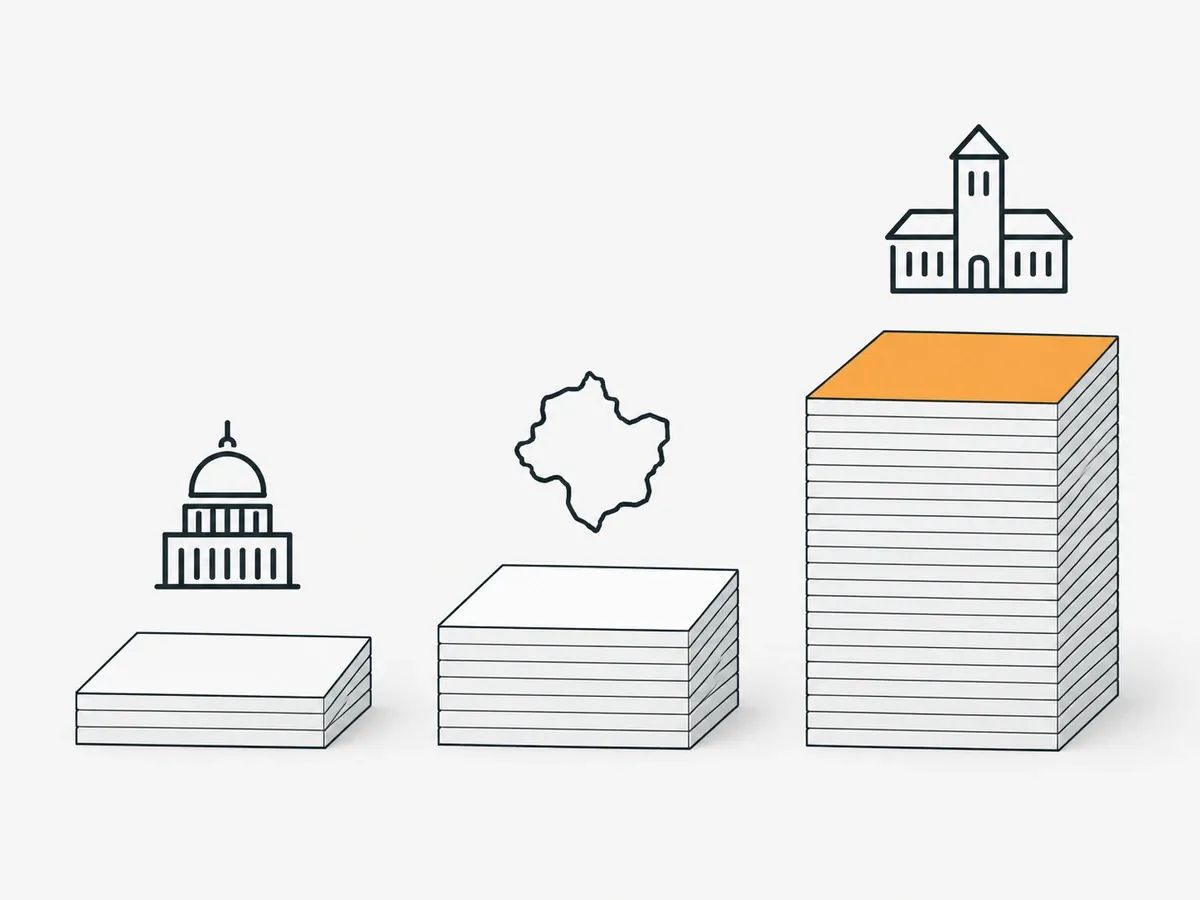
get.gov's eligibility page lists eight kinds of body that can register a .gov domain: federal, state or territory, tribal, county, city, special district, school district and interstate. In everyday use most of these fall into three levels: federal, state and local.
Both registrars publish their lists. CISA updates its list of all .gov domains daily. GOV.UK's list page, last updated 31 March 2026, says its active list of .gov.uk domain names is updated once a year.
When we counted the rows in CISA's list on 3 October 2026, it held 16,814 domains. Of those, 9,170 were registered to cities, 2,671 to counties, 1,446 to states or territories and 1,169 to federal executive bodies. GOV.UK's list held 7,932 rows. These are our counts of rows in the two lists on that day. A row is a domain name, and one body can hold several.
By that count, more than half of the .gov names belong to cities. The pages below come from US federal and state bodies and from UK councils.
How to find relevant gov sites
Three starting points, in order of effort: a search operator, the registrars' own lists, and a backlink tool's top-level-domain filter.
Search with the site: operator
Google's search help says to enter site: in front of a site or domain to search for results from that site. Combine site:.gov or site:.gov.uk with a phrase from the kind of page you want. Four examples:
site:.gov "employee discounts" vendorsite:.gov.uk "business directory" "add your company"site:.gov "made in" "get listed"site:.gov.uk "add your event"
Treat these as patterns, not a script. Swap in your town, county or state, and the wording your kind of page uses: one council's business directory is another council's supplier directory, so try both wordings.
Start from the registrars' lists
CISA's list of .gov domains gives each domain's type, so you can filter it to the cities and counties near you and visit those sites one by one. GOV.UK's list holds the domain names only, so search it for the name of your council or town. Both are the registrars' own records, so they are the cleanest starting point for a list of government domains in your area.
Check which gov sites link to you or a competitor
Backlink tools can filter a site's links by top-level domain. "In the Backlinks report 2.0 you can use the advanced filter for filtering results by their TLD, such as .gov or .edu links:" is how Ahrefs' help centre describes it in an article dated 3 September 2026. Majestic offers the same idea for country domains with its DomainEndsWith filter.
Run the filter on your own domain first, then on a competitor's. Note what kind of page each government link sits on: a directory entry, a discount listing, an event page. That tells you which of the routes below is already open in your field. Our guide to checking a competitor's backlinks walks through the process.
How to build gov backlinks: seven kinds of page that list businesses
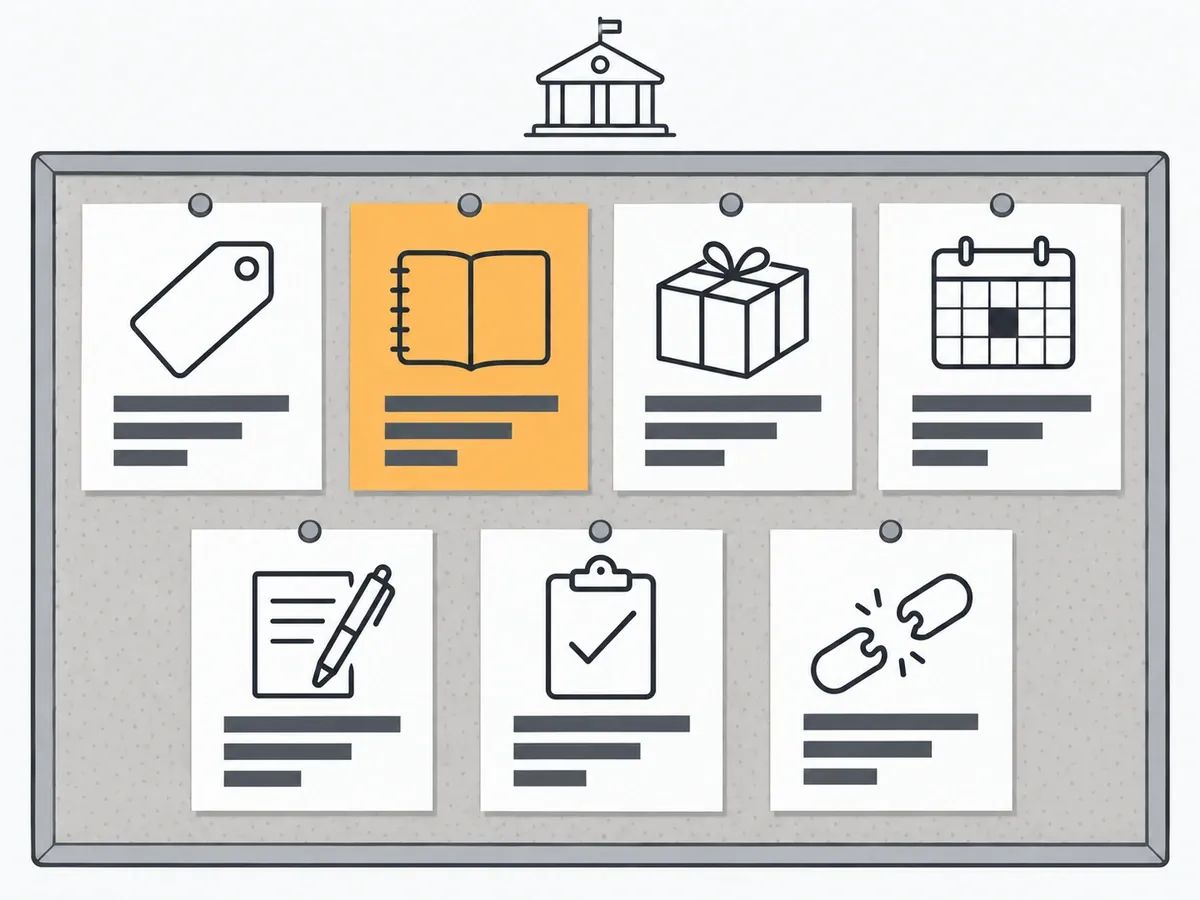
Each of the seven routes below is a named government page that states, in its own words, what it lists and what it asks for.
1. Employee discount pages
Some state governments publish discounts that businesses offer to state employees. Indiana's vendor page, run by the Indiana State Personnel Department, opens with: "We welcome discount offers from businesses who serve employees throughout the state of Indiana!"
The page lists what an offer must include, and one item is the business's own site: "Web site (if applicable)." It states a decision time: "You will be notified (by e-mail) of acceptance/denial of your offer within 10 business days." And it is plain about what a listing means: "A listing on the state’s employee-discount page does not signify: endorsement by the State Personnel Department".
Indiana is not the only state with a page like this. Missouri runs a vendor registration form for discounts to active and retired state employees, and Kentucky's personnel site posts discount offers for state employees.
A practitioner account describes the same route from the outside. In a write-up first published on 2 February 2025, Dennis Yu of BlitzMetrics recorded a conversation with Lewis Vandervalk, founder of the agency Blue Crocus. In Yu's write-up: "His team uses a specific search operator to find government websites, universities, and local organizations that list employee discounts, senior discounts, or student discounts." And: "Lewis mentioned they landed a .gov backlink in Indiana for a dumpster rental client this way." This is Yu's account of Vandervalk's process, and it gives no count and no time.
2. Council and city business directories
A council business directory is a public list of local firms, and several UK councils run one. The Royal Borough of Kingston upon Thames runs a Local Supply Chain Business Directory, and it is exact about what an entry shows: "The published version of the directory only includes basic information: supplier name and address, category and website."
Who can join is defined just as exactly: "This is defined as organisations that have a trading address within the borough, the South London Partnership sub region or neighbouring boroughs". And the page sets expectations: "Inclusion on the directory does not guarantee work, or an invitation to bid for work."
Other councils run their own directories. Sheffield City Council's business directory is free for local businesses to join, and the council said on 20 November 2025 that the directory held more than 1,000 Sheffield businesses. The London Borough of Sutton runs a free supplier directory for Sutton-based businesses, and registration starts with an email to the council's team.
An entry in Kingston's directory is a listing with your name, address, category and website, the same kind of entry as a citation. Our guide to citations covers how those listings work.
3. Made-in programmes
A made-in programme lists products made in a particular state, and the listing can carry the maker's website. The State of Hawaiʻi's Hawaiʻi Made programme states the offer plainly: "Your business name and website link will be listed on the Hawaiʻi Made website at no cost to you."
The criterion is just as plain: "If you’re a local business owner and at least 75% of your total product offerings listed in your website is made in Hawaiʻi, complete your application online". Montana's Made in Montana programme certifies products, not services. Both pages tie the listing to goods made in the state.
4. Event calendars
Council event calendars list public events. Rushmoor Borough Council's what's on calendar says: "We welcome events from community groups, charities, partners and business organisations." Listings are free, though the council puts its own events first. And on time: "We aim to add your event to our what’s on calendar within five working days."
The Royal Borough of Greenwich's event form asks the organiser for a website or booking link where readers can find out more. The entry here is an event your business runs for the public. The calendar is not a place for a sales page.
5. Government blogs that take outside posts
Two federal blogs show that each site sets its own rule. VA News, the U.S. Department of Veterans Affairs' news site, takes guest posts with stories for Veterans. Its submission page, last updated 25 April 2023, asks for posts of 300 to 2,000 words, with a title. On links: "Clearly mark any passages that should be hyperlinked and include the links". And on time: "it can take up to 2 months to be published".
Digital.gov, run by the General Services Administration, is at the opposite end. It takes contributions from federal staff and contractors only, and it tells everyone else: "We cannot accept promotional content or pitches from the public."
Read the submission page before you pitch. One of the two blogs above invites outside stories and asks writers to mark where links go; the other is closed to the public. Our guide to finding guest post opportunities covers how to pitch a blog that accepts outside posts.
6. Supplier profiles and success stories
A US small business that registers in SAM.gov, the federal System for Award Management, can fill out a small business profile. That profile feeds the Small Business Administration's Dynamic Small Business Search, which contracting officers use to find contractors.
NIST, the National Institute of Standards and Technology, takes success stories from businesses that hold one of its Small Business Innovation Research (SBIR) awards and posts them on its own site and on sbir.gov. Its submission page was updated 23 January 2024.
Both routes are open only to businesses that already work with, or want to supply, the federal government. Neither page says whether the entry links to the business's website, so check a live entry before you count on a link.
7. Reporting a broken link
The General Services Administration asks to be told when something on its website breaks. Its website information page, last updated 21 September 2026, says: "Please use the Report a website issue page to submit broken links, out-of-date content, or suggestions to the website."
To find broken links on a government page, run the W3C Link Checker, a tool from the web standards body, on that page. It checks that every link on the page resolves. A report tells the site a link is dead. Whether the site replaces it, and with what, is the site's decision. Our guide to broken link building covers how to suggest a replacement page.
What government sites say about linking out
Government sites publish their own linking policies. Two examples show the shape they take. USA.gov's linking policy, last updated 8 July 2024, says: "USA.gov links to select websites that are not government-owned or government-sponsored. We do this if these websites provide government information in a way that is not available on an official government website."
Derbyshire County Council's policy takes the same line: "We provide these links only where they add value to the information available on our website."
Each government site publishes its own criteria, and there is no single rule. Read the policy of the site you are approaching, and ask for a link only where your page gives its readers something the site says it links to. If you want the wider picture of how links are described, our guide to the types of backlinks sets it out.
Check the page you send them to
Where a route above asks for your website, the form or email carries your URL, so the page that URL points to has to load.
Before a placement of ours goes out, we check the HTTP status code the client's target URL returns, so a link does not go out pointing at a dead page or a redirect chain. Do the same before you submit a URL to a government form: a directory entry that points at a page that does not load is a wasted entry.
After publication, we check that the page is live, the link is in the body copy, the anchor and target URL match the order and the page is indexable. Only then is the URL reported to the dashboard. That is our quality assurance routine, and you can run a reader's version of it yourself: once your listing appears, open it, click the link and confirm it lands on the right page.
One more distinction. The links we place are on independently owned websites, where our Guest Posts are new articles of 750 words or more. A government listing is a route you work yourself, through the forms above.
Frequently asked questions
What are gov backlinks?
Gov backlinks are links to your site from websites on government domains: .gov in the United States and .gov.uk in the United Kingdom. Only government bodies can register those domains, so every gov backlink starts on a page a government body chose to publish.
Why are gov backlinks important for SEO?
Only government bodies can hold .gov and .gov.uk domains, and a government page that lists businesses sets its own criteria for who it lists. A listing shows your business met that page's criteria, and it puts your business in front of the people who use that page, such as the employees a state discount page serves or the residents a council directory serves.
How can I find relevant gov sites for backlinks?
Search with the site: operator and a phrase from the kind of page you want, such as site:.gov.uk with a directory wording. The registrars publish lists of .gov and .gov.uk domains to work through. A backlink tool's top-level-domain filter on a competitor's site shows which government pages already link to it.
What is the best way to get listed on gov resource pages?
Find the page's own criteria and submission route, and follow them. The Indiana State Personnel Department's discount page takes offers from businesses that serve employees throughout Indiana, and the Royal Borough of Kingston upon Thames' directory takes businesses with a trading address in or near the borough. Each page states what it asks for, so match it before you write.
How long does it take to get a gov backlink?
There is no single answer, because each page states its own time for its own process. The Indiana State Personnel Department says it decides on a discount offer within 10 business days, and Rushmoor Borough Council aims to add an event to its calendar within five working days. VA News says a guest post can take up to 2 months to publish.
Can a UK business get gov backlinks?
Yes. UK councils list businesses and events on .gov.uk pages. The Royal Borough of Kingston upon Thames publishes a business directory that shows each entry's website, and the Royal Borough of Greenwich's events calendar asks for a website or booking link. These routes work the same way as the .gov ones; only the domain differs.
related Blog Posts


Join 7,000+ Clients Growing with Rhino Rank
Sign Up


Stay ahead of the SEO curve
Get the latest link building strategies, SEO tips and industry insights delivered straight to your inbox.