
 Back to all posts

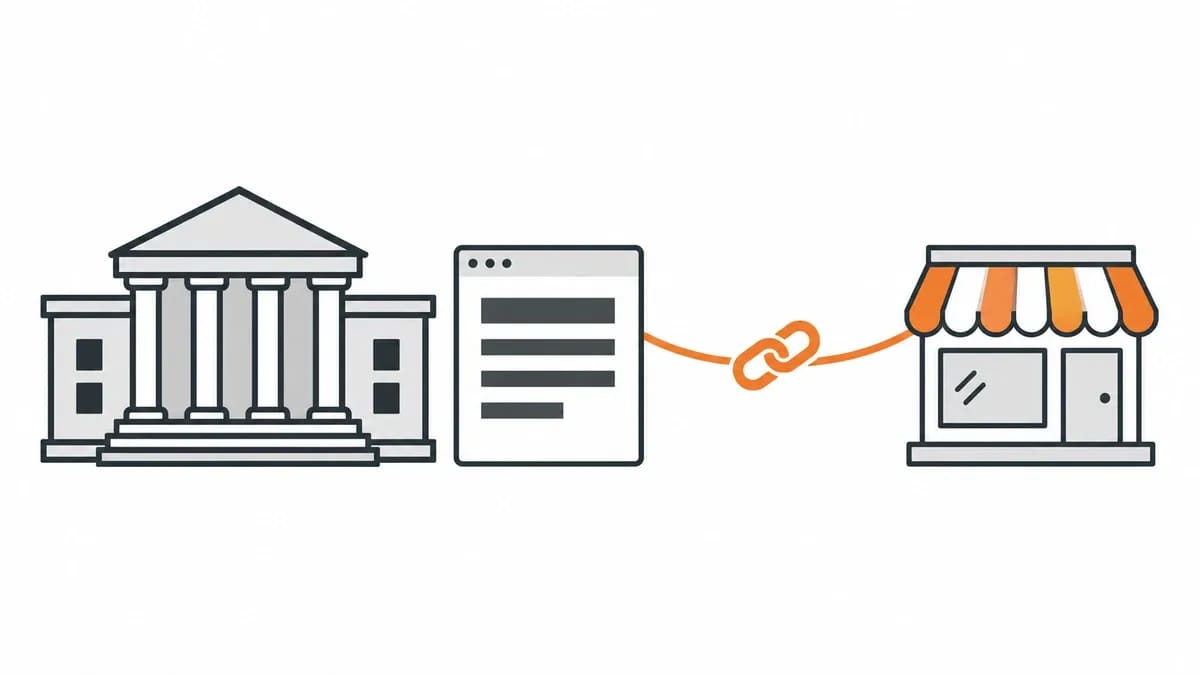
Reciprocal links are links between two websites that point at each other: site A links to site B, and site B links to site A. In SEO the term covers both the mutual links that build up between sites in the same field with no agreement, and the ones two site owners arrange with each other. An arranged mutual link is called a link exchange, or a reciprocal link exchange.
You may have met the term because another site has asked you for a link back, or because you are reviewing the links your own site already has. This page sets out what counts as a reciprocal link, how common reciprocal links are in two dated studies, and a reciprocal link example you can check on the live pages. It then walks through how a link exchange works, including the three-way or ABC exchange, how to find your own reciprocal links and how to get them.
What are reciprocal links?
A reciprocal link is two ordinary links: one on a page of site A pointing to site B, and one on a page of site B pointing to site A. Each link is a normal hyperlink on a normal page. "Reciprocal" describes the pair, not either link on its own.
The two links in a pair do not have to appear at the same time or in the same place. One can sit in an article on the first site while the other sits on a resources page on the second site. What makes them reciprocal is simply that each site links to the other.
Two terms sit side by side here, and they are not the same thing. A reciprocal link can exist with no agreement at all: two sites that cover the same subject cite each other over time, and neither owner asked the other for anything. A link exchange is an agreement between two site owners to link to each other. "Reciprocal backlinks" and "reciprocal linking" are two more names for the same pair of links.
A reciprocal link is one of several types of backlinks a site can have in its profile.
You may also meet the phrase "natural reciprocal link". It means a mutual link that nobody arranged. We cover links of that kind in our guide to natural backlinks.
How common reciprocal links are
Two dated studies have counted reciprocal links, each with its own sample and its own way of counting. Here is what each study found, and what each figure measures.
Ahrefs: 140,592 sites and 112,440 top-ranking pages
Ahrefs published a study of reciprocal links on a page that says it was updated on 11 March 2020. The first sample was about 140,000 websites, each with 10,000 or more visits a month from Google, as estimated by Ahrefs. The result: "26.4% of the 140,592 domains in our sample have no reciprocal links. 73.6% do."
The second sample was the top 10 ranking pages for each of about 10,000 non-branded search queries, each query with an Ahrefs Keyword Difficulty score between 40 and 60. Across those pages, "43.7%—almost half—of the 112,440 top-ranking pages we studied have some reciprocal links."
On how the study counted a link as reciprocal: "We only cross-checked “dofollow” outgoing links with “dofollow” incoming links." In plain terms, a pair counted only when a standard followed link ran in each direction. Both figures are shares of the sites or pages in that sample that had at least one reciprocal link when the study was run.
AutoBacklinks: 40 well-known marketing sites
AutoBacklinks, a maker of outreach software, published a count by Rachid Idali on a page last updated on 26 September 2026. The author describes the method and the result together: "I took 40 well known marketing and SEO sites and checked every possible pair between them. 582 pairs have a link running in at least one direction. 301 of those, 51.7%, run in both."
A pair here is two of the 40 sites. For each possible pair, the count asks whether a link runs from the first site to the second, from the second site to the first, or in both directions at once. A direction counts only when at least one of its links is followed and at least one sits outside the navigation, header, footer and sidebar.
The author states the limits of the count himself: "This is one industry, and an unusually link literate one. Forty domains is a small sample chosen for recognisability, not randomness."
The two studies measure different things. Ahrefs counts the share of sites, or of pages, that have any reciprocal link at all, while AutoBacklinks counts the share of connected pairs, inside a set of 40 sites, where the link runs both ways. Read each figure with its own sample and its own date.
A reciprocal link example
Here is a reciprocal link example you can check for yourself. We checked this pair on the live pages on 3 October 2026.
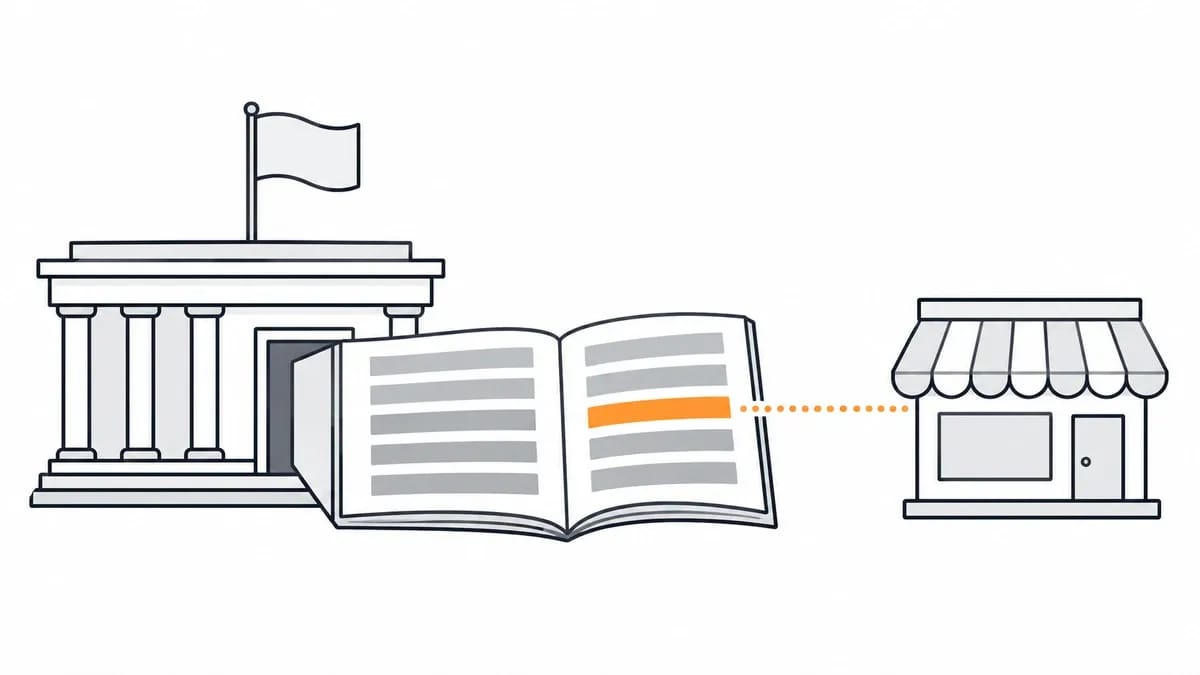
Klaviyo, an email marketing platform, has a page about working with Shopify: Klaviyo's Shopify integration page. That page links to Klaviyo's listing on the Shopify App Store, with a button that reads "Install on Shopify App Store". The App Store listing links back to klaviyo.com: a "Learn more" link to Klaviyo's pricing page, and a "Tutorial" link to its customer resources.
That is a reciprocal link: a link on a Klaviyo page pointing to a Shopify page, and links on a Shopify page pointing back to Klaviyo. The two sites link to each other because the two products work together: the Klaviyo page explains the integration, and the App Store listing is where a Shopify user installs it. This is a reciprocal link that came from an integration.
How a link exchange works
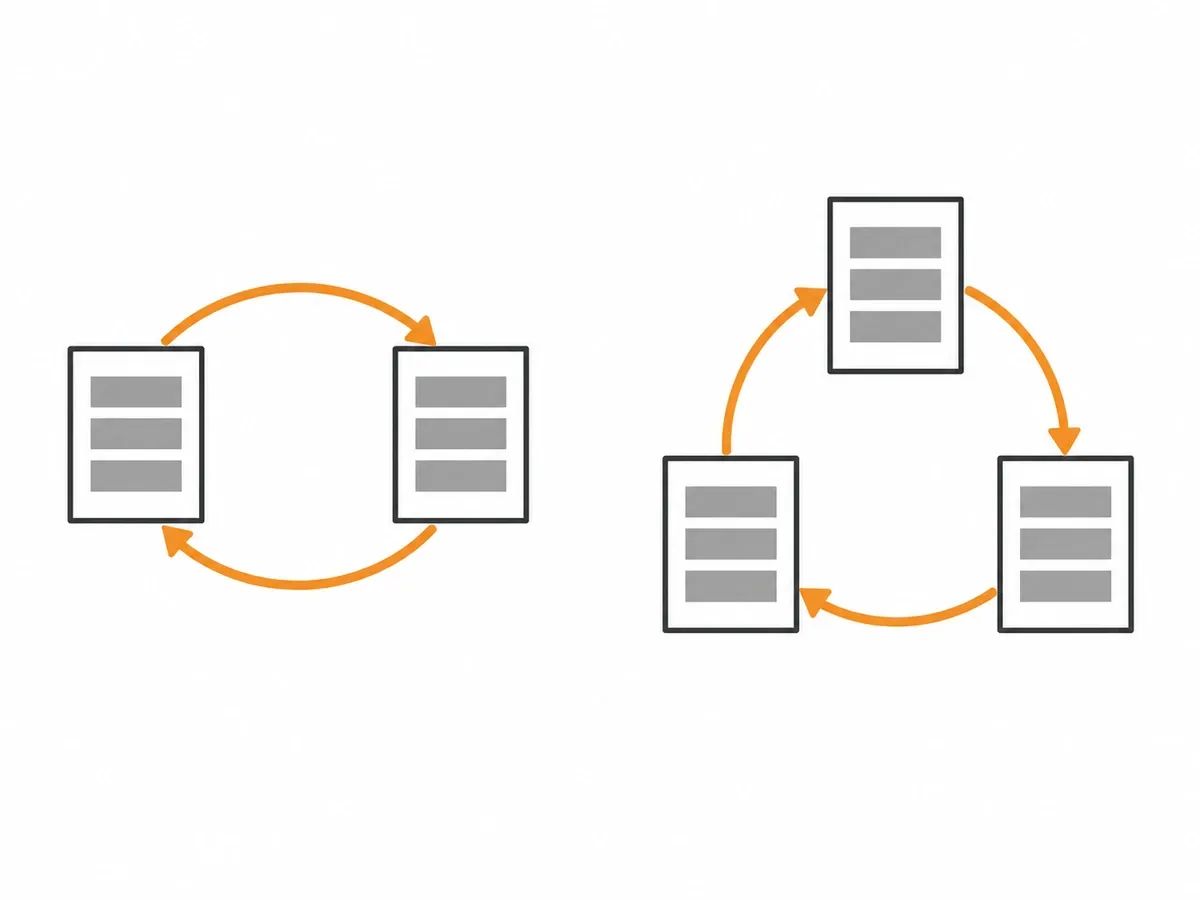
A link exchange is the arranged version of a reciprocal link: two site owners agree to link to each other. It comes in a few shapes.
- Direct exchange. Site A links to site B, and site B links back to site A. The two links can sit in articles, or sometimes in a footer or sidebar.
- Partner page. Each site keeps one page that holds links to everyone in the arrangement. The page exists to carry those outbound links: if three sites are in the arrangement, each site's partner page links to the other two.
- Three-way or ABC link exchange. AutoBacklinks describes this shape in one sentence: "Three way, also called an ABC exchange. A links to B, B links to C, C links back to A." No two of the three sites link to each other directly.
- Guest article swap. One side places a link to the other in a guest article on a third site, and the other side places a link back somewhere else. Our guide to guest posts and niche edits explains how those two placement types differ.
The shapes differ in where the links sit and in the number of sites that take part. What makes each one an exchange is the same thing: an agreement to link to each other.
How to find your reciprocal links
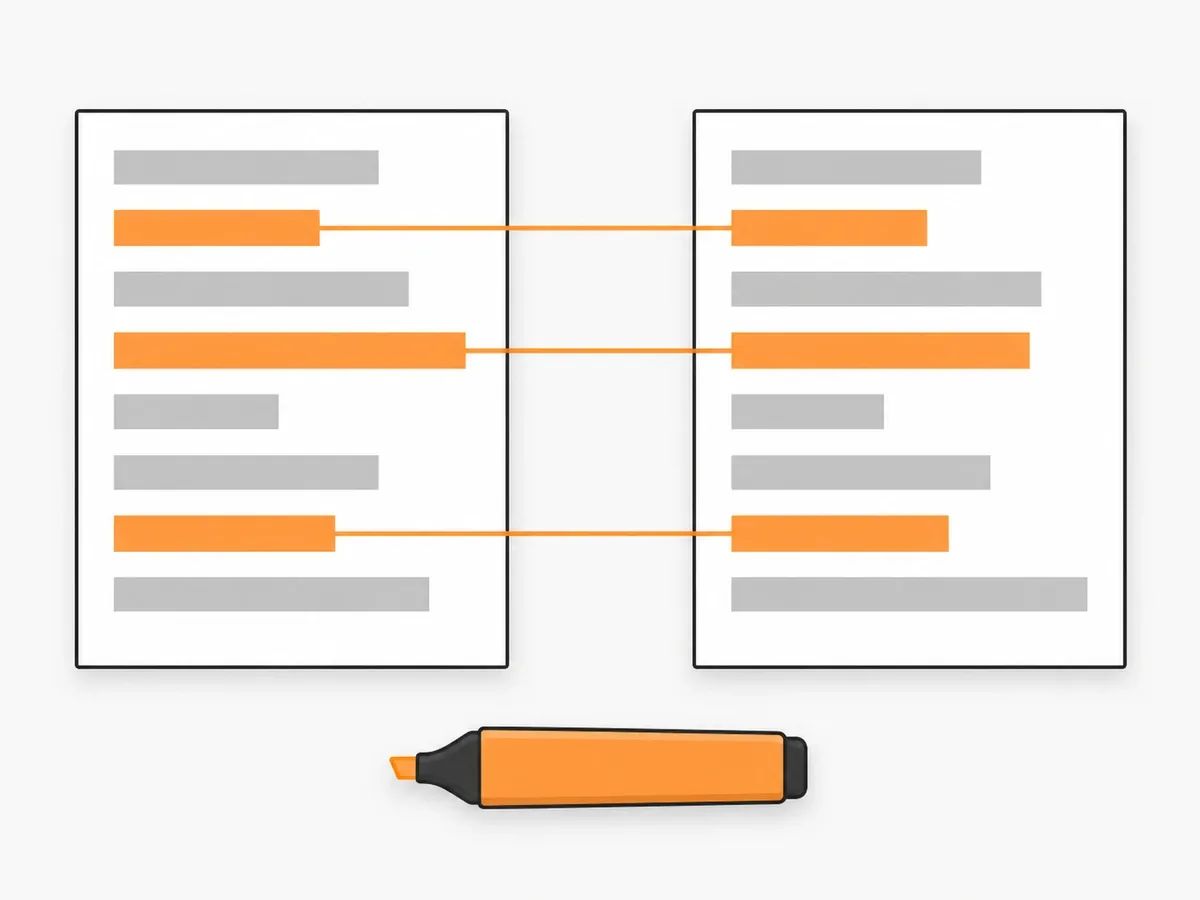
You need two lists: the sites that link to you, and the sites you link to. The domains that appear on both lists are your reciprocal links. A reciprocal link is a pair, so no single list can show you one: you have to put the two lists side by side.
- List the sites that link to you. In Google Search Console, open the Links report. Under External links, "Top linking sites" lists the sites that link to you the most, and the report has an export button. Select "More" beneath the list, choose a domain, and the report shows which of your pages that site links to. The report's own help page describes it as a sample rather than a complete list, and says it does not show whether a link is marked nofollow. A backlink tool gives you a second list of referring domains to work from, and our guide to checking backlinks shows how those exports work.
- List the sites you link to. Export the external links on your own pages, either from your CMS or from a crawl of your site.
- Compare the two lists by domain. Match the referring domains against the domains you link out to. A spreadsheet is enough for this: one column per list, then a match on the domain name. Every domain that appears on both lists is a reciprocal link.
- Say which way you are counting. The same overlap gives two different percentages: the share of the sites you link to that link back, and the share of the sites linking to you that you link back to. For its 140,592 sites, the Ahrefs study uses the first. Any figure you read or quote should say which of the two it uses.
If you already know which partner sites you want to check, a checker does the job page by page instead. SoftSEOTools has a free one: SoftSEOTools' reciprocal link checker. Its own description reads: "The tool visits each partner page, scans all outbound links, and checks if any of them point to your domain."
Your reciprocal links are one part of your wider backlink profile.
How to get reciprocal links
Two routes produce reciprocal links as a by-product of something else you are already doing.
The first route is integrations and partnerships. If your product works with another product, a page on each site about the integration can link to the other, as in the Klaviyo and Shopify example.
The second route is testimonials. A supplier you have written a testimonial for may publish it with a link to you, and you may already link to that supplier. Our guide to testimonial link building walks through how that route works in practice.
Where our placements sit
A link we place is a link from a publisher's page to yours. Our Guest Posts are articles of 750 words or more, published on a real, independently owned website in your niche, each with one contextual link. Our Curated Links are added to articles that are already published. In both cases you supply the target URL and the anchor text. After publication we check that the page is live, that the link sits in the body copy, that the anchor and target URL match the order, and that the page is indexable. Only then is the URL reported to the dashboard. You can read the full checklist on our quality assurance page.
Frequently asked questions
What is a reciprocal link in SEO?
A reciprocal link in SEO is a pair of links between two websites: a link from site A to site B, and a link from site B to site A. Each link is an ordinary hyperlink. Reciprocal describes the pair, not either link on its own.
Are reciprocal links good for SEO?
A reciprocal link is two ordinary links, each sending readers from one site to the other. In the Ahrefs study updated on 11 March 2020, 73.6% of 140,592 sites with 10,000 or more monthly visits from Google had at least one. In the same study, 43.7% of 112,440 top-ranking pages for about 10,000 non-branded search queries had at least one.
What is a link exchange?
A link exchange is an agreement between two site owners to link to each other. A reciprocal link can also exist with no agreement, when two sites in the same field cite each other over time. The exchange can run directly between two sites, or through a third site.
What is an ABC link exchange?
An ABC link exchange is a three-way exchange: site A links to site B, site B links to site C, and site C links back to site A. No two of the three sites link to each other directly.
What is a natural reciprocal link?
A natural reciprocal link is a mutual link that nobody arranged. Two products that integrate, and each have a page about the other, are one example.
How do I find my reciprocal links?
List the sites that link to you, list the sites you link to, and compare the two lists by domain. The names that appear on both lists are your reciprocal links. Google Search Console and a backlink tool can supply the first list; your CMS or a crawl can supply the second.
related Blog Posts


Join 7,000+ Clients Growing with Rhino Rank
Sign Up

Stay ahead of the SEO curve
Get the latest link building strategies, SEO tips and industry insights delivered straight to your inbox.