
 Back to all posts
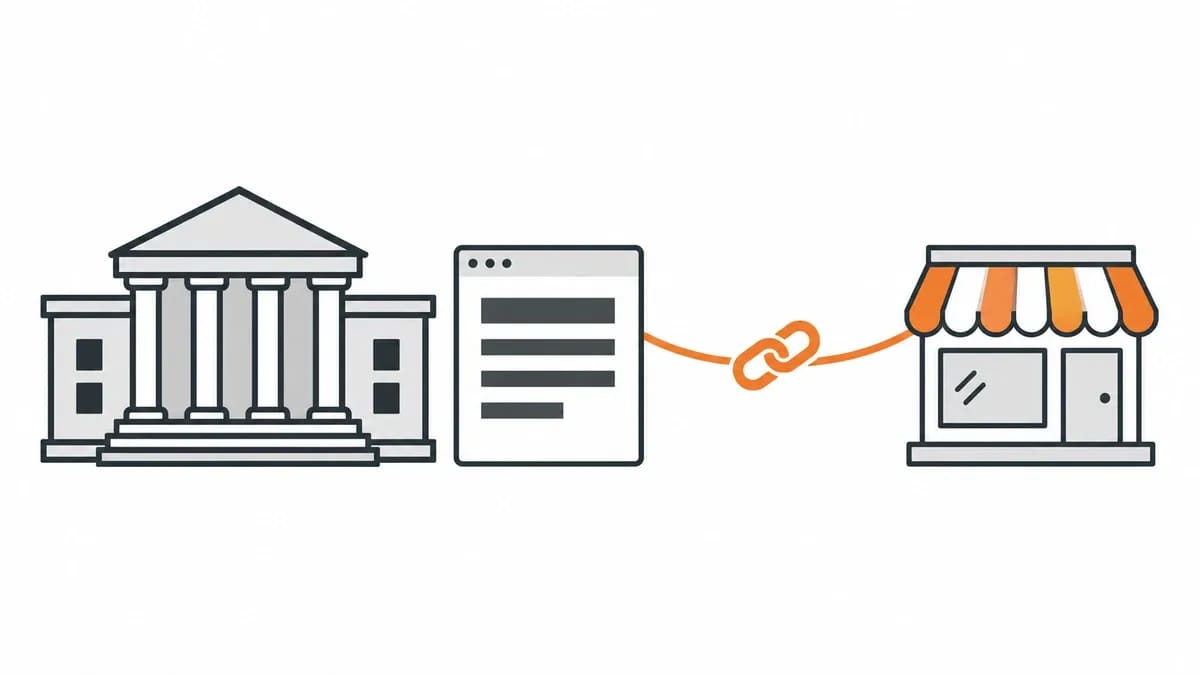
Edu backlinks, or edu links, are links to your site from the websites of universities and colleges, on .edu domains in the United States and .ac.uk domains in the United Kingdom. A university links to a business where one of its own pages has a reason to, such as a careers page, a staff discount page, a scholarship list or an alumni business directory. Each of those pages states its own conditions.
This guide to edu link building covers who can register the two domains, how to find university pages that link out, and seven routes to a listing, each with the university's own conditions. The conditions quoted in it come from pages the universities and the two registries publish themselves. At the end we set out what we do and where our work fits. For government sites, read our companion guide to gov backlinks.
What edu backlinks are and who can register the domains
The two domains behind edu backlinks are restricted, and the organisations that run them publish who may register. Those rules decide whose sites can carry the links this guide is about.
EDUCAUSE, a higher education information technology association, "is the sole registrar for the names in the .edu generic top-level domain (gTLD)". The US Department of Commerce awarded it management of the domain in October 2001. EDUCAUSE's .edu FAQ states: "Eligibility for a .edu domain name is limited to U.S. postsecondary institutions that are institutionally accredited". The institution as a whole must be accredited; accreditation of a single programme does not qualify. Asked whether K-12 schools (US schools from kindergarten to 12th grade) are eligible, the FAQ answers: "No, only appropriately accredited postsecondary institutions are eligible." Names that existed on 29 October 2001 were allowed to stay whatever the holder's eligibility, which EDUCAUSE gives as the reason some organisations hold .edu names without meeting the current requirements. An institution may register as many as two .edu names, and it does not own the name it holds: it cannot give, sell or transfer it to another organisation.
In the United Kingdom the registry is Jisc. Jisc's eligibility policy states: "The ac.uk domain is managed to add value to organisations in the United Kingdom whose core mission is tertiary education and/or public research". The first group on its list of eligible bodies is "organisations recognised as having Degree Awarding Powers in the UK;". The list also includes research councils and learned societies. A department or faculty does not get its own name; it uses a sub-domain of its institution's.
So who can hold these domains is set by the two registries' eligibility rules, and a business outside those rules cannot register one. A link from one of these sites comes from a page the institution runs.
How to find edu pages that link out
Two tools do the finding: a search engine's site operator, and the domain filter in a backlink report. Then you read what you find.
- Search by domain. A search engine's
site:operator goes in front of a site or domain to ask for results from that site or domain only. Putsite:.eduorsite:.ac.ukbefore a topic and a page type to look for pages of that type on education domains. Page types worth trying include "staff discounts", "alumni business directory", "external scholarships" and "advertise a vacancy". - Filter a backlink report by domain ending. Zutrix's help page for its backlink monitoring, dated 20 November 2024, describes a filter by the top-level domain of backlinks, with .edu among its examples. Ahrefs' help centre describes the same kind of filter in its Backlinks report, on a page dated 3 September 2026. Run the filter on your own site to check edu backlinks you already have, then on a competitor's backlinks to see which education pages link to them. Our guide to checking a competitor's backlinks covers the method step by step.
- Open each page you find and read what kind of page it is and who it lists. A vacancy board, a discount page, a scholarship list and an alumni directory each have their own conditions. Check the page still takes submissions before you spend time on it. Keep the pages you find as your own edu backlink list, with each page's route and conditions. The next section sets out the kinds we found.
How to get edu backlinks: seven routes universities publish
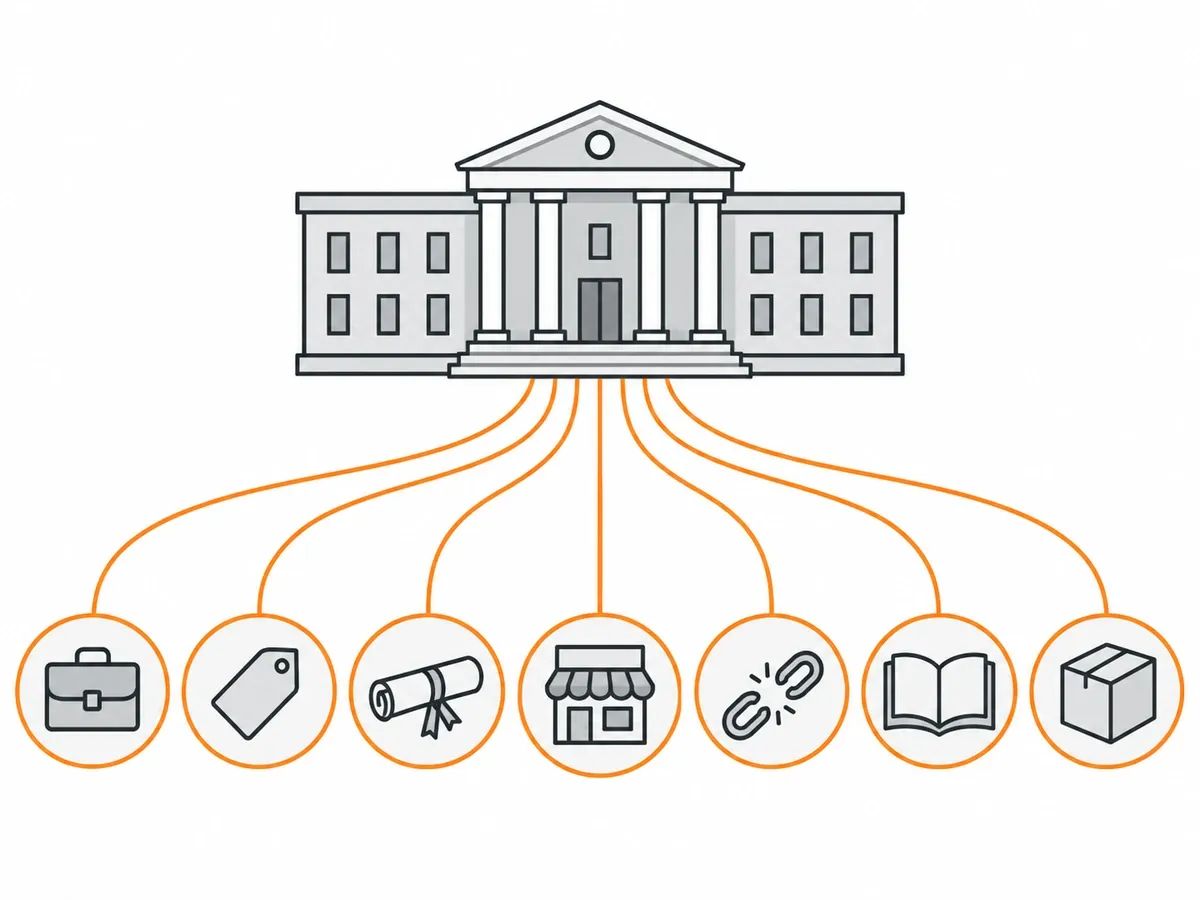
For each route below we read the university's own page on 3 October 2026. Each sentence about an institution is that institution's own condition, not a rule for universities in general. Only two of the pages, Bath's and Glasgow's, say in words that a link to the business's website is published.
Careers and vacancy adverts

If you employ students or graduates, you can ask a university careers service to advertise your vacancy. The University of Bath's vacancy advertising policy states: "There is no charge for a basic advert, and a link to your website is automatically included." If you are looking for free edu backlinks, this is the plainest case we found: no charge, a stated link, and Bath's own right to be selective. Bath also notes that students are expected to search the portal themselves, so submitting a vacancy does not automatically alert them to it. The University of Glasgow's terms for employers, with a review date of August 2024, set conditions for recruitment agencies that advertise on an employer's behalf, and one of them is: "The only web link we will include will be to the employer's own site".
The careers services below check the employer first. The Cambridge Careers Service states: "We require that all organisations provide sufficient company information before approval, including a company description, live website, and company registration number." Newcastle University asks employers to request an account through its online employer portal before they advertise. The University of Portsmouth declines vacancies from employers that do not have a company website, and the University of Exeter says a missing or minimal website makes an employer difficult to verify. In the US, Duke University routes employers through the platform Handshake, and Duke reviews and approves each request before students see it. Drexel University and Temple University route employers through Handshake too, and Drexel asks for an active website that clearly relates to the organisation. Handshake is a separate recruiting platform, and adverts sent through it are posted there.
This route fits a business that has a real vacancy, placement or internship to offer. Have your company description, a working website and your registration number ready before you apply.
Staff and student discounts
Some universities run discount schemes for staff and students and take applications from businesses. Cardiff University states: "Over 200 organisations already provide discounts to our staff. To join them please email staff_discounts@cardiff.ac.uk with the following information:" and it replies to confirm whether it can offer the discount to its staff. Cardiff's list of what to send includes how staff will claim the discount, such as an online code, a special URL or a staff ID card.
In the US, Baylor University's Waco Perks programme states: "Any business with a storefront within the City of Waco or McLennan County may apply to offer a discount or deal through the Waco Perks program." Baylor keeps the decision: it may approve, deny, suspend or remove a business at its discretion. Lenoir-Rhyne University invites any business to take part by offering a discount to its students, faculty and staff, and the University of Findlay tells businesses that their name, contact information and location will be posted on the university's website.
Scholarship listings
Some financial aid offices list scholarships from outside organisations and publish what they will list. UC Davis says its office will consider scholarships that are "Genuinely seeking to help students afford their education, rather than using scholarships as a means to promote a business." Its form lists what will prevent a listing, including an application fee or a requirement to buy a product or service, and the applicant acknowledges that UC Davis is in no way obligated to list the scholarship. The University of Nevada, Reno states: "Each scholarship is a continuing program (this is not the first time the scholarship has been awarded) of at least $500 that directly issues funds made payable to the winner’s school." Nevada adds that each external scholarship organisation sets its own criteria and deadlines, and that it does not promote scholarships requiring social media interaction. The University of Nebraska–Lincoln's donor form states: "Your responses will be sent to a review committee who will make a decision within 7–10 business days."
UC Davis asks for a scholarship that exists to help students afford their education, and Nevada for one that has been awarded before. Read the office's own page before you set one up, because the criteria are each office's own.
Alumni business directories
If the owner or a founder studied there, an alumni business directory can list the business. Teesside University states: "Open to graduates, current students, and Teesside staff alike, those who wish to feature in the business directory are invited to submit details online." Teesside's page says the directory may contain links to third-party sites. The University of Wisconsin–Milwaukee's directory lists businesses that are "Founded, co-founded, owned or operated by a UWM alum" and that "Have an active website and/or social profile". UWM's directory sits inside Panthers Connect, its online community, and the page asks visitors to log in to view the businesses. The University of Aberdeen asks any business that wants to feature in its directory to complete its form, and the University of Northwestern, St. Paul reviews each submission and publishes it if approved. Check the directory's own eligibility line before you submit; Teesside's and UWM's differ.
Broken link reports
A link on a university page stops working when the resource it points to moves or closes, and some universities publish where to report one. Commonwealth University of Pennsylvania's report form says its Strategic Communications web team fixes the problem or replaces the broken link. The University of Wyoming asks you to start with the page's owner, using the contact details at the bottom of that page, and to use its report form only if you cannot find them. Cardiff University's website feedback page asks people to send notices of broken links and out-of-date information to its Digital Communications team.
If you have a page that covers what the dead link covered, say so in the report. Our guide to broken link building sets out the full method.
Library and department resource guides
Some university libraries publish how they choose the sites they link to. UT Southwestern's Health Sciences Digital Library, on a page last updated 29 September 2026, lists relevance first: "Relevancy - Meets the needs of faculty, staff, students, residents, and fellows of UT Southwestern Medical Center and employees of UT Southwestern University Hospitals." Tarrant County College's library publishes its own selection criteria and says a site does not need to meet every one of them to be a great site.
A guide of this kind links to a resource its own readers need, so the page you suggest has to be a reference on the guide's subject. Both library pages we found were in the US.
Supplier registers
If you sell to universities, a supplier register is one route. Washington University in St. Louis keeps a business registration form for a supplier directory, and it states: "While inclusion in our directory increases your visibility to the university, participation is not required prior to engaging in the WashU procurement process." The form thanks businesses for their interest in being added to its directory of potential businesses for consideration. Registration is a way to be seen by the university, not a condition of selling to it. It is the one page of this kind we found.
In every route the university decides, by its own rules. The work is to find the page, read its conditions and apply with something that meets them: a vacancy, a discount, a scholarship that meets the office's criteria, an alumni-owned business, a replacement for a dead link, a reference page or a supply relationship. Once a page lists you, check from time to time that the page is still live and your entry is still on it.
Edu backlinks service: what we place and what universities decide
Every listing in the seven routes is the university's own decision, made through its own form or email address. They are applications to the university, and the university decides each one; no service can make that decision for you. What we place is different. Guest Posts are new articles of 750 words or more, written in-house by our UK team and published on a real, independently owned website in your niche with one contextual link. Curated Links are links added to articles that are already published. For both, you supply the target URL and the anchor text.
How we choose publishers and check their pages is set out on our quality assurance page. We weigh indexed pages, organic traffic and its trend, Moz DA, Ahrefs DR, referring domains and the strength of the link profile together. Before a placement goes out we check the HTTP status code your target URL returns, so the link does not point at a dead page or a redirect chain. After publication we check that the page is live, that the link is in the body copy, that the anchor and target URL match the order and that the page is indexable, and only then is the URL reported to the dashboard. Each link has 12-month replacement cover.
Frequently asked questions
What are edu backlinks?
Edu backlinks are links to your site from university and college websites. The domains are .edu in the United States and .ac.uk in the United Kingdom. Both are restricted by their registries' eligibility rules to education and research organisations, so a business outside those rules cannot register one; the links come from pages the institutions run.
Who can register a .edu domain?
Accredited US postsecondary institutions. EDUCAUSE is the sole registrar and has managed the domain since October 2001. Names that existed on 29 October 2001 were allowed to stay. A business that is not an accredited postsecondary institution cannot register one.
How do you get edu backlinks?
You get backlinks from edu sites through a page the university runs: a vacancy advert, a staff or student discount, a scholarship listing, an alumni business directory, a broken link report, a library resource guide or a supplier register. Each page has the university's own conditions, and the university decides.
How do you find edu backlinks?
Search with the site: operator, for example site:.edu or site:.ac.uk plus a page type such as staff discounts or external scholarships. You can also filter a competitor's backlink report by domain ending to see which education pages link to them.
Can you buy an edu backlinks service?
Not for listings on university pages: each university decides those through its own application. What we place is guest posts and curated links on real, independently owned websites in your niche. Each link we place is checked after publication and carries 12-month replacement cover.
related Blog Posts




Join 7,000+ Clients Growing with Rhino Rank
Sign Up


Stay ahead of the SEO curve
Get the latest link building strategies, SEO tips and industry insights delivered straight to your inbox.