
 Back to all posts

PPC vs SEO: when to use each channel
PPC vs SEO is not a winner-takes-all choice. PPC buys controlled visibility while you keep paying. SEO builds organic visibility that can keep returning traffic after the work compounds. Prioritise PPC when speed, testing or tight targeting matters. Prioritise SEO when search demand is steady and margins improve without a media cost on every click. Most serious programmes use both.
The right decision depends on the job in front of you. A new landing page with no organic rankings needs a different plan from a mature service page that already converts well. A high-margin emergency service can live with expensive clicks. A low-margin ecommerce category may need organic traffic before the numbers make sense.
Use this guide to compare PPC and SEO as acquisition channels: cost, speed, control, measurement and fit. It is not a keyword research guide or a link-building how-to.
Quick comparison
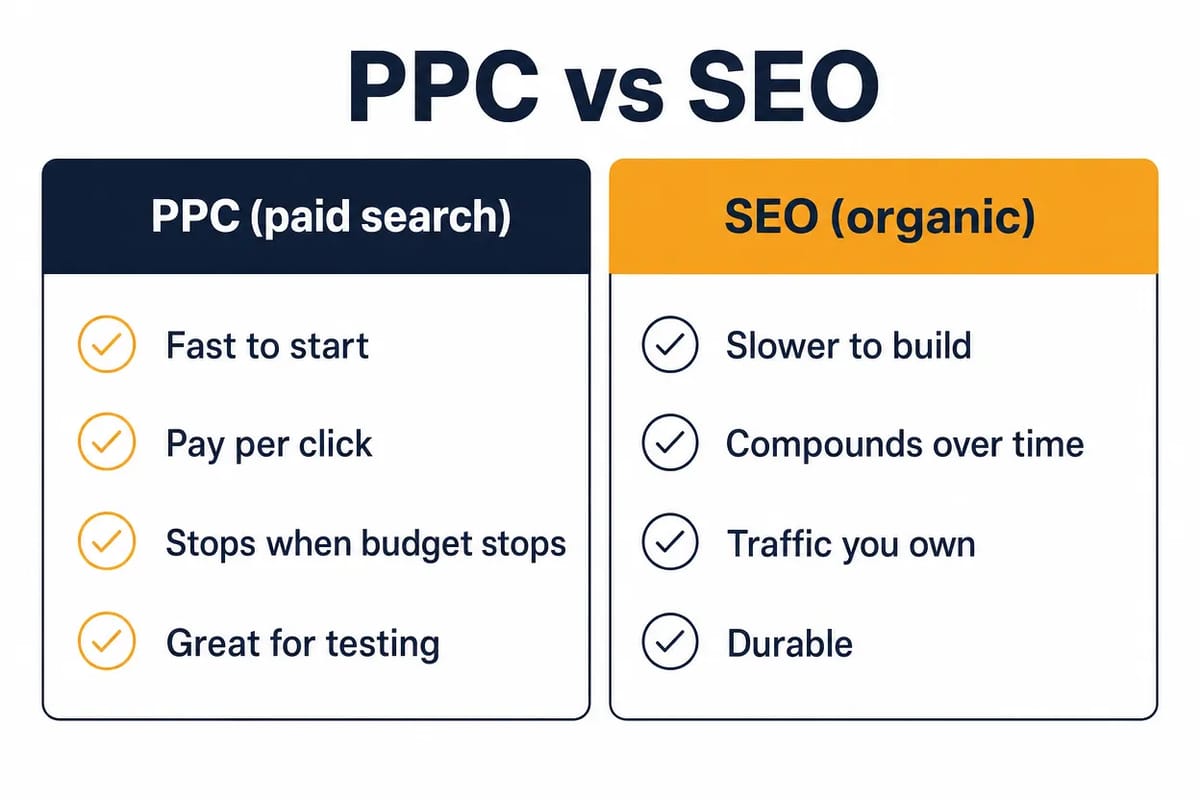
Area | PPC | SEO | Better fit |
|---|---|---|---|
Speed | Fast visibility | Slower impact | PPC for urgent tests |
Cost | Pay per click | Pay for work | Depends on margin |
Control | High targeting control | Lower SERP control | PPC for precision |
Durability | Stops with spend | Can compound | SEO for steady demand |
Measurement | Direct campaign data | Longer attribution | PPC for quick reads |
Use the table as the short version. PPC is easier to switch on, cap and test. SEO is harder to force, but it can reduce your dependence on paid traffic when the page, content and authority are strong enough to rank.
What PPC actually buys
PPC, or pay-per-click advertising, means you pay when someone clicks an ad. In search advertising, that usually means bidding for ad placements against specific queries. In paid social or display, it may mean targeting audiences, placements or behaviours rather than search terms.
The clearest PPC advantage is control. You choose the campaign, location, audience, daily budget, bid strategy, ad copy and landing page. If the offer changes, the ad can change. If a keyword wastes spend, you can pause it. If a product launch needs traffic now, PPC can create visibility while SEO work is still earning its place.
That control has a price. PPC cost is not only the click. You also pay for account management, creative, testing, landing page work and reporting. Cost per click is only the media price for the visit. Cost per acquisition is the number that tells you whether the campaign is healthy.
When you run search PPC, the auction is quality-weighted. A higher bid can help, but it is not the whole ranking system. Google Ads uses Ad Rank, which considers bid, ad quality, landing page quality, auction context, competition and expected asset impact. That is why a lazy campaign can pay more than it should, even with a strong budget.
Quality Score also needs careful wording. It is a diagnostic in Google Ads, not the auction itself. It helps you assess expected click-through rate, ad relevance and landing page experience. Better ad quality can often reduce actual cost per click, but the practical job is still the same: match the query, the ad and the page tightly enough that the click has a real chance of converting.
What SEO actually builds
SEO helps search engines understand, crawl, index and show your pages for relevant searches. It covers content, internal structure, technical access, page experience, links and brand signals. It is not free traffic. It is traffic earned through labour, publishing, site quality and authority.
The main SEO advantage is compounding visibility. A page that ranks well can keep bringing visitors without a media charge on each click. That does not make the traffic costless. You still paid for strategy, writing, design, development, tools, links and maintenance. The difference is where the cost sits: PPC charges each visit through the ad platform; SEO charges through the work needed to earn and defend rankings.
SEO also changes the way your brand is found. A paid ad can capture a high-intent click today. A good organic footprint can meet the same buyer across guides, service pages, comparisons, local searches and branded queries. That matters when the sale takes more than one visit.
You should still frame trust honestly. Ranking does not prove a brand is good, and it does not create trust by itself. It can, however, make a useful brand easier to find during research. Trust matters away from search too: MarketingCharts reported in 2023, from a May survey of 13,802 adults across 14 countries, that 59% of consumers were more likely to purchase from a brand they trust.
SEO vs PPC ranking mechanics
PPC rankings are bought through an auction, but the auction is quality-weighted. You can raise bids, improve ads, adjust budgets and refine targeting. You can also see impression, click and conversion data quickly enough to make decisions within days rather than months.
When you work on SEO rankings, you are earning visibility through relevance, usefulness, crawlability, internal links, external links and the wider quality of the site. Google Search Central says some changes can show in search within hours, while others can take several months. That makes SEO harder to schedule around a deadline.
This is the first real difference in the SEO vs PPC decision. PPC gives you more immediate control over visibility. SEO gives you less control over timing, but a successful page can keep working after the initial push.
Do not treat either channel as a sales guarantee. PPC can bring the wrong clicks if your targeting, copy or landing pages are weak. SEO can bring visitors who are too early in the buying journey. The channel is only as good as the intent it reaches and the page it sends people to.
Cost: CPC is not the same as ROI
You can see PPC cost quickly because the ad platform shows spend. That visibility is useful, but it can also make PPC look harsher than it is. A high daily budget may be profitable if the leads are good and the close rate is high. A small daily budget may still be wasteful if the clicks never convert.
The core PPC numbers are spend, impressions, click-through rate, cost per click, conversion rate, cost per acquisition, revenue and return on ad spend. For lead generation, you also need lead quality, sales acceptance and close rate. A cheap form fill is not a win if sales cannot use it.
Your SEO cost is less obvious because it is spread across people and assets. Content work, technical fixes, internal linking, design improvements, digital PR, link earning and reporting all count. The common mistake is to compare PPC's visible media spend with SEO's invisible labour spend and then call SEO free.
A better comparison is payback. Ask how much traffic and revenue each channel can produce after management, labour and media costs. PPC often gives a faster read because spend and conversion data are tied to the campaign. SEO usually needs a longer attribution window because rankings, clicks and assisted conversions build over time.
If you use third-party tools to study competitors, keep the job narrow. A guide on how to use Ahrefs for link building can help you inspect link gaps and authority signals, but it should not replace your own PPC conversion data or your own organic revenue tracking.
When to prioritise PPC
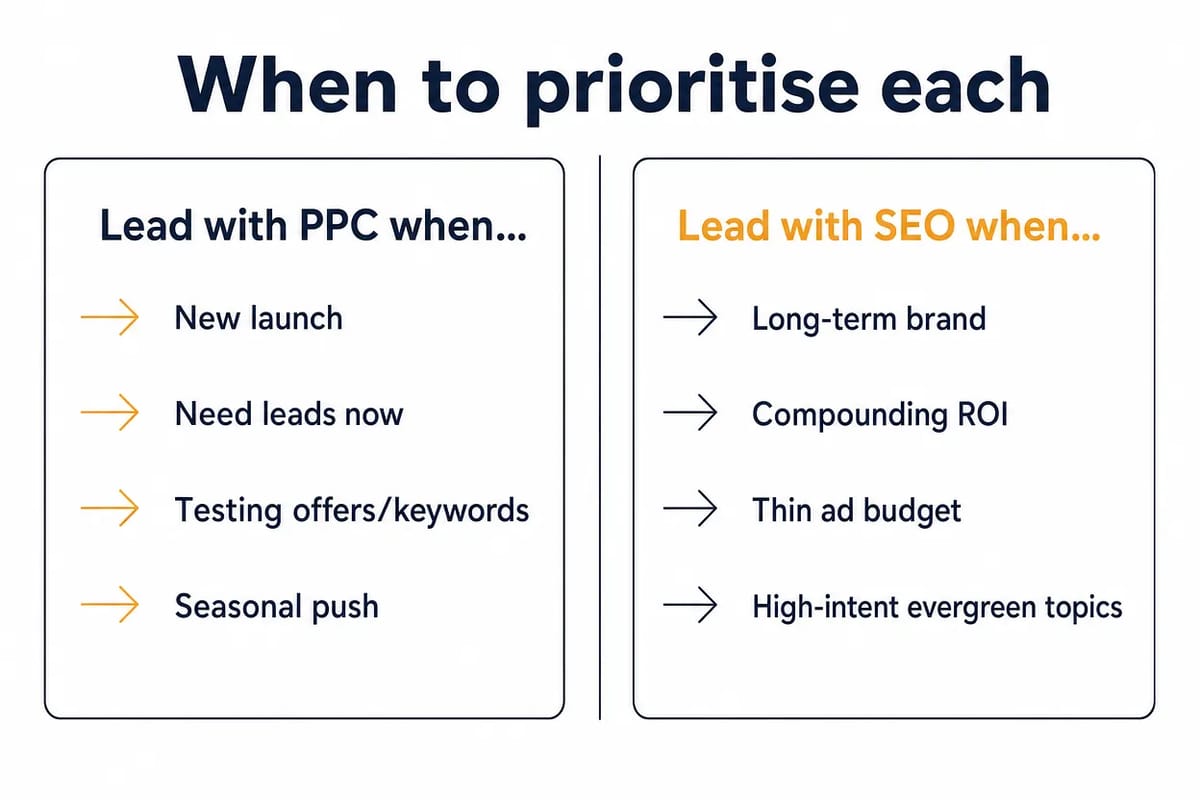
Prioritise PPC when speed matters more than compounding value. Product launches, seasonal offers, new landing pages, webinars, local service pushes and urgent lead targets are all PPC-friendly. You can test the offer, see which queries or audiences respond, and decide whether the economics deserve more budget.
PPC is also useful when organic results are crowded by strong domains. If your site cannot rank for a high-intent term this quarter, paid search may be the only practical way to appear near the top of the page. That does not mean the click will be cheap. It means you can choose whether the economics work.
Use PPC when you need controlled targeting. Location, device, schedule, audience segments, remarketing lists and campaign exclusions can shape who sees the ad. That level of control is useful when only a narrow buyer group is profitable.
PPC is strong for testing. If you are unsure which message, landing page, price point or call to action works, paid campaigns can produce cleaner feedback than waiting for SEO rankings. The winning PPC message can then inform title tags, meta descriptions, page copy and conversion blocks in organic pages.
The weak point is dependence. Once the budget stops, paid visibility usually stops with it. That is fine for a launch, a limited offer or a controlled test. It is more dangerous when the business has no other source of qualified demand.
When to prioritise SEO
Prioritise SEO when the search demand is steady and the page can become a durable asset. Evergreen service pages, buying guides, comparison pages, local landing pages and problem-led articles are all good candidates if they match real demand and can be maintained.
SEO is also the better channel when paid clicks are too expensive for the margin. If every click costs money and only a small share converts, PPC can become hard to scale. SEO still has costs, but a ranking page does not pay the ad platform each time someone visits.
Use SEO when buyers research before they enquire. A person comparing providers, checking terminology or learning how a process works may not click an ad yet. Organic pages can meet that buyer earlier, build familiarity and support the later conversion.
The work breaks into three practical areas. On-page SEO makes the page useful and relevant. Keyword research helps you understand search demand and intent without stuffing phrases into copy. Technical SEO makes the site accessible, fast enough and easy to crawl; a technical SEO checklist is useful when you need to audit that layer.
Off-page SEO is your authority layer. Search engines discover and evaluate pages partly through links, but the useful version is not bulk link buying or random placements. It is earning or placing relevant references where they make sense for the reader. Social distribution can support discovery, and this guide to social media link building covers that side. When the gap is relevant links inside existing content, curated links are the cleaner bridge between an SEO plan and off-page execution.
The weak point is timing. SEO can be slow, and not every improvement moves rankings. You need patience, clean measurement and the discipline to stop working on pages that do not have enough demand or commercial value.
When to combine PPC and SEO
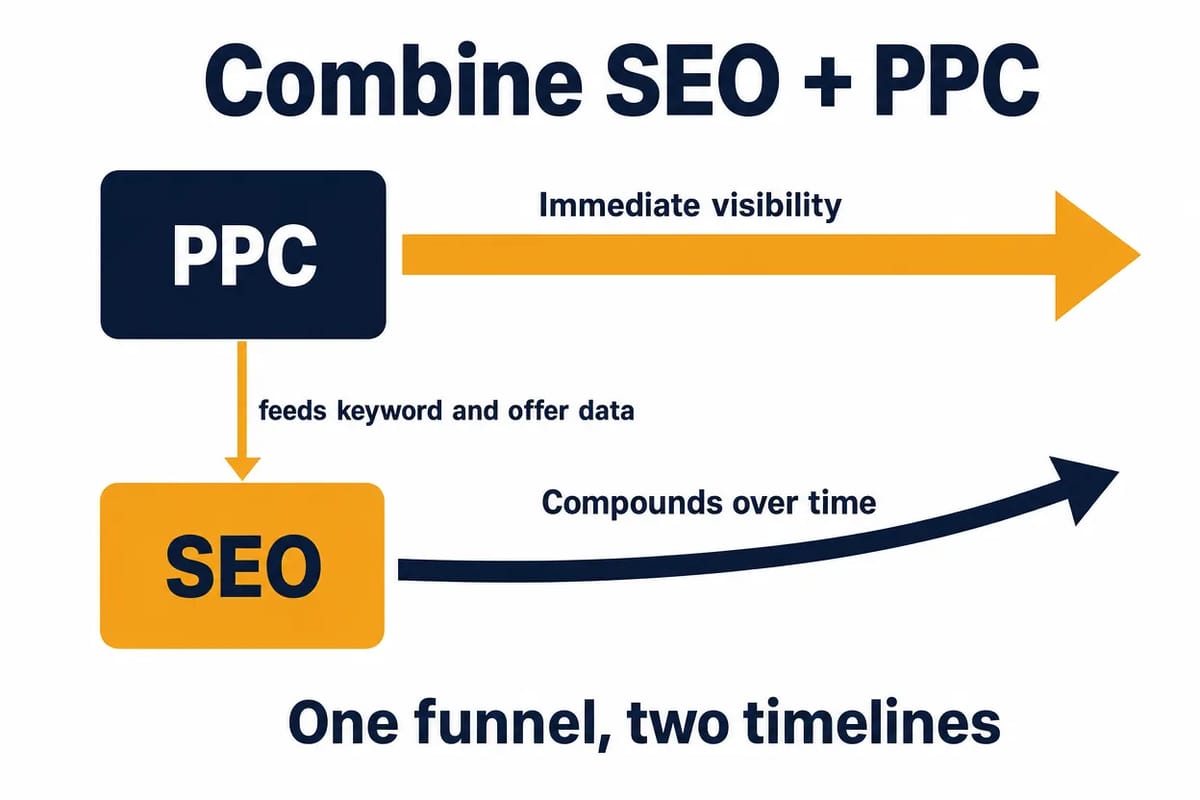
Most mature search programmes combine both channels because each one covers the other's blind spots. PPC gives speed and data. SEO gives depth and durability. Together, they let you buy visibility while you build the pages that may reduce paid dependence later.
The cleanest combined use is testing with PPC before investing heavily in SEO. If an ad group converts well, the query set is a good candidate for organic content, service-page expansion or a comparison page. If the paid traffic is weak, an SEO campaign around the same intent may not be worth the effort.
PPC can also protect important commercial terms while SEO catches up. A new site may need paid search for its core service keywords during the first few months. As rankings improve, you can decide whether to keep ads live for incremental coverage or shift budget to weaker areas.
If you combine them, separate the jobs before you separate the budget. PPC can carry urgent terms, retarget recent visitors and test offers. SEO can take the slower, durable topics where a useful page can rank and keep earning visits. That split helps you avoid paying for clicks that organic already captures, while still buying coverage where organic visibility is not ready.
SEO can improve PPC performance too. A stronger landing page, clearer offer, better page speed and better content-market fit can help both channels. PPC does not fix a poor page. It only sends more people to it. If the page fails to convert, the campaign will expose that quickly.
The combined model is not "spend everywhere". It is a budget decision. Use paid search where the account can prove profitable demand. Use SEO where organic visibility can become an asset. Use both where the query is valuable enough to justify owning more of the search result.
A practical decision framework
Start with the offer. If the offer is unproven, PPC is usually the cleaner test because you can buy controlled traffic and measure response. If the offer is proven and people already search for it, SEO deserves serious investment.
Then check the margin. PPC needs enough gross profit to survive the click cost, conversion rate and sales cycle. SEO needs enough lifetime value to justify content, technical work and authority building. Low-margin products can still use PPC, but the account has less room for waste.
Next, check the timeline. If the business needs leads this week, SEO is not the only answer. If the business wants lower dependence on ad spend over the next year, PPC alone is not the answer.
Finally, check the team's capacity. PPC needs active account management, creative testing and landing page work. SEO needs publishing discipline, technical support and authority building. A weak internal owner can ruin either channel.
The decision normally looks like this:
- Choose PPC first when you need fast traffic, controlled targeting or offer testing.
- Choose SEO first when demand is stable, margins are tight or content can become an asset.
- Combine them when the keyword set is commercially important and the budget can support both learning and compounding growth.
Common PPC mistakes
The first PPC mistake is chasing cheap clicks. Low CPC looks good in a dashboard, but it means little without conversion quality. A higher CPC can be fine if the buyer intent is stronger and the sales team can close the lead.
The second mistake is treating budget control as profit control. Google Ads lets you set and edit average daily budgets, and spending limits help control account spend. That does not mean the spend is useful. The campaign still needs clean targeting, clear conversion tracking and a page that matches the promise in the ad.
The third mistake is reading Quality Score as the goal. It is a useful diagnostic, but the account should be judged by profitable customer actions. If a change improves Quality Score but lowers lead quality, it is not a win.
The fourth mistake is stopping too early or waiting too long. PPC data needs enough volume to mean something, but a campaign with poor search terms, weak conversion rate or bad lead quality should not be allowed to spend forever.
Common SEO mistakes
The first SEO mistake is calling it free. Organic clicks do not have a media charge, but the work behind them still has a cost. If you underfund content, technical fixes or authority, the channel may never reach the point where it compounds.
The second mistake is targeting phrases with no commercial use. Ranking for broad informational terms can help if they support the buyer journey. It is weaker when the traffic has no path to revenue, enquiry or brand demand.
The third mistake is expecting every page to rank on the same timeline. Some fixes can be reflected quickly. Competitive pages may need months of content improvement, internal support and stronger external signals. That uncertainty is normal, not proof the channel has failed.
The fourth mistake is separating SEO from conversion. Organic traffic still lands on a page. If the page is slow, unclear or poorly matched to intent, ranking higher only sends more visitors into a weak experience.
Final verdict
PPC vs SEO is a channel-fit decision. PPC is better when you need speed, control, testing data and direct budget management. SEO is better when you want durable organic visibility, lower dependence on paid clicks and a wider search footprint over time.
For many businesses, the best answer is staged. Use PPC to learn quickly and cover urgent commercial terms. Build SEO around the pages and topics that can keep paying back. Then measure both by the same commercial standard: qualified traffic, conversion quality, revenue and payback period.
That keeps the decision honest. PPC buys access. SEO earns visibility. The best channel is the one that matches the situation.
Frequently asked questions
Is SEO better than PPC?
SEO is better when you have stable search demand, enough time to build rankings and a need to reduce media dependence. PPC is better when you need traffic quickly, want tight targeting or need to test an offer before investing in organic content.
Is PPC better than SEO for small businesses?
PPC can work well for small businesses because budgets, locations and campaigns can be controlled. It can also become expensive fast if the clicks do not convert. Small businesses often need PPC for quick learning and SEO for a more durable base.
How long does SEO take compared with PPC?
PPC can create visibility once campaigns are live and eligible to show. SEO timing varies. Some changes can be reflected quickly, while competitive rankings can take months. The safer assumption is that PPC gives the faster read and SEO needs a longer window.
Can PPC help SEO?
PPC does not directly make organic rankings rise. It can help SEO decisions by showing which queries, messages and landing pages convert. That data can guide organic page priorities, page titles, calls to action and content updates.
Should I keep PPC running after SEO starts ranking?
Sometimes. Keep PPC if the combined paid and organic presence produces extra profitable conversions, protects a key term or supports a seasonal push. Reduce it if organic rankings already capture the demand and paid clicks no longer add enough value.
How should I measure PPC and SEO together?
Use channel-specific metrics, then tie both to commercial outcomes. PPC needs spend, CPC, conversion rate, cost per acquisition and return on ad spend. SEO needs non-brand organic traffic, rankings, assisted conversions, content cost, technical cost and revenue. Both should be judged by qualified demand, not traffic alone.
Every fact and commercial claim in this guide was fact checked and verified on 16 July 2026.
related Blog Posts




Join 2,600+ Businesses Growing with Rhino Rank
Sign Up
Stay ahead of the SEO curve
Get the latest link building strategies, SEO tips and industry insights delivered straight to your inbox.