
 Back to all posts

Domain Authority vs Domain Rating is a comparison of two different questions, not two versions of the same number. Domain Authority (DA) is Moz's score for how likely a site is to rank in search results. Domain Rating (DR) is Ahrefs' score for the strength of a site's backlink profile. The two are built from different link indexes and different methods, so the DA and DR for one site often differ.
This page covers what each score measures, how each is calculated, how DR differs from URL Rating, what our own checker data shows about the gap between the two, and how we use both scores in our own work.
What Domain Authority and Domain Rating measure
Domain Authority measures how likely a website is to rank in search results compared to its competitors. Domain Rating measures the strength of a website's backlink profile compared to the other sites in Ahrefs' database.
Moz gives its definition on its Domain Authority page, last updated 18 March 2025:
"Domain Authority® (DA) is a search engine ranking score developed by Moz. It predicts how likely a website is to rank on search engine results pages (SERPs) compared to competitors. The score ranges from 1 to 100, with higher scores indicating a greater ability to rank."
Ahrefs gives its definition on a help page dated 3 September 2026:
"Domain Rating (DR) shows the strength of a website's backlink profile compared to the others in our database on a 100-point scale. It's essentially a less granular version of Ahrefs Rank (AR)."
Put plainly, DA asks how likely this site is to rank against its competitors. DR asks how strong this site's backlinks are against every other site in Ahrefs' database. One is a prediction about search performance. The other is a measure of link profile strength.
Both makers say their score is relative rather than absolute. Moz's page states: "There’s no universal "good" or "average" Domain Authority score because it’s a relative metric." Ahrefs' help page states: "It’s not possible to say that a Domain Rating of 30 is good, or 50, or 60, or 70. It’s all relative."
The practical reading is that a score only means something next to other scores from the same tool.
For a typical domain, the two scores sit close together. In a July 2026 sample from our own DA/DR checker, the average domain came out at DA 27.9 and DR 28.6, and the median gap between the two was 1 point (DR minus DA of -1). The detail behind those figures is in the checker data section below.
How each metric is calculated
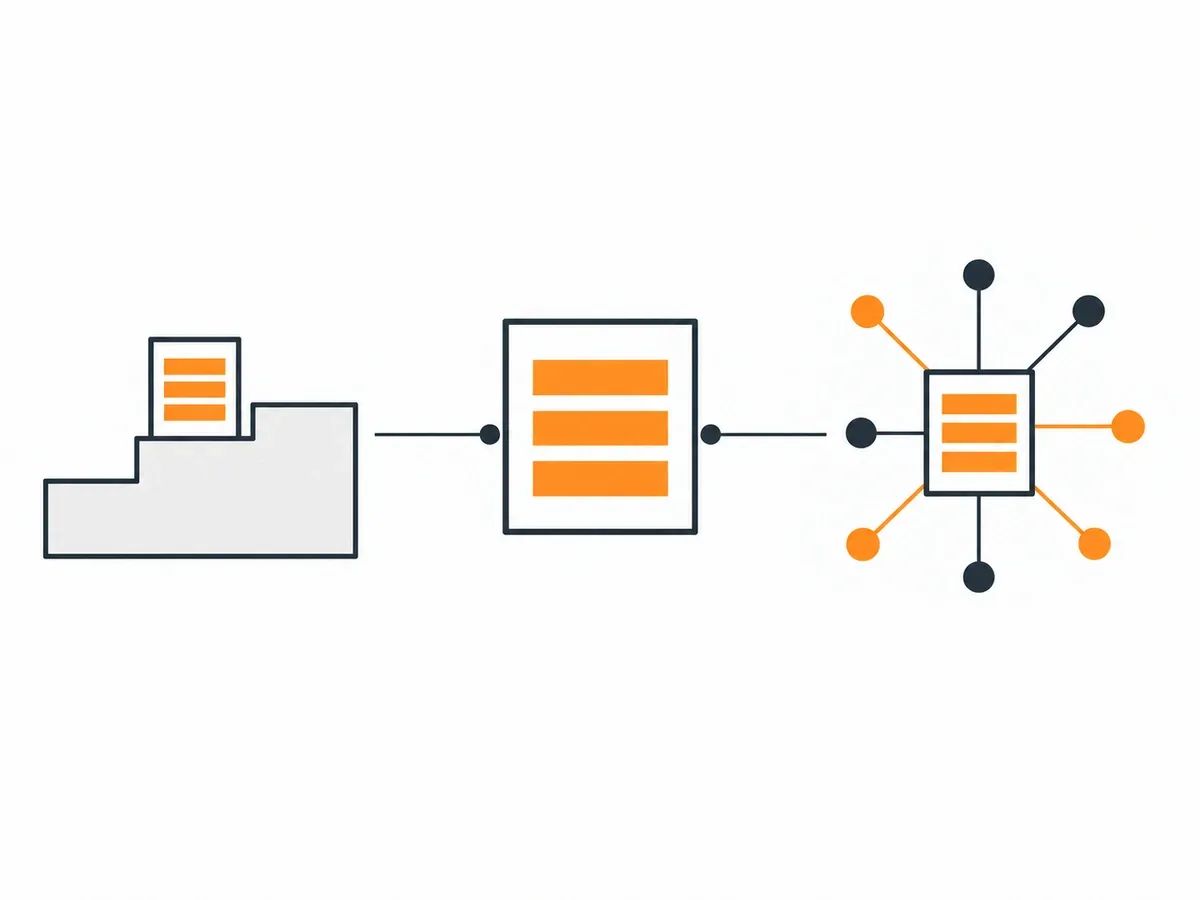
Domain Authority is a machine learning prediction built mainly from backlink data. Domain Rating is a links-only measure plotted on a logarithmic scale.
Moz Domain Authority
In Moz's words: "Moz calculates Domain Authority using a machine learning algorithm that evaluates multiple factors, primarily focusing on backlink data." The same page adds: "These factors include the number of linking root domains, the quality of those links, and other signals that correlate with rankings across thousands of search results."
The model behind DA changed in 2019. Moz's announcement of 5 February 2019 said: "Rather than relying on a complex linear model, we’ve made the switch to a neural network." The rollout of the new Domain Authority was planned for 5 March 2019.
On the scale, Moz's page says: "It explains why it’s easier to grow your score from 20 to 30 than it is to grow it from 70 to 80."
A new website starts at a Domain Authority of 1. We have a fuller guide to Moz DA for readers who want the detail.
Ahrefs Domain Rating
Ahrefs Academy describes the score: "Domain Rating represents the overall strength of a website’s backlink profile and considers both the size and quality of the links pointing at a website. Like UR, DR is also plotted on a logarithmic scale from 0-100."
Three things feed a DR number: the unique referring domains that link to a site with a followed link, the DR of those linking domains, and how many other sites each of those domains links to. On that last point, Ahrefs' help page says: "The source domain splits its rating equally amongst the domains it links to. So: a DR-10 domain which links to three other domains can influence your DR more than a DR-80 domain which links to a million other domains."
DR counts followed links only. In Ahrefs' words: "In Ahrefs, DR ignores any backlinks or referring domains with the Nofollow attribute."
Ahrefs is also direct about what the metric leaves out. Its blog post on Domain Rating, dated 4 May 2022, says: "Please note that Ahrefs’ DR metric is purely link-based. We don’t take into account things such as the search traffic of a given website, the age of its domain, or the popularity of a parent brand." That sentence is why a DR figure always needs a separate traffic check beside it, a point we return to below.
Why the two tools show different numbers
The first reason the makers give is that their indexes differ. Ahrefs Academy says: "it’s perfectly normal for our backlinks and referring domains metrics to be different from other tools since we all crawl the web differently." Moz's page notes that its own index changes from crawl to crawl: "Updates to Moz’s web index may include more or fewer linking domains than previous crawls." Each crawler finds a slightly different set of links, so each tool scores a slightly different picture of the same site.
The second reason is that the measures differ. DA is a prediction built from several factors, with links at the centre. DR is built from links alone.
So a gap between DA and DR is the normal case. The useful question is what explains it on a given site.
Domain Rating vs URL Rating
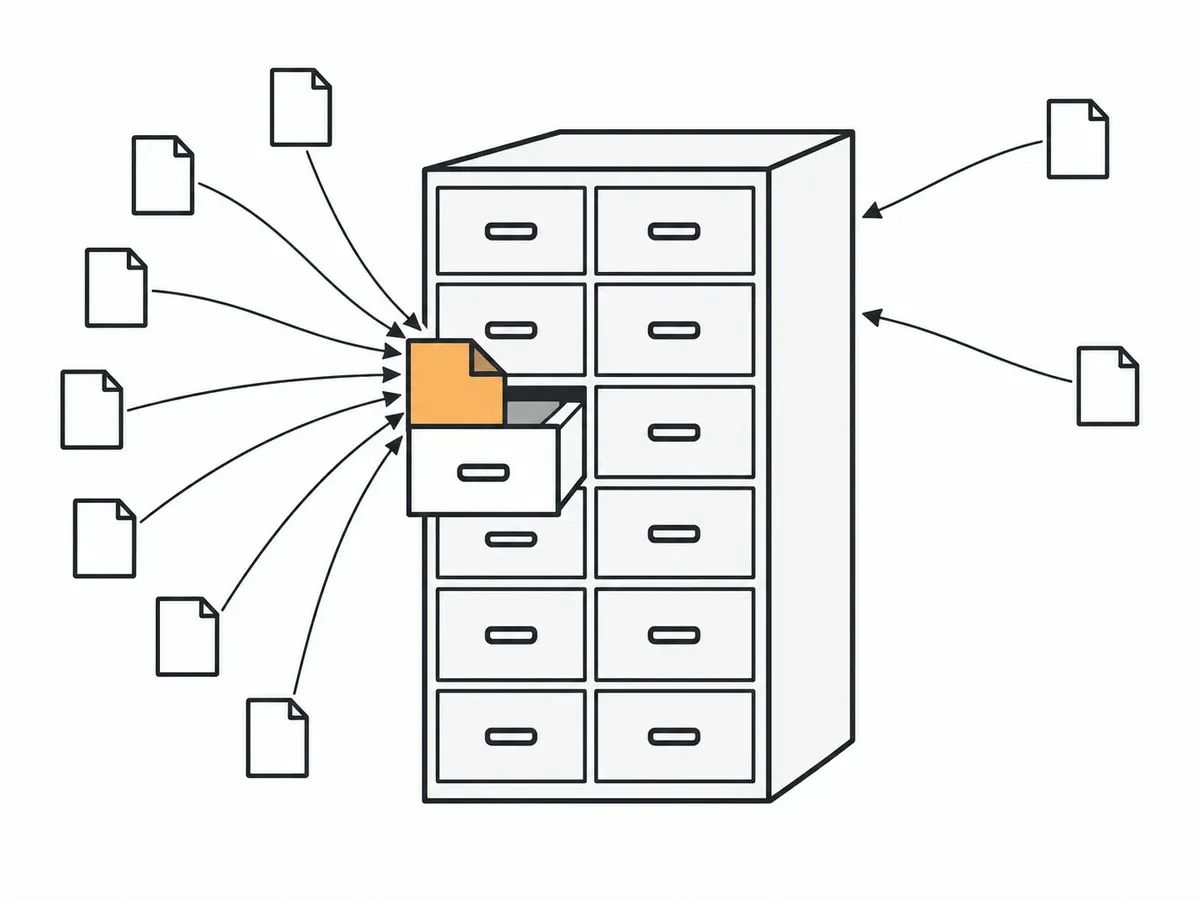
Domain Rating measures a whole domain. URL Rating (UR) measures a single page. Ahrefs' help page puts it in one line: "UR is a page-level metric, whereas DR is a domain-level metric." And on what UR shows: "URL Rating (UR) shows the strength of a page's link profile on a 100-point scale."
One point catches people out: "So if you put a website into Ahrefs’ Site Explorer and check its UR, the number you get will be for the homepage alone." The UR shown beside a domain in Site Explorer is not an average across the site. It is the score of the homepage.
The two scores are not measured on one scale: "While they are both backlinks-based metrics, UR compares pages to pages, whereas DR compares domains to domains." So a page can outscore its own domain: "Therefore, a page with many high-UR links (therefore creating a high UR page) can exist within a low-DR domain."
As a made-up example, imagine example.com is a small site with a DR of 15. One article on example.com earns strong links from several high-UR pages. That article's UR can sit well above 15 while the rest of the site stays weak. The page is strong; the domain is not.
Ahrefs also ranks every site in its database against the others: "Ahrefs Rank represents all websites in our database ordered by their raw DR values."
Why a DR shows 0 or "No Data"
Ahrefs' help pages give two reasons for a "No Data" result or a row of zeros: the check was run on a different version of the address, or the site is too new to have a link profile in the index.
Ahrefs' help page, dated 3 September 2026, gives the first thing to check: "make sure you check both www and non-www versions to see if there are any discrepancies." In Ahrefs' own example, one version of a site shows "No Data" for backlinks and referring domains in Site Explorer, while the non-www version of the same site has 21K backlinks and 798 referring domains. The links were there all along. The check had been run on the other version of the address.
Zeros can also appear on a project dashboard. Ahrefs' dashboard help page carries the note: "In some situations, you may come across a dashboard overview that shows N/A signs and zeros:" The same page explains: "This usually happens with relatively new websites."
On the Moz side, a new website starts at a Domain Authority of 1, so a brand new domain begins at the bottom of that scale.
What our checker data shows about the gap
In our July 2026 sample, the typical domain's two scores sat close together. Our free checker lets anyone look up both scores for a domain, and the checks people run give us a sample of how DA and DR compare. In July 2026 we took a sample from our DA/DR checker's database: 29,632 checks since the tool launched in February 2026, covering 15,357 unique domains, using the latest check for each domain.
- Mean DA was 27.9 and mean DR was 28.6.
- The median DR-minus-DA gap was -1.
- DR was higher than DA on 42.1% of domains.
- DR was at least 20 points higher than DA on 12.5% of domains.
- 2.1% of domains had a DR of 50 or more with a DA under 25.
For the typical domain in the sample, the two scores sit close together: the averages are less than a point apart and the median gap is a single point. The sample is the set of domains people chose to check in our tool, so it describes those domains and not the whole web.
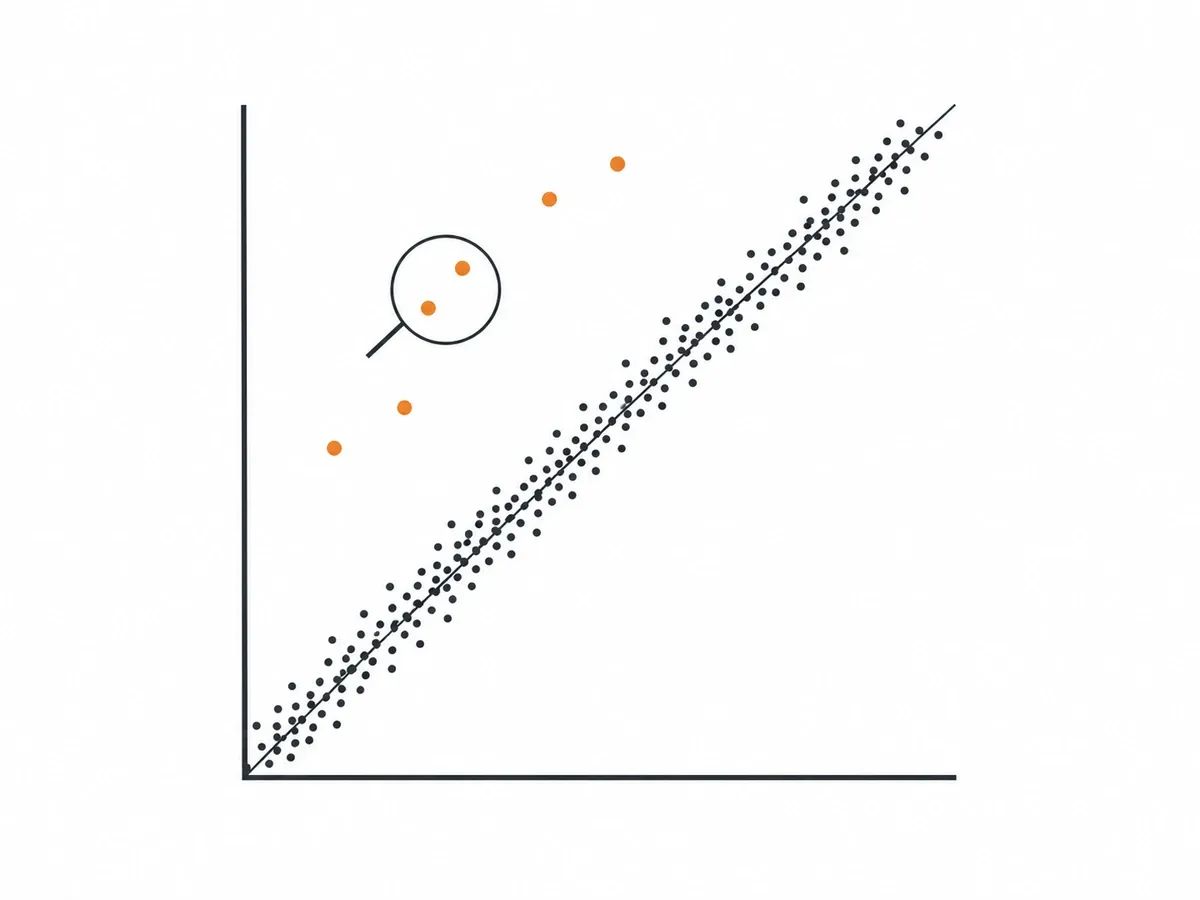
When a domain does show a large gap, the gap itself tells you the two tools are seeing different things. The next step is to look at the site's organic traffic and its referring domains. We cover DA to DR conversion on a separate page.
Other authority scores
DA and DR are not the only authority scores. Semrush, Majestic and Common Crawl each publish measures of their own.
Semrush's score is called Authority Score. Its knowledge base says: "Authority Score is our compound metric that grades the overall quality of a website or a webpage." Semrush also sets out how to read it: "Authority Score is best used for domain comparison, and not for determining good/bad on an absolute scale."
Majestic publishes a pair of scores. Its glossary says: "Trust Flow, a trademark of Majestic, is a score based on quality, on a scale between 0-100." And alongside it: "Citation Flow is a score between 0-100 which helps to measure the link equity or "power" the website or link carries."
Common Crawl, a non-profit web crawl archive, publishes a public web graph. Its blog post of 19 January 2026 says of Common Crawl's web graph: "The Web Graph dataset includes two key authority metrics computed across billions of links:" The two metrics are Harmonic Centrality and PageRank.
One dated comparison of several scores against traffic comes from Collaborator, a guest post marketplace. Its study, on a page dated 27 August 2026, says: "We analyzed more than 40,000 websites from the Collaborator catalog." The study measured how closely each score tracked estimated traffic. It found: "Moz's Domain Authority (DA) and Majestic's Trust Flow (TF) show weak correlations with traffic, at 0.238 and 0.297, respectively." It also found: "Semrush's Authority Score (AS) emerged as the strongest metric, with a correlation coefficient of 0.645." Its advice for anyone using any of these scores: "Search traffic should always be evaluated separately, regardless of which website authority metric you use."
Those figures describe one marketplace's own catalogue, and they measure correlation with estimated traffic only. They are a prompt to check traffic beside a score, not a verdict on any one metric.
When to use DA and when to use DR
Both scores earn their keep across four jobs: comparison, prospecting, monitoring and reporting.
Comparing yourself with competitors
Both makers frame their scores as tools for comparison. Moz's page says: "The best way to use DA is to compare your score to competitors in your industry."
Pick the sites that rank for the search terms you want, and compare your score against theirs. Keep to the same tool each time. A DA of 35 against a competitor's DR of 35 is not a like-for-like comparison, because the two numbers come from different indexes and different methods.
Choosing sites for links
Ahrefs' own suggestion for DR is: "Instead, consider DR as a great metric for selecting websites to build links from." Read that alongside what the metric leaves out. Ahrefs states that DR is purely link-based, so the traffic check has to happen separately, as covered in the calculation section above.
We cover the wider set of link building metrics, including traffic and referring domains, in a separate guide.
Monitoring a campaign
Ahrefs' dashboard help page gives the refresh rate: "Update frequency: every 12 hours." On the Moz side, Domain Authority changes as Moz's web index updates, as quoted in the calculation section above.
Either way, a score change is supporting evidence. Rankings and traffic are the result.
Reporting to a client
Report the score the client asked for, state which tool it comes from and keep to one tool across the report. DA and DR are not interchangeable, so a report that switches between them mid-way makes a trend impossible to read. If a client wants both, show both as separate lines with the tool named beside each.
How we use DA and DR
Our Guest Posts are tiered and priced by the minimum Moz DA of the placement site, in six tiers from DA10+ to DA60+. We measure each site with Moz Domain Authority and cross-check it against Ahrefs Domain Rating and live traffic. DA sets the tier and price; DR and live traffic tell us whether the number is earned.
Our Curated Links are tiered by the placement site's referring domains, and we choose host articles on relevance, referring domains, DA, organic traffic and overall site quality.
When we choose a publication, we look at indexed pages, organic traffic and its trend, Moz DA, Ahrefs DR and referring domains, weighed together. For a Guest Post, we set the tier and price from the site's DA, then read Ahrefs DR and live organic traffic beside it. The placement goes ahead when the traffic and its trend agree with the number, and a site whose traffic does not support its scores is turned away. A high DA figure on an empty site is still an empty site.
After a placement goes live, our quality assurance process checks that the page is live, that the link sits in the body copy, that the anchor and target URL match the order and that the page is indexable, before the URL is reported to the dashboard.
What both metrics leave out
The first gap is traffic. Ahrefs states that DR is purely link-based, and the Collaborator study quoted above advises evaluating search traffic separately whatever score you use. A domain-level score can describe a site's links. It cannot tell you whether anyone reads the site, so traffic has to be checked on its own.
The second gap is the page. DA and DR are domain-level scores, so neither one describes the single page a link sits on. A strong domain can hold weak pages, and a weaker domain can hold a strong one. Ahrefs' page-level score is URL Rating, covered in its own section above.
The scores are best used to sort a list. Once the list is sorted, open the site.
Frequently asked questions
Is DA better than DR?
Neither is better, because they answer different questions. DA predicts how likely a site is to rank compared to its competitors, while DR measures the strength of a site's backlink profile. We use DA to set the tier and price of a Guest Post, then cross-check the site against DR and live traffic.
Why is my DR higher than my DA?
The two tools crawl different link indexes and measure different things, so a gap between the two scores is normal. In our July 2026 sample of 15,357 unique domains, DR was higher than DA on 42.1% of them.
What is the difference between DR and UR?
DR is a domain-level score and UR is a page-level score. When you check a website in Ahrefs' Site Explorer, the UR you see is the score of the homepage alone, not an average across the site.
What is a good DA or DR score?
Both Moz and Ahrefs say their scores are relative, so there is no fixed number that counts as good. Compare your score with the sites that rank for the search terms you want, and use the same tool for every comparison.
How often do DA and DR update?
Ahrefs' dashboard updates Domain Rating every 12 hours. Moz says Domain Authority changes as its web index updates.
Should I use DA or DR for pricing links?
We tier and price Guest Posts on Moz DA, then cross-check each site against DR and live traffic before a placement goes ahead. Curated Links are tiered by the placement site's referring domains instead.
related Blog Posts



Join 7,000+ Clients Growing with Rhino Rank
Sign Up



Stay ahead of the SEO curve
Get the latest link building strategies, SEO tips and industry insights delivered straight to your inbox.