
 Back to all posts

Content marketing for link building is publishing something on your own site, such as a study, a dataset, a guide, a tool or an infographic, that other sites cite with a link, and then telling the people who might cite it that it exists. Content marketing link building has two halves: making the asset and making it known.
This page works through content marketing and link building together, in order. First, how many pages pick up a link at all, from three dated studies. Then what those studies counted by content format. After that, how to find a topic that already holds links. Then what journalists say they want in a pitch, with the sample sizes attached. A later section sets out the two routes to a link on a page: a content asset and a placement. There is an order of work for running the whole thing. We also look at what each tool reports. A short FAQ finishes the page. Why a link from another site matters at all is covered in our guide to how backlinks help SEO.
What content marketing for link building is
Content marketing for link building, also called link building content marketing or content-based link building, is the work of putting a citable asset on your own site and telling the people who cover that subject about it. The asset lives on your own site: a study, a dataset, a guide, a tool or an infographic, with its own URL. The link comes from another site's page, where a writer cites the asset as a source for their own readers. A citation here is ordinary: another site publishes a piece, refers to the asset for a figure, a definition or a method, and links so its readers can check the source.
The work has two halves: making the asset, and making it known to the writers and site owners who cite this kind of material. Publishing the page is the end of the first half, not the end of the work. The assets themselves, and how to build them, are covered in our guide to linkable assets, so we do not repeat those steps here.
How many pages get a link at all
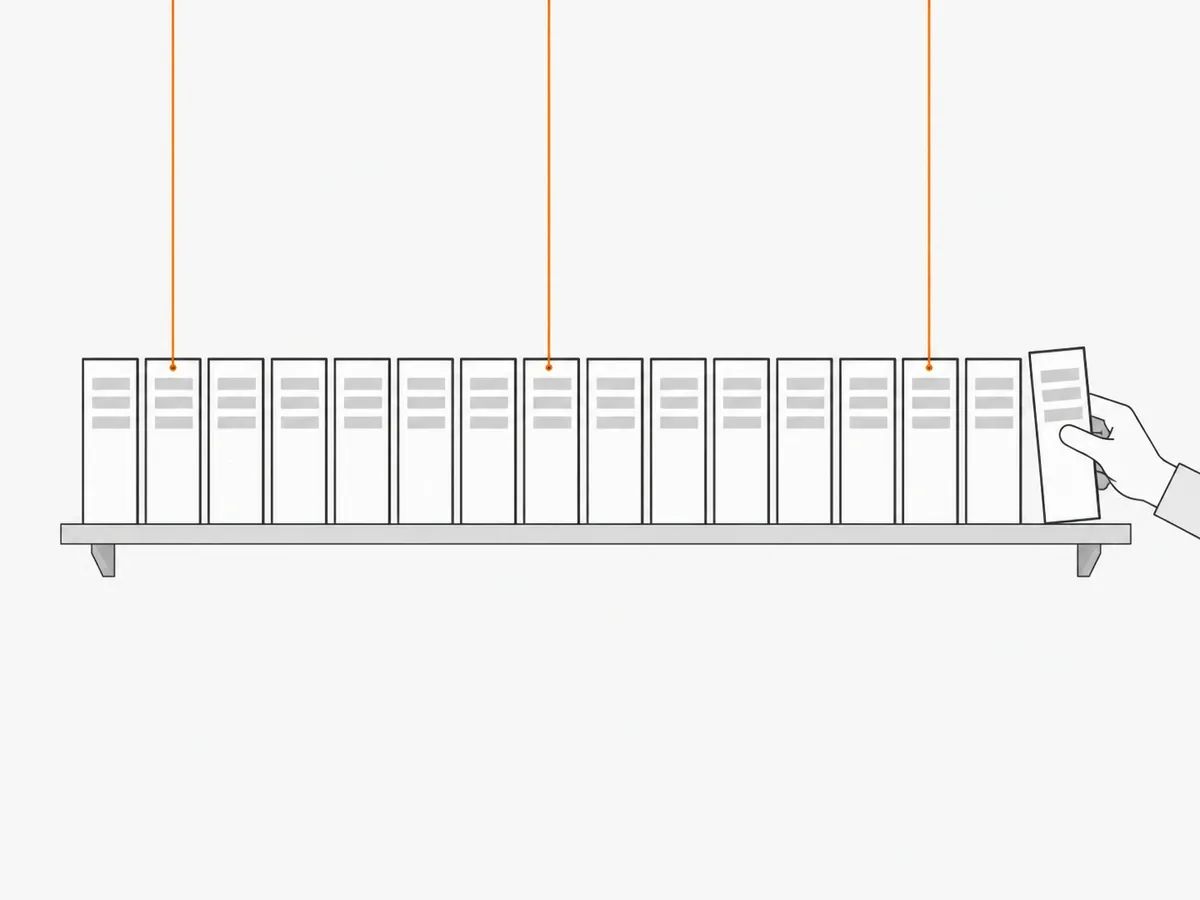
Three dated studies counted how many pages had no links. Each used its own sample and its own measure, so the three are kept separate here.
In 2020, Tim Soulo at Ahrefs published a study of the whole Ahrefs Content Explorer database, over one billion pages. It found that 66.31% of those pages had no backlink at all, and 26.29% had links from three websites or fewer. The measure there is referring domains, meaning unique websites linking to a page, and the sample is the pages in that one database in 2020.
Backlinko, working with BuzzSumo, released a study on 19 February 2019 covering 912 million articles shared socially between October 2017 and October 2018. It found: "In fact, 94% of all blog posts have zero external links." And the other way round: "Only 6% of the content in our sample had at least one external link." The measure there is external links on blog posts in BuzzSumo's database in that period.
Earlier still, on 8 September 2015, Steve Rayson published a study that BuzzSumo ran with Moz. In a random sample of 100,000 posts, it counted over 75% with zero external links.
Three samples, three dates and three measures, and we do not add them together or average them. In each one, the larger share of the pages counted had no link of the kind that study measured. So in all three samples, a page with even one such link was in the smaller group. The job of a content asset is to give another site a reason to cite it.
Which content formats pick up links: what the studies counted
In Backlinko and BuzzSumo's 2019 sample, why posts, what posts and infographics had the most referring domains per post on average. Each figure below stays tied to its own sample.
Backlinko and BuzzSumo's 2019 study, the same 912 million articles shared socially between October 2017 and October 2018, compared formats. It states: "We found that “Why Posts”, “What Posts” and infographics received 25.8% more links compared to videos and “How-to” posts." The study's own means of referring domains per post, across its six format categories, were:
- Why Post: 3.18
- What Post: 2.94
- Infographic: 2.83
- Video: 2.47
- How to Article: 2.27
- List Post: 2.10
Two things are worth holding on to. The formats are BuzzSumo's own categories, assigned across its database, not labels we chose. And the gaps are small: each format sits less than one referring domain per post from the next, and the widest gap, from why posts to list posts, is just over one. These figures describe what was counted in one sample from 2017 to 2018, not what any one asset will pick up.
Moz and BuzzSumo's 2015 study looked at shares and links together. Across 750,000 articles, it put the correlation between total shares and referring domain links at 0.021. A correlation that close to zero means shares and links did not move together across that sample. The study named two content types where shares and links did rise together: research-backed content and opinion-forming journalism. A share count is not a link count, and a post that travels well on social media is not, by that fact alone, picking up citations.
More recently, Orbit Media's 2026 survey of 1,042 content marketers, written up by Andy Crestodina, asked marketers about their own blogging. It reports that "fewer marketers now publish new research studies, despite the fact that it improves the likelihood of performance by 50%." And on outcomes: "14% report “strong results.”" Those figures are what the marketers surveyed said about their own results, and the 50% is Orbit's reading of those answers. They are not a count of links, and we do not read them as one.
How to find a topic that already picks up links
The direct way to choose a topic is to look at what already holds links on that subject. Two tools describe that kind of search in their own words.
Ahrefs Academy's link building training for Content Explorer instructs: "Search for a broad topic and filter for pages that get at least 400 referring domains." The Content Explorer product page describes the database behind it: "Find content ideas and link prospects in our database of 22 billion web pages." The 400 is the setting in Ahrefs' own training example, not a rule.
BuzzSumo describes its archive in similar terms: "Study shares, links, and trends over the last five years" and "Access our archive of 8bn articles worldwide". Both tools' pages were read on 4 October 2026.
The search itself runs in three plain steps. First, search the subject in one of these tools; in Content Explorer, that means the referring domains filter quoted above. Second, open the pages that already hold links from many sites and note what they are: a dataset, a definition, a tool, a chart. Whatever form the linked pages take on your subject is the form the citing sites have already responded to. Third, list the sites that linked to those pages. Those are the sites that cite this subject, and that list is where any later pitch begins.
Say the subject is email marketing. If the pages holding links from the most sites on that subject are benchmark reports full of dated numbers, then the citing sites on that subject link to numbers, and a writer planning an asset on email marketing knows what form the asset should take and who to tell about it. The same check works for any subject, and it happens before anything gets built.
Rebuilding a page that already holds links, and writing to the sites that link to it, is the skyscraper technique, which has its own guide on this site.
What journalists say they want in a pitch

Journalists say the most valuable parts of a pitch are relevance to their beat, access to relevant sources, original research or data, and high-resolution images. That list comes from Muck Rack's State of Journalism 2026, released 19 March 2026, and the release states its sample.
On the sample: "Muck Rack surveyed 1,044 journalists between January 30 and March 2, 2026, with 897 responses included in the final analysis after data quality checks." And on who answered: "Respondents were primarily based in the United States, with additional representation from the United Kingdom, Canada and India."
On what makes a pitch valuable, the release says: "Journalists say the most valuable elements of a pitch are:" and then lists four:
- Clear relevance to their beat
- Access to relevant sources
- Original research or data
- High-resolution images
The release also counts two things about pitches: "86% of journalists say at least some of their stories originate from PR pitches" and "88% immediately disregard pitches that miss their beat". Nearly nine in ten of the journalists surveyed set aside a pitch that misses their beat. The practical order follows from that: build the list of who covers the subject first, and write the email second. A pitch about original data sent to the wrong desk is still the wrong desk.
For a baseline on replies, Instantly's 2026 cold email benchmark, updated 12 January 2026 and covering platform-wide data from 1 January to 18 December 2025, reports: "The overall average reply rate is 3.43% with top-performers of users exceeding 10% reply rates (2-4x higher)". That figure covers every kind of cold email sent through one platform, not link outreach, so it is a reference point, not a target for a pitch.
Original research or data is one of the four elements journalists list, and an asset built on original research is the thing a pitch can offer. Answering journalists' own requests for sources, rather than pitching them cold, is a separate route with its own guide: HARO backlinks.
Two routes to a link: a content asset and a placement
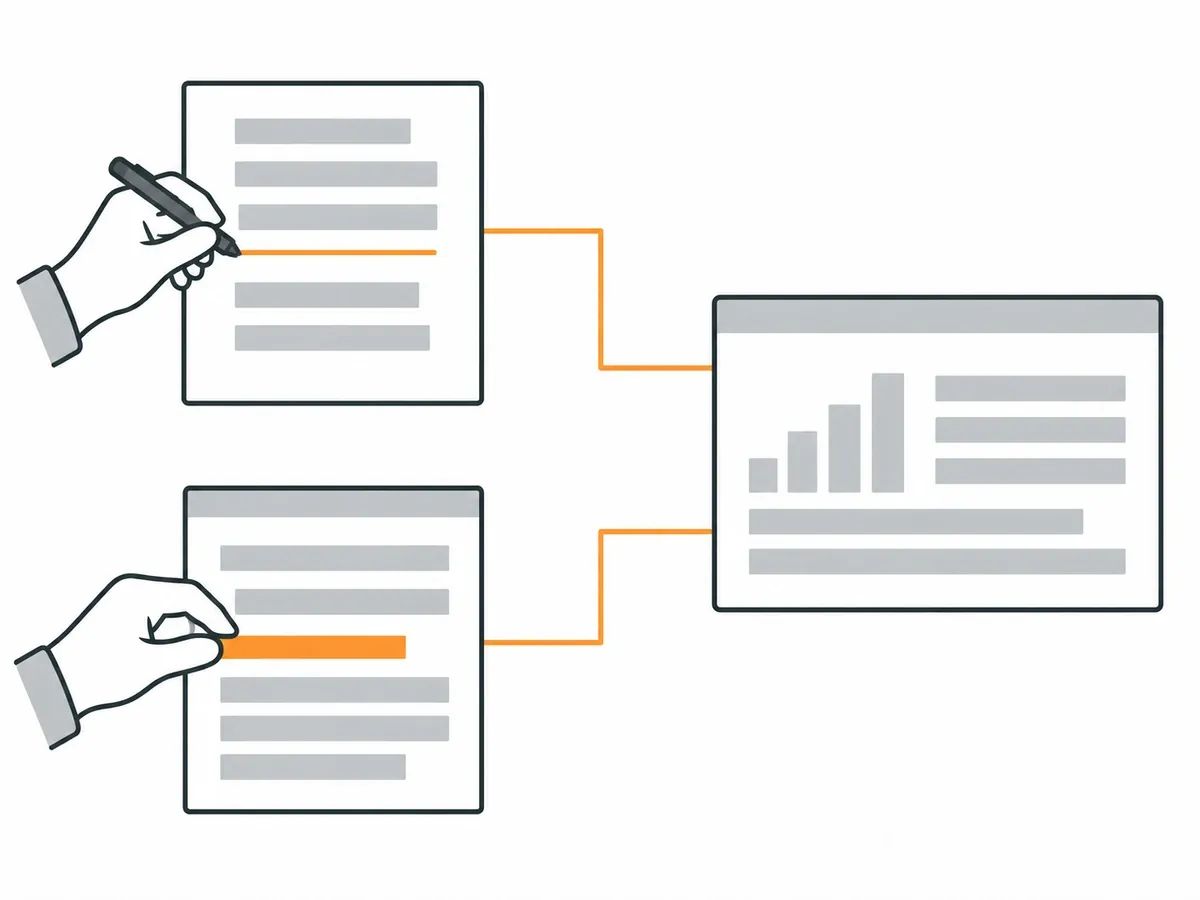
A page picks up a link in one of two ways, and a campaign can use both.
Route one is the content asset this page is about. Someone finds the asset and chooses to cite it. Which page links, with what anchor text, and when, is their decision. Google's link best practices page, updated 10 December 2025 and read on 4 October 2026, describes the visible part of that choice: anchor text, also called link text, "is the visible text of a link." On a citation, the citing writer picks those words, and there is no checkout where you supply them.
Route two is a placement, and placements are the work we do. A Rhino Rank Guest Post is a 750+ word article with one contextual dofollow link, written in-house by our UK team and placed by manual outreach on a site whose content fits the niche. A Rhino Rank Curated Link is a link placed into an article that is already published, so there is no article to write. On both, the buyer supplies the target URL and the anchor text. How the two differ is set out in our guide to Guest Posts and niche edits.
Before a placement goes out, we check the HTTP status code the target URL returns. After publication, we check that the article is live, the link sits in body copy and the anchor and target URL match the order. That is our post-publication check, and every delivered link carries 12-month replacement cover.
The two routes combine. A placement can point at the content asset itself, which puts a link on the page while the pitching is still going on. If you would rather hand the outreach over, our Managed Service comes with a dedicated account manager, competitor research, manual outreach and monthly white-label reporting, with no contract. What each route costs is set out in our link building cost guide.
How to run it: an order of work
Here is the whole process of link building with content marketing, step by step, in the order the sections above set out.
- Pick the page the links should point to, and check it returns a 200 status. A link aimed at a page that errors or redirects is effort spent on the wrong address.
- Find the topic with the search in the section above: what already holds links on this subject, and who linked to it.
- Choose the format from what already holds links on that subject. If the citing sites link to datasets, build a dataset. If they link to tools, build a tool.
- Build the asset with its data, method and date stated on the page, so a writer can cite it without having to email you to ask how the numbers were produced.
- List the journalists and site owners who cover the subject, and pitch each one on their beat. The Muck Rack figures above are the reason this list comes before any email.
- Record the referring domains the page holds before the first pitch goes out, and read the same report again afterwards. Without a before number, there is no after number.
The same six steps repeat for the next asset.
How to measure it: what each tool reports
The number to watch is referring domains to the asset's own URL. Each tool reports a slightly different slice of the picture, and each words its metrics differently, so here is what each one says. Each page below was read on 4 October 2026.
- Semrush Backlink Analytics defines its headline metric as "Referring domains: The total number of unique websites linking to the analyzed domain." and adds "Track new and lost links over time to understand your progress".
- Ahrefs' backlink checker "Shows the cumulative growth or decline in referring domains over time."
- BuzzStream, an outreach tool rather than a link index, says you can "Measure your performance with open rates, reply rates, placements, and team activity tracking."
- Majestic describes its Trust Flow metric in these words: "This metric represents the quality of backlinks to URLs and websites."
- Moz Link Explorer lists "Anchor text analysis" among its reports.
Two habits keep the numbers honest. Count referring domains to the asset's URL, not to the whole site, because the count you want is the citations of the asset itself. A report for the whole domain would hide the asset among every other page the site holds. And read replies and links as two separate numbers: a busy inbox is not the same thing as new referring domains. When a new citation appears, our free DA/DR checker returns the two scores for the site that linked. The process errors that cost links, measurement ones included, are in our guide to link building mistakes.
Frequently asked questions
What is content marketing for link building?
Content marketing for link building is publishing an asset on your own site that other sites cite with a link, and telling the people who cover the subject that it exists. The asset can be a study, a dataset, a guide, a tool or an infographic. The work has two halves: making the asset and making it known.
Which content formats get the most links?
In Backlinko and BuzzSumo's 2019 study of 912 million articles, why posts, what posts and infographics averaged 25.8% more links than videos and how-to posts. The means in that sample ran from 2.10 referring domains per post for list posts up to 3.18 for why posts. That is one sample of articles shared socially between October 2017 and October 2018, so it describes that sample, not a rule for any one asset.
How many pages get no backlinks at all?
In a 2020 study of its Content Explorer database, over one billion pages, Ahrefs found 66.31% had no referring domain. Backlinko and BuzzSumo counted 94% of blog posts with no external link in a 2019 study of 912 million articles. These are different samples with different measures, so the two figures sit side by side rather than combining.
What do journalists want in a pitch?
Muck Rack's 2026 survey of 1,044 journalists lists four elements of a valuable pitch: clear relevance to their beat, access to relevant sources, original research or data, and high-resolution images. In the same survey, 88% of journalists said they immediately disregard pitches that miss their beat. The list of who covers your subject comes before the email.
Can I use content marketing and link placements together?
Yes. A content asset and a placement are two routes to a link on the same page, and a campaign can use both. A Guest Post or Curated Link can point at the asset while it is being pitched.
related Blog Posts



Join 7,000+ Clients Growing with Rhino Rank
Sign Up

Stay ahead of the SEO curve
Get the latest link building strategies, SEO tips and industry insights delivered straight to your inbox.