
 Back to all posts


The skyscraper technique is a link building method in three steps: find a page on your topic that many sites already link to, publish a better page on the same topic, then email the sites that link to the old page and ask them to link to yours. The deciding moment happens on someone else's site, which is why the skyscraper technique sits inside off-page SEO, even though the page you publish is your own.
This page covers the method in order: where it comes from, how to run each step, what the outreach has returned in the results people have published, what a campaign costs in time, what moved the reply rate in large email samples, and what to do when a site owner does not reply. Every result below is printed with its own year and its own sample, because each test counted something slightly different. If you are weighing the method up for your own site, read the sections on time and reply rates before you commission anything.
What the skyscraper technique is
The skyscraper technique is Brian Dean's name for a way of earning links, published on his site Backlinko. The premise is that a site already linking to a page on your topic has shown it links out on that topic, so a stronger page on the same topic gives that site a reason to link to you. The appeal of the method is that half the prospecting is already done: the old page has gathered the list of sites that link out on your topic.
Dean's page sets the method out in three steps: "Step 1: Find link-worthy content", "Step 2: Make something even better", "Step 3: Reach out to the right people".

His own reported result covers one article on his own site. On the page as last updated on 20 June 2024, he writes: "Out of 160 emails I landed 17 links: an 11% success rate." On traffic, he writes: "organic search traffic to my entire site – not just that post – doubled in just 14 days:". These are his figures for his own site, from one article and one round of emails, and the 160 prospects were what remained after he cleaned up a longer list.
What marks the third step out from ordinary cold outreach is who receives the email. In Dean's words: "Instead of sending outreach emails to random people, you’re reaching out to site owners that have already linked out to similar content." Every prospect has linked to a page like yours before. You are not asking a stranger to take a chance on you. You are asking a site owner to update a link they have already given.
How to run the skyscraper technique, step by step
You run the skyscraper technique in three stages: prospecting, publishing and outreach. Each stage has one job, and the sections below take them in turn.
Step 1: find a page that already earns links
Start with a page on your topic that many sites link to. The measure that matters is referring domains: the count of different sites linking to that page. A backlink tool shows who those sites are, and Ahrefs describes its Site Explorer this way: "See which websites link to competitors and gauge the quality of their backlinks." We have a separate walk-through on using Ahrefs for link building, and a backlink gap analysis produces the same kind of list across several competing pages at once.
Say you run a payroll software site, and a competing guide to payroll deadlines has links from a long list of blogs, news sites and accountancy firms. That guide is your target. The sites linking to it are your raw prospect list.
Not every site on the raw list is worth an email. The WPMU DEV team wrote up twelve skyscraper campaigns on 27 April 2022, and their account shows how hard they pruned: "We targeted 71 competitive posts across all campaigns which had a combined 3,657 do-follow backlinks. However, only 1,108 (30.3%) warranted reaching out." Fewer than a third made their outreach list. Prune yours the same way: the sites worth emailing are the ones with a real readership and a page where your link would sit naturally.
Step 2: publish a better page
The second step of the skyscraper technique is to publish a page that beats the one you are targeting. Dean's advice on the Backlinko page is: "I recommend that you beat the existing content on every level: length, design, current information etc." The same page lists four ways to do that: make it longer, more up to date, better designed and more thorough.
What kind of page earns links is worth checking before you commission anything. One dated study comes from Campfire Labs, published on 10 June 2026. The team describes its sample this way: "We pulled live backlink data from Ahrefs across eight well-known (and randomly selected) B2B SaaS domains—Ahrefs, Ramp, Brex, Carta, Lattice, Gong, Klaviyo, Salesloft—and classified over 70 of their most-linked editorial pages into two buckets:". The two buckets were data-driven content and standard content.
One result from the Campfire Labs study: "In the mid-authority band (domains under DR 82, which describes the majority of B2B SaaS company sites) standard content earned more referring domains per month than data-driven content: a median of 9.5 versus 4.5." The authors attach their own caveat: "This is observational, correlational research across a small sample". On that small sample, among mid-authority sites, standard content such as how-to guides earned links from more sites per month than data studies did, though the data studies drew their links from sites with a higher domain rating.
The practical reading for the skyscraper technique: build the page you would cite if you were writing the linking article. The site owner you email in step 3 has to believe the swap improves their page, because they are the one making the edit.
Step 3: email the sites that link to the old page
The last step of the skyscraper technique is the outreach. For each site on the pruned list, find the person who looks after the page, name the page of theirs that links to the older piece, and show them yours. Ask once, plainly, and follow up if you hear nothing. How many follow-ups are reasonable, and what reply rates to expect, comes from the published results further down this page.
What the outreach returns: the published results
These are single-site tests published by the people who ran them: each counts something slightly different, so read each row on its own.
Who | When | What was contacted | Links won, as printed |
|---|---|---|---|
Brian Dean, Backlinko | Article published 18 April 2013 | 160 emails | 17 links, "an 11% success rate" |
Olga Mykhoparkina, Chanty | 14 November 2017 | 230 emails | 0 |
Maros Kortis, Mangools | 1 August 2018 | 28 emails | 1 |
David Miles | 24 January 2020 | Around 3,200 people, for thirteen articles | 44 |
WPMU DEV | 27 April 2022 | 1,108 sites, across 12 campaigns | 72, "Success Rate – 6.50%" |
Published results of skyscraper outreach, each row with its own sample and year.
The denominators differ: emails sent in three rows, people emailed for David Miles and sites contacted for WPMU DEV.
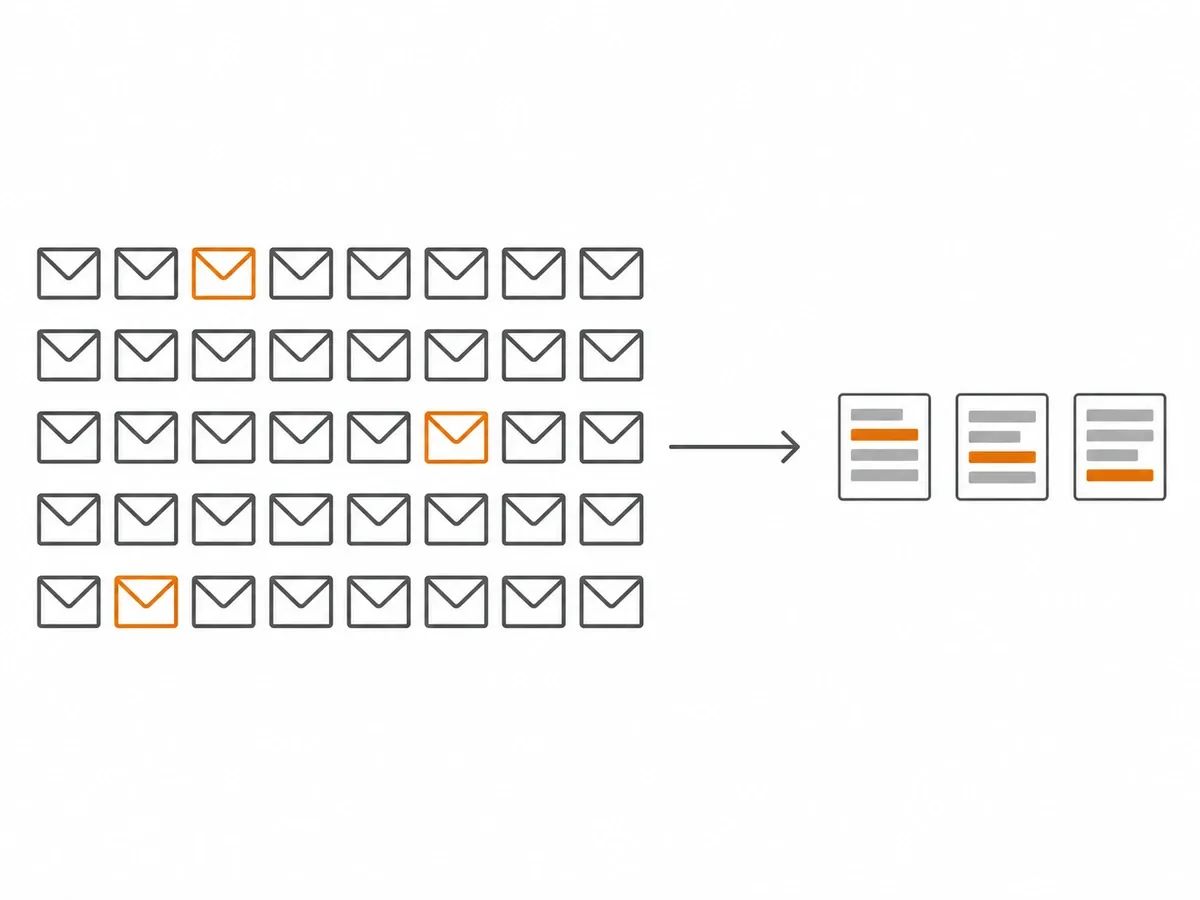
The fullest account comes from WPMU DEV, written up by Martin Aranovitch. The team went in with a target: "So, we set out with an expectation of achieving a 5% success rate, which is to say that we aimed for 5% of contacted sites to link to our skyscraper articles." Across the twelve campaigns, the results as printed were "Campaigns – 12", "Sites Contacted – 1,108", "New Backlinks – 72" and "Success Rate – 6.50%".
David Miles, who teaches UK mortgage brokers and financial advisers to run their own Google Ads campaigns, tried the high-volume "shotgun" variant of the skyscraper technique on a site that was about nine months old. In his write-up, dated 24 January 2020, he reports: "In total, I sent emails to around 3,200 people asking for links to thirteen different articles on my site." The return: "In total, this project got me 44 new inbound links to my site spread across those thirteen pages."
A third account comes from Olga Mykhoparkina, CMO at Chanty, writing in Search Engine Journal on 14 November 2017: "Having sent 230 emails, we’ve expected to see the same 11 percent success rate as it was claimed initially in the Skyscraper technique." Her result line: "Backlinks: 0. Zero. None. Nada."
The five tests above are single sites and single companies. For a wider baseline, two large studies cover outreach email in general, not only skyscraper outreach. Hunter's State of Email Outreach report describes its sample: "This report is based on 31 million emails sent by Hunter users in 2025, and surveys to better understand how professional cold email senders approach the process and how recipients react when they see cold emails in their inboxes." Its headline figure: "The average cold email sequence reply rate is 4.5%—for every 1000 recipients that received a cold email in 2025, only 45 replied."
An older baseline comes from Backlinko's study with Pitchbox of 12 million outreach emails, on a page last updated 16 April 2019: "Only 8.5% of outreach emails receive a response."
A reply is not a link, and these two baselines count replies.
What a skyscraper campaign costs in time
WPMU DEV's write-up puts the cost of a skyscraper campaign at weeks of writing per article, plus a working day or more of outreach per article, and numbers both halves. On the writing: "each skyscraper required on average 2-3 weeks to write (we normally take 2-4 days to write a blog post or tutorial.)" On the outreach: "Meanwhile, Alec spent on average 8-10 hours per skyscraper running the outreach campaigns and tracking results."
Those are WPMU DEV's hours from its campaigns, and your own will depend on the topic and the list. What the account gives you is the shape of the budget. The planning lesson we take from it is to budget the outreach hours before commissioning the page. A campaign that is only budgeted for the writing is half budgeted, and a page that goes live with no outreach plan is where the skyscraper campaign stops.
What moved the reply rate
Each finding below comes with its source and its year.
List size. Hunter's State of Email Outreach report, based on emails sent in 2025, found that smaller, targeted sequences did better: "Sequences with 21–50 recipients outperform by +158% compared to 500+ recipients (6.2% vs 2.4%)." A smaller list is also the kind a sender can personalise properly, which is the next finding.
Follow-ups and personalisation. The same Hunter report measured both: "Using three messages instead of one increases total replies by +106% (6.8% vs 3.3%)." And on personalisation: "Emails with two custom attributes see a +56% higher reply rate than non-personalized emails (5.6% vs 3.6%)."
When the links arrived. WPMU DEV's 2022 write-up shows the timing across its twelve campaigns: "58% of the contacted sites that provided us with a backlink did so after the initial email, 14% did so after a 3-day follow-up email, 15% after a 7-day follow-up, 13% after a final 15-day follow-up." Some owners never replied at all: "19 (26%) of the contacted sites that provided us with a backlink didn’t respond by email or follow-up in any way." A link can land without a reply, which is worth remembering when a campaign is judged by its inbox.
Where to stop. David Miles, looking back on his 2020 shotgun campaign: "With hindsight, it would probably have been better to send no more than three follow-ups because I don’t think I got any additional links due to sending the fourth or fifth ones."
Which pages drew links. Miles also noted which of his pages attracted links: "Interestingly, some of my thirteen articles attracted more links than others and it appeared that the ones people were most keen to link to were the ones which contained real-life case studies or which included video demonstrations." That is his observation across thirteen pages, not a measured effect.
Links that arrive without outreach. Of its skyscraper articles' total backlinks, WPMU DEV says: "on average over 90% of total backlinks came from organic SEO." On average across those articles, far more of the links came without outreach than through it.
These are findings inside those samples, from those years: what the senders counted or noticed, not promises for the next campaign.
When the site owner does not reply: the placed link
Every result above turns on one moment: a site owner agreeing to edit a page that is already live. That is the step the whole skyscraper technique depends on, and it is the step the sender cannot control. The published accounts show how often that moment comes: 72 links from 1,108 sites contacted in WPMU DEV's 2022 campaigns, 44 links from around 3,200 people in David Miles's 2020 test, none from 230 emails in Chanty's 2017 test.
We place links, so we see that moment from the other side. A Rhino Rank Curated Link is a link placed in an existing article, on a publication chosen for relevance, referring domains, DA, organic traffic and overall site quality. With links placed in existing articles, the edit to the live page is part of the order, so that step is not an open question. The order specifies the anchor text and the target URL, and our checks run against both.
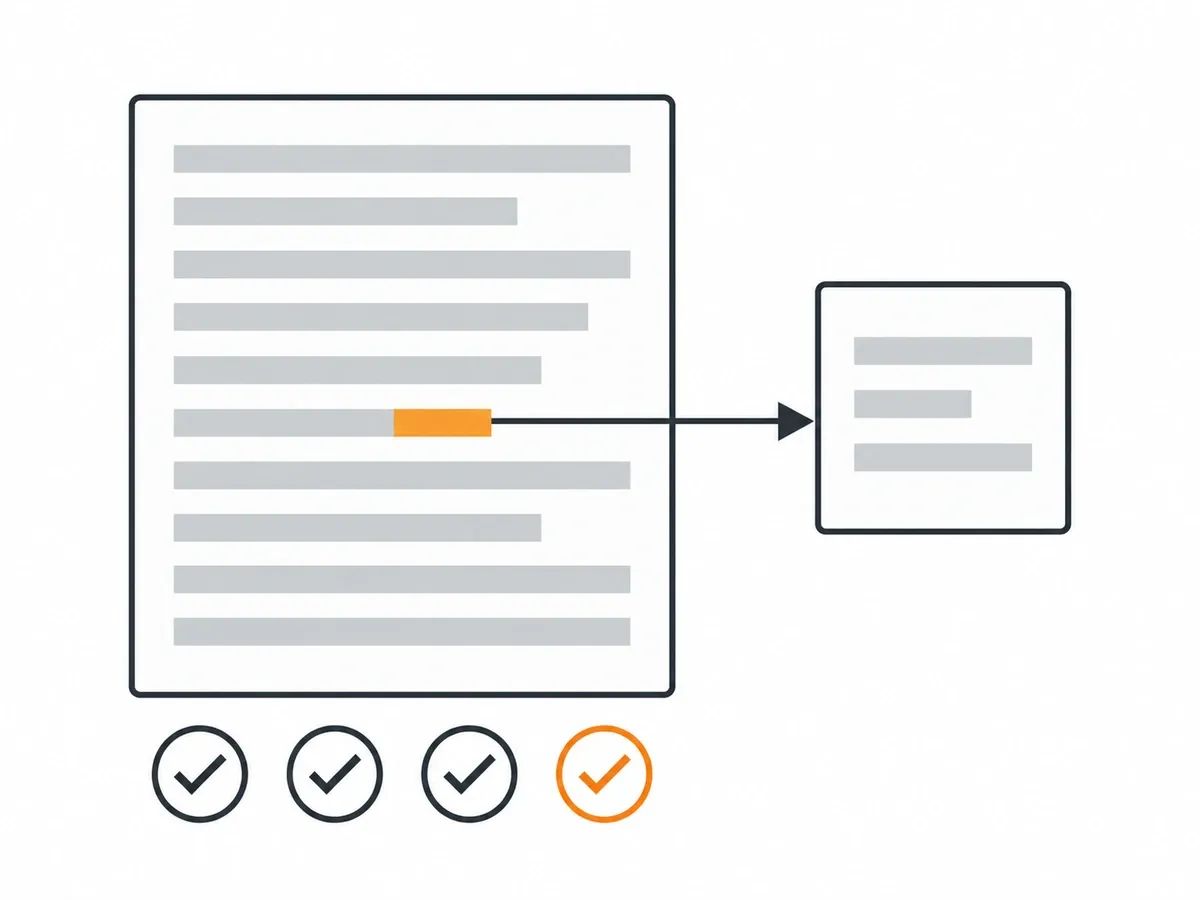
Those checks sit around the placement. Before a placement goes out, we check the HTTP status code the target URL returns. After publication, we check the page is live, the link is in the body copy, the anchor and target URL match the order and the page is indexable, and only then is the URL reported to the dashboard. That quality assurance process has its own page, and a delivered link carries 12-month replacement cover: if the link is removed or its page is taken down, we replace it like for like. Curated Links start at $60 per link.
Both routes aim at the same thing: a followed link from a relevant, indexed page that real people read, which remains one of the strongest ranking levers a site has. The two routes sit side by side, and many sites use both: outreach for the pages that can earn links, placements where they cannot wait on a reply.
Other ways to earn links from the same list
The list of sites linking to an older page has more than one use. When the old page is gone, the same list is the starting point for broken link building, where you offer your page as the replacement for a link that points nowhere. For other ways to earn a link, from publishing something worth citing to claiming unlinked mentions, the Rhino Rank guide to editorial links takes them in turn.
Frequently asked questions
What is the skyscraper technique in SEO?
The skyscraper technique is a link building method in three steps: find a page on your topic that many sites already link to, publish a better page on the same topic, then email the sites that link to the old page and ask them to link to yours. Brian Dean named the method on his site Backlinko, and the aim is for the better page to earn the links the older page already has.
Does the skyscraper technique still work?
The dated results published by people who ran the skyscraper technique vary widely. WPMU DEV reported 72 links from 1,108 sites contacted in 2022, David Miles reported 44 links from around 3,200 people emailed in 2020, Chanty's CMO reported no links from 230 emails in 2017, and Brian Dean reported 17 links from 160 emails for an article he published in 2013. Each test counted something slightly different, so the results stand on their own rather than averaging out to one rate.
What is a good success rate for skyscraper outreach?
WPMU DEV aimed for 5% of contacted sites to link back and printed a 6.50% success rate across its twelve skyscraper campaigns in 2022. For context, Hunter puts the average reply rate for cold email sequences sent in 2025 at 4.5%, meaning 45 of every 1,000 recipients replied, and that figure counts replies, not links.
How long does a skyscraper campaign take?
In WPMU DEV's 2022 account, each skyscraper article took 2-3 weeks to write, against a normal 2-4 days for a blog post, plus 8-10 hours of outreach and tracking per article. Add the prospecting time on top and a single article is a multi-week project, so plan the outreach time before the writing starts.
What tools do you need for the skyscraper technique?
The skyscraper technique needs two tools: a backlink tool to find the pages that link to the page you are targeting, and an email tool to send and track the outreach. Ahrefs covers the first, and Hunter covers the second.
related Blog Posts



Join 7,000+ Clients Growing with Rhino Rank
Sign Up


Stay ahead of the SEO curve
Get the latest link building strategies, SEO tips and industry insights delivered straight to your inbox.