
 Back to all posts


This is our monthly report of the cross-platform AI figures: how many people use AI worldwide and by country, how many users each platform has, market share measured three ways, business adoption, revenue and spending, agents, and AI next to search. Every figure is printed as its source states it, with the source, the date and the sample or method beside it. Figures we could not trace to a source we could open are named in the method section and left out of the tables. Company statements, measurement-firm estimates and figures the press reported from unnamed people are kept apart, and each table row says which one it is.
- Meta's capital expenditures were $34.91 billion in Q3 2026 (Meta Q3 2026 results press release).
- OpenAI put ChatGPT at "our collective 1.2B weekly users" (OpenAI, DevDay 2026 Recap, 29 September 2026).
- 55.9% of US businesses on Ramp paid for AI in September 2026 (Ramp AI Index).
- ChatGPT took 56.4%, Gemini 25.0% and Claude 9.6% of generative AI website traffic in September 2026 (Similarweb).
- ChatGPT sent 80.47% of the AI chatbot referrals to websites that Statcounter recorded in September 2026 (Statcounter Global Stats).
- 21% of UK adults used an AI app or service for news in the past month, with ChatGPT the most used at 13% (Ofcom, 15 September 2026).
- AI training made up 52% of crawler requests by June 2026, by the crawlers' stated purpose, up from 22% in spring 2025 (Cloudflare).
- 18.8% of the working-age population worldwide used generative AI in June 2026 (Microsoft AI Economy Institute).
- 40% of respondents at organisations with more than $1 billion in revenue report scaling AI agents, up from 27% a year earlier (McKinsey, The State of AI, survey 4 May to 8 June 2026).
- AI Overviews has over 2.5 billion monthly active users (Google, Sundar Pichai's I/O keynote, 19 May 2026).
We publish a full report for each platform: ChatGPT statistics: users, share and revenue, Google Gemini statistics, Claude AI statistics from Anthropic, Perplexity AI statistics, Grok AI statistics from SpaceXAI and Meta Muse statistics. Each one goes deeper on that platform's users, share and money figures.
How many people use AI
Microsoft puts generative AI use at 18.8% of the working-age population worldwide, Pew Research Center finds about half of US adults ever use AI chatbots, and Ofcom finds 54% of UK adults use AI tools. Each counts something different: Microsoft's figure comes from its own telemetry, Pew asked whether adults ever use chatbots, and Ofcom asked people whether they use AI tools.
Worldwide and by country
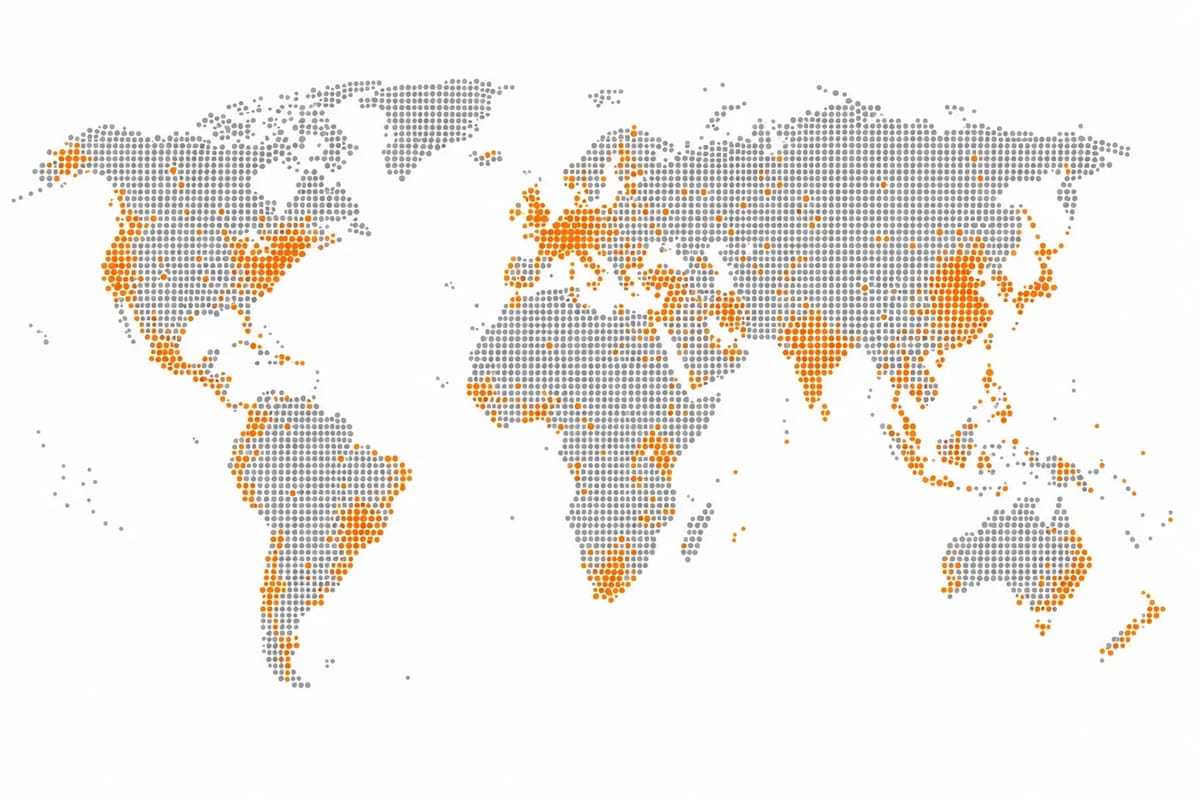
Worldwide, 18.8% of working-age people used a generative AI product in June 2026, with the Global North at 28.8% against 16.2% in the Global South. Of the seven economies we picked from Microsoft's dataset, the United Arab Emirates leads at 73.3% and the United Kingdom sits at 43.7%. Microsoft's measure is built from its own telemetry of people aged 15 to 64 who used a generative AI product, so it counts recorded use rather than survey answers. Microsoft says its next report will widen the measure to cover newer tools, and it expects that change to lift the figures for almost all economies.
The table below gives Microsoft's figures for seven economies across four periods.
Date | Value | Source |
|---|---|---|
H1 2025 | United Arab Emirates 59.4%, Singapore 58.6%, United Kingdom 36.4%, South Korea 25.9%, United States 26.3%, India 14.2%, China 15.4% | Microsoft AI Diffusion dataset (GitHub) |
H2 2025 | United Arab Emirates 64.0%, Singapore 60.9%, United Kingdom 38.9%, South Korea 30.7%, United States 28.3%, India 15.7%, China 16.3% | Microsoft AI Diffusion dataset (GitHub) |
Q1 2026 | United Arab Emirates 70.1%, Singapore 63.4%, United Kingdom 42.2%, South Korea 37.1%, United States 31.3%, India 17.6%, China 16.4% | Microsoft AI Diffusion dataset (GitHub) |
Q2 2026 | United Arab Emirates 73.3%, Singapore 64.3%, United Kingdom 43.7%, South Korea 40.6%, United States 33.0%, India 18.5%, China 17.5% | Microsoft AI Diffusion dataset (GitHub) |
The US and the UK
In the US, 49% of adults say they ever use AI chatbots, against 33% in 2024, though the 2024 question was worded differently and asked only of people who had heard of chatbots. About a quarter of Americans use chatbots daily, and use falls with age: 66% of 18 to 29 year olds against 23% of over-65s. Pew surveyed 5,119 US adults in February 2026. In the UK, 54% of adults say they use AI tools, against 31% the year before, and Ofcom itself says "year-on-year comparisons should be treated with caution." Use is highest among younger adults, at 79% of 16 to 24 year olds, and 75% of online UK adults read AI-generated search summaries at least sometimes. Ofcom's survey covered 7,533 UK adults aged 16 and over.
AI for news
One in ten people use AI chatbots for news each week, up from 7% a year earlier, in the Reuters Institute's Digital News Report. The UK is the lowest of any market in that survey at 4%, and 16% of under-35s use chatbots for news. Only 1% say AI is their main source of news. In the Reuters Institute's news survey, 4% of respondents always or often click through from AI to news sources, against 19% from search. Across 45 markets, 42% of people who use chatbots for news ask follow-up questions.
The table below lists each usage figure with its source, its sample or method, and the day we checked it.
Figure | Source and date | Sample or method | Checked |
|---|---|---|---|
18.8% of the working-age population worldwide used generative AI | Microsoft AI Economy Institute, Global AI Diffusion report, figure June 2026 | Microsoft telemetry; people aged 15-64 who used a generative AI product | 31 October 2026 |
Global North 28.8%, up from 27.5% in Q1 2026; Global South 16.2% | Microsoft AI Economy Institute, Q2 2026 | Same telemetry measure | 31 October 2026 |
49% of US adults say they ever use AI chatbots | Pew Research Center, fieldwork 17-23 February 2026 | Survey of 5,119 US adults | 31 October 2026 |
33% of US adults in 2024 against 49% in 2026 | Pew Research Center, 2026 | The 2024 question was asked only of adults who had heard of chatbots | 31 October 2026 |
About a quarter of Americans use chatbots daily: 12% several times a day, 4% almost constantly | Pew Research Center, February 2026 | Survey of 5,119 US adults | 31 October 2026 |
66% of US adults aged 18-29 and 23% of adults aged 65+ use chatbots | Pew Research Center, February 2026 | Survey of 5,119 US adults | 31 October 2026 |
54% of UK adults use AI tools, against 31% the year before | Ofcom, Adults' Media Use and Attitudes 2026 | Survey of 7,533 UK adults aged 16+; Ofcom says "year-on-year comparisons should be treated with caution." | 31 October 2026 |
79% of UK 16-24s and 74% of 25-34s use AI tools | Ofcom, 2026 | Same survey | 31 October 2026 |
75% of online UK adults read AI-generated search summaries at least sometimes | Ofcom, 2026 | Same survey | 31 October 2026 |
10% of people use AI chatbots for news each week, up from 7% | Reuters Institute, Digital News Report 2026 | News survey across 48 markets | 31 October 2026 |
UK the lowest of any market in the survey at 4% | Reuters Institute, 2026 | Same survey | 31 October 2026 |
16% of under-35s use AI chatbots for news | Reuters Institute, 2026 | Same survey | 31 October 2026 |
Only 1% say AI is their main source of news | Reuters Institute, June 2026 | Same survey | 31 October 2026 |
42% of chatbot-for-news users ask follow-up questions | Reuters Institute, June 2026 | Across 45 markets | 31 October 2026 |
How many users each AI platform has
OpenAI, Alphabet and Sensor Tower count in different units, so the table prints each unit. OpenAI counts 1.2 billion weekly users for ChatGPT; Alphabet says the Gemini app has reached "one billion users" without stating a period; Sensor Tower, a measurement firm, counts monthly users and puts ChatGPT over 1.1 billion, Gemini at 662 million and Claude at 245 million.

The table below gives the user figures for each platform, each with its unit.
Figure | Source and date | Sample or method | Checked |
|---|---|---|---|
ChatGPT: 1.2 billion weekly users | OpenAI, DevDay 2026 Recap, 29 September 2026 | Company's own count; weekly users | 31 October 2026 |
ChatGPT: over 1.1 billion monthly users | Sensor Tower (measurement firm), via TechCrunch, 16 June 2026 | Monthly users | 31 October 2026 |
Gemini app: "one billion users", Alphabet's wording, no period stated | Alphabet Q3 2026 earnings release (SEC filing), 28 October 2026 | Company's own figure; period not given | 31 October 2026 |
Gemini app: 950 million monthly active users, daily active users tripling in the last year | Google, Q2 2026 earnings call remarks, 22 July 2026 | Company's own figure | 31 October 2026 |
Gemini: 662 million monthly users | Sensor Tower (measurement firm), via TechCrunch, 16 June 2026 | Monthly users | 31 October 2026 |
Claude: 245 million monthly users | Sensor Tower (measurement firm), via TechCrunch, 16 June 2026 | Monthly users | 31 October 2026 |
Anthropic: more than 11,900 customers with $100,000 or more of revenue on a TTM basis; no consumer user figure given | Anthropic Form S-1 (SEC filing), 26 October 2026 | Company's own filing | 31 October 2026 |
Claude Code: weekly active users doubled since 1 January 2026, no absolute number given | Anthropic, Series G funding post, 12 February 2026 | Company's own statement | 31 October 2026 |
Perplexity app: monthly active users grew from 26.2 million in August 2025 to 37.9 million in February 2026 | Similarweb numbers (measurement firm), via Fast Company, 3 September 2026 | iOS and Android app users | 31 October 2026 |
Perplexity: 780 million queries in May 2025 | CEO Aravind Srinivas onstage, via TechCrunch, 5 June 2025 | Company's own figure | 31 October 2026 |
Grok features: approximately 117 million monthly active users at 31 March 2026, up from 89 million at 31 December 2025 | SpaceX final prospectus (SEC filing), June 2026 | Company's own filing; users of Grok's AI features | 31 October 2026 |
Grok Bot: 800,000 paid weekly users in early October 2026 | SpaceX Q3 2026 earnings call, 20 October 2026 | Company's own figure; paid weekly users | 31 October 2026 |
Muse: more than 10 million people in the US and Canada set up a Muse personal agent | Meta Q3 2026 earnings call, 21 October 2026 | Company's own figure; "set up", not monthly users | 31 October 2026 |
Muse: about 25% of people who set it up use it on any given day | Meta Q3 2026 earnings call, 21 October 2026 | Company's own figure | 31 October 2026 |
Copilot: daily users up nearly 50% on the quarter and over 5x on the year, no absolute number given | Microsoft FY27 Q1 earnings call, 28 October 2026 | Company's own growth rates | 31 October 2026 |
US adults who say they ever use each chatbot: ChatGPT 44%, Gemini 24%, Copilot 17%, Meta AI 14%, Grok 8%, Claude 6% | Pew Research Center, February 2026 | Survey of 5,119 US adults | 31 October 2026 |
OpenAI's own counts of ChatGPT weekly users over the year sit below.
Date | Value | Source |
|---|---|---|
February 2026 | 900 million weekly users | TechCrunch, last reported by OpenAI |
July 2026 | 1 billion weekly users | The Verge, milestone passed |
31 August 2026 | 1 billion weekly active users | |
29 September 2026 | 1.2 billion weekly users | OpenAI, DevDay 2026 Recap |
ChatGPT is at 1.2 billion weekly users, up from 1 billion in July, with more than 50 million consumer subscribers as of 27 February 2026; 44% of US adults say they use it. OpenAI says its products reach more than one billion weekly active users across all products, not ChatGPT alone. More in ChatGPT statistics: users, share and revenue.
Gemini: Alphabet says the Gemini app has reached "one billion users"; on 22 July 2026 Google gave 950 million monthly active users, and 24% of US adults say they ever use Gemini. More in Google Gemini statistics.
Claude: Sensor Tower counts 245 million monthly users for Claude. Anthropic gives no consumer figure; its filing lists more than 11,900 customers with $100,000 or more of revenue on a TTM basis, and its Series G post of 12 February 2026 said weekly active Claude Code users had doubled since 1 January, with run-rate revenue over $2.5 billion. 6% of US adults say they ever use Claude. More in Claude AI statistics from Anthropic.
Perplexity: Similarweb's numbers put the Perplexity app at 37.9 million monthly active users in February 2026, up from 26.2 million in August 2025; the CEO said Perplexity received 780 million queries in May 2025. More in Perplexity AI statistics.
Grok: SpaceX's prospectus states that approximately 117 million monthly active users used Grok's AI features at 31 March 2026, up from 89 million at 31 December 2025, and counts 6.3 million active paid subscribers across X Premium and SuperGrok at 31 March 2026, of which 1.9 million SuperGrok; Grok Bot had 800,000 paid weekly users in early October 2026, and 8% of US adults say they ever use Grok. More in Grok AI statistics from SpaceXAI.
Meta: on Meta's Q3 2026 earnings call, Mark Zuckerberg, Founder and CEO, Meta, said: "In just a month and a half, more than 10 million people in the US and Canada have set up Muse personal agents." About 25% of them use it on any given day. More in Meta Muse statistics.
Copilot: Microsoft gives growth rates only for Copilot, telling its FY27 Q1 earnings call on 28 October 2026 that daily users are up nearly 50% on the quarter and over 5x on the year; in Pew Research Center's February 2026 survey, 17% of US adults say they ever use it.
AI market share, measured three ways
Similarweb, Statcounter and Sensor Tower measure different things, so answers differ. Similarweb's share of generative AI website traffic puts ChatGPT at 56.4% and Gemini at 25.0%; Statcounter's share of AI chatbot referrals to websites puts ChatGPT at 80.47% and Gemini at 10.94%; Sensor Tower's AI assistant market share, as TechCrunch reports it, put ChatGPT at 46.4% at the end of May.
Website traffic (Similarweb)
ChatGPT's share of generative AI website traffic went from 71.8% in October 2025 to 56.4% in September 2026, while Gemini went from 13.6% to 25.0%. Similarweb counts website traffic only, as its title says. The table below gives the monthly series.
Date | Value | Source |
|---|---|---|
October 2025 | ChatGPT 71.8%, Gemini 13.6%, DeepSeek 4.1%, Grok 2.8%, Perplexity 2.5%, Claude 2.3%, Copilot 2.0% | Similarweb, gen AI website traffic share |
April 2026 | ChatGPT 53.7%, Gemini 26.7%, Claude 8.0%, DeepSeek 4.0%, Grok 3.2%, Copilot 2.0%, Perplexity 1.5% | Similarweb, gen AI website traffic share |
July 2026 | ChatGPT 54.3%, Gemini 26.6%, Claude 9.6%, DeepSeek 3.4%, Grok 2.5%, Copilot 1.7%, Perplexity 1.0% | Similarweb, gen AI website traffic share |
August 2026 | ChatGPT 55.6%, Gemini 25.6%, Claude 9.3%, DeepSeek 3.5%, Grok 2.5%, Copilot 1.6%, Perplexity 0.9% | Similarweb, gen AI website traffic share |
September 2026 | ChatGPT 56.4%, Gemini 25.0%, Claude 9.6%, DeepSeek 3.4%, Grok 2.3%, Copilot 1.5%, Perplexity 0.9% | Similarweb, gen AI website traffic share |
Referrals to websites (Statcounter)
ChatGPT sent 80.47% of the AI chatbot referrals to websites that Statcounter recorded in September 2026, with Gemini at 10.94% and Perplexity at 5.84%. Gemini passed Perplexity to become the second-largest source of AI chatbot referrals in the March 2026 data. Statcounter states that Grok sends no referral data in its header, so Grok has no cell in this series. The table below gives four months from the series.
Date | Value | Source |
|---|---|---|
2025-04 | ChatGPT 84.21%, Perplexity 12.07%, Gemini 2.31%, Copilot 0.23%, Claude 0.3%, DeepSeek 0.88% | Statcounter, share of AI chatbot referrals to websites (CSV export) |
2026-03 | ChatGPT 78.16%, Perplexity 7.07%, Gemini 8.65%, Copilot 3.19%, Claude 2.91%, DeepSeek 0.02% | Statcounter, share of AI chatbot referrals to websites (CSV export) |
2026-08 | ChatGPT 79.4%, Perplexity 4.34%, Gemini 10.93%, Copilot 2.77%, Claude 2.53%, DeepSeek 0.02% | Statcounter, share of AI chatbot referrals to websites (CSV export) |
2026-09 | ChatGPT 80.47%, Perplexity 5.84%, Gemini 10.94%, Copilot 1.78%, Claude 0.95%, DeepSeek 0.02% | Statcounter, share of AI chatbot referrals to websites (CSV export) |
App and web audience (Sensor Tower)
Sensor Tower says ChatGPT's True Audience share, unique users across app and web, fell below 50% for the first time in March 2026; TechCrunch reports its market share at 46.4% by the end of May, Gemini 27.7%, Claude 10.3%. The table below gives the Sensor Tower figures.
Figure | Source and date | Sample or method | Checked |
|---|---|---|---|
AI assistant market share at end of May 2026: ChatGPT 46.4%, Gemini 27.7%, Claude 10.3%; Grok, Perplexity, DeepSeek and Meta AI each under 5% | Sensor Tower (measurement firm), via TechCrunch, 16 June 2026 | Market share as TechCrunch reports it; method not stated | 31 October 2026 |
ChatGPT's True Audience share fell below 50% for the first time in March 2026 | Sensor Tower, State of AI press release, 16 June 2026 | Unique users across mobile app and web | 31 October 2026 |
Time spent on generative AI apps projected to rise from 17.2 billion hours in H1 2025 to 36 billion hours in H1 2026 | Sensor Tower, 16 June 2026, projection | Projection | 31 October 2026 |
In-app purchase revenue from AI apps expected above $4 billion in H1 2026, up 36% on H2 2025 | Sensor Tower, 16 June 2026, projection | Projection | 31 October 2026 |
Claude US mobile average revenue per user rose from under $0.50 in September 2025 to $2.76 in May 2026 | Sensor Tower, 16 June 2026 | App analytics | 31 October 2026 |
13% of Anthropic's users pay for a subscription | Sensor Tower (measurement firm), via TechCrunch, 16 June 2026 | App analytics | 31 October 2026 |
Crawls against referrals (Cloudflare)
Cloudflare's crawl-to-refer ratio counts how many pages a platform crawls for each visit it refers to a website. Anthropic crawled 38,000 pages for every referred visit in July 2025, even after an 87% decline that year. These are 2025 figures, the newest table Cloudflare published in the pages we read. Cloudflare's 2025 figures show the imbalance on the crawl side: Google referred nearly 90% of search referrals to Cloudflare-protected sites in 2025, while Anthropic's crawl-to-refer ratio reached as much as 500,000:1, OpenAI's reached 3,700:1 in March, and Google's rose from just over 3:1 to as high as 30:1; around its Content Independence Day in 2025, Cloudflare noted ratios from 118:1 up to nearly 50,000:1 across leading AI bots. The table below gives the January and July 2025 ratios.
Date | Value | Source |
|---|---|---|
January 2025 | Anthropic 286,930.1; OpenAI 1,217.4; Perplexity 54.6; Google 3.8; Microsoft 38.5 | Cloudflare, crawl-to-refer table (Radar data) |
July 2025 | Anthropic 38,065.7; OpenAI 1,091.4; Perplexity 194.8; Google 5.4; Microsoft 40.7 | Cloudflare, crawl-to-refer table (Radar data) |
How many businesses use AI
Ramp's card data shows 55.9% of US businesses on Ramp paying for AI; the Census Bureau's survey puts US firms using AI between 17% and 20%; nearly nine in ten respondents in McKinsey's global survey report regular AI use in at least one business function. The three ask different questions: Ramp counts card transactions, the Census Bureau asks whether a firm used AI in the past two weeks, and McKinsey's figures are self-reported by respondents.

Card data (Ramp)
Paid adoption on Ramp reached 55.9% in September, 12.1 points above a year earlier. Anthropic is paid by 43.8% of Ramp businesses and OpenAI by 40.6%, and Anthropic took 60.5% of Ramp token spend in the week ending 23 October. Ramp itself says its results likely underestimate adoption, because free AI tools leave no transaction. Ara Kharazian, Lead Economist, Ramp, wrote in Ramp Economics Lab: "It feels like we're at the top of the S-curve, where the growth in the market will have to come from more intense adoption rather than more customers."
Survey data (Census Bureau and McKinsey)
The Census Bureau's business survey puts US firms using AI between 17% and 20% from December 2025 to May 2026, rising to 37% of firms with at least 250 employees; a Census working paper puts 18% of firms using AI in a business function, or 32% weighted by employment. In McKinsey's survey of 1,719 participants in 97 nations, 44% of respondents say AI is scaling across their enterprise, up from 38% a year earlier, and 37% attribute at least some EBIT impact to AI.
Spending forecast and order books
Gartner forecasts worldwide AI spending of $2.7 trillion in 2026, up 49.5%; its table total reads 2,670,460 million dollars. Most of it is infrastructure at 1,484,397 million dollars, with AI agents and assistants at 29,219 million dollars. Gartner places generative AI in what it calls the Trough of Disillusionment for 2026. Microsoft's commercial remaining performance obligation rose 73% to $677 billion.
The table below gives the business adoption and spending figures in full.
Figure | Source and date | Sample or method | Checked |
|---|---|---|---|
55.9% of US businesses on Ramp paid for AI, up 0.6 points from August and 12.1 points from a year earlier | Ramp AI Index, September 2026 | Transaction data from 85,000+ businesses on Ramp; Ramp says it likely underestimates adoption | 31 October 2026 |
Anthropic paid by 43.8% of Ramp businesses | Ramp AI Index, September 2026 | Same sample | 31 October 2026 |
OpenAI paid by 40.6% of Ramp businesses | Ramp AI Index, September 2026 | Same sample | 31 October 2026 |
Sector adoption: information 79.9%, finance and insurance 73.7%, manufacturing 60.9% | Ramp AI Index, September 2026 | Same sample | 31 October 2026 |
Large businesses 65.7%; small businesses 50.0% | Ramp AI Index, September 2026 | Same sample | 31 October 2026 |
Median firm paying for AI spends $15.70 per employee per month | Ramp AI Index, September 2026 | Same sample | 31 October 2026 |
Top 1% of paying firms spend a median $9,567.53 per employee per month | Ramp AI Index, September 2026 | Same sample | 31 October 2026 |
Anthropic took 60.5% of Ramp token spend in the week ending 23 October, up from 51.3% four weeks earlier; OpenAI 35.1% | Ramp AI Index, week ending 23 October 2026 | Ramp AI Token Spend Management data | 31 October 2026 |
US firms using AI hovered between 17% and 20% | US Census Bureau, BTOS, data December 2025 to May 2026 | Survey asks whether the business used AI in the past two weeks | 31 October 2026 |
37% of firms with at least 250 employees reported using AI | US Census Bureau, BTOS story, 26 May 2026 | Same survey | 31 October 2026 |
18% of firms used AI in a business function, rising to 32% on an employment-weighted basis | US Census Bureau working paper, reference period November 2025 to January 2026 | BTOS 2026 AI supplement | 31 October 2026 |
Nearly nine in ten respondents report regular AI use in at least one business function | McKinsey, The State of AI: Global Survey 2026 | 1,719 participants in 97 nations; self-reported, weighted by GDP | 31 October 2026 |
44% report AI scaling across their enterprise, up from 38% a year earlier | McKinsey, 2026 | Same survey | 31 October 2026 |
56% use AI in three or more functions, up from 51% | McKinsey, 2026 | Same survey | 31 October 2026 |
37% attribute at least some EBIT impact to AI, about the same share as last year | McKinsey, 2026 | Same survey | 31 October 2026 |
80% say AI improved their individual productivity | McKinsey, 2026 | Same survey | 31 October 2026 |
Worldwide AI spending forecast at $2.7 trillion in 2026, up 49.5%; table total 2,670,460 million dollars | Gartner press release, 16 September 2026, forecast | Forecast | 31 October 2026 |
AI infrastructure forecast at 1,484,397 million dollars in 2026 | Gartner, 2026, forecast | Forecast | 31 October 2026 |
AI agents and assistants forecast at 29,219 million dollars in 2026 | Gartner, 2026, forecast | Forecast | 31 October 2026 |
Microsoft commercial remaining performance obligation up 73% to $677 billion; Azure up 48% | Microsoft FY27 Q1 press release, quarter to 30 September 2026 | Company-stated | 31 October 2026 |
The money: revenue, valuations and spending on compute
The firmest figures are the filed ones: Anthropic's S-1 puts consumption revenue at $13.1 billion, 80% of the total, in the six months to 30 June. OpenAI's September annualised revenue of almost $50 billion is a figure Reuters reported from one anonymous source. Capital expenditure is company-stated in results releases and calls: Alphabet at $51.4 billion in the third quarter, Meta at $34.91 billion and Microsoft at $45.2 billion.

AI company revenue: filed, stated and reported
Anthropic's S-1 defines run-rate revenue as consumption fees over a trailing 28-day period multiplied by 13, plus monthly subscription fees multiplied by 12. OpenAI's reported figure leaves out sales through cloud partners such as AWS and Google Cloud, where Anthropic's includes them, so the two run-rates are not like for like. Anthropic has filed a registration statement on Form S-1 and says it intends to list its Class A common stock on the Nasdaq Global Select Market under the symbol ANT. SpaceX says its Super Intelligence revenue growth came mainly from new cloud services agreements, the Cursor acquisition and wider Grok adoption.
The table below gives the revenue, valuation and capex figures, each marked as filed, stated, guidance or reported.
Figure | Source and date | Sample or method | Checked |
|---|---|---|---|
Anthropic consumption revenue $13.1 billion (80% of total) and subscriptions $3.2 billion (20%), six months to 30 June 2026 | Anthropic S-1 filing figure, via CNBC, 26 October 2026 | Filed figure | 31 October 2026 |
OpenAI annualised revenue for September almost $50 billion | Reuters, 8 October 2026, reported | One anonymous source; excludes cloud-partner sales | 31 October 2026 |
Q2 2026 quarterly revenue: OpenAI $6.7 billion against Anthropic $11.5 billion | Reuters, 8 October 2026, reported | Reported, not filed | 31 October 2026 |
OpenAI advertising business at a $1 billion annualised run rate | OpenAI announcement, via CNBC, 31 August 2026 | Company announcement | 31 October 2026 |
OpenAI valuation $852 billion | CNBC, 31 August 2026, reported | Reported | 31 October 2026 |
SpaceX Super Intelligence segment revenue $7,560 million in Q3 2026 (Q2 2026: $2,561 million; Q3 2025: $813 million) | SpaceX Q3 2026 earnings release (SEC filing), 20 October 2026 | Filed; SI includes Cursor and X | 31 October 2026 |
SpaceX SI advertising revenue $538 million in Q3 2026 (Q3 2025: $454 million) | SpaceX Q3 2026 earnings release (SEC filing) | Filed | 31 October 2026 |
Perplexity in valuation talks above $30 billion; estimated at $20 billion a year earlier | Fast Company, 3 September 2026, reported | Reported; Fast Company calls the earlier figure estimated | 31 October 2026 |
Google Cloud revenue up 103% to $30.7 billion ($30,709 million against $15,157 million a year earlier) | Alphabet Q3 2026 earnings release (SEC filing), 28 October 2026 | Filed | 31 October 2026 |
Google Cloud backlog $561 billion, just over 55% to be recognised within 24 months | Alphabet Q3 2026 earnings call, 28 October 2026 | Company-stated | 31 October 2026 |
Alphabet first-party model APIs process nearly 32 billion tokens per minute, over four times a year ago | Alphabet Q3 2026 earnings release, 28 October 2026 | Company-stated | 31 October 2026 |
Alphabet capital expenditure $51.4 billion in the quarter | Alphabet Q3 2026 earnings call, 28 October 2026 | Company-stated | 31 October 2026 |
Alphabet 2026 capital expenditure guidance $195-205 billion, kept after a Q2 raise from $190 billion | Guidance, via CNBC, 28 October 2026 | Guidance | 31 October 2026 |
Microsoft capital expenditure $45.2 billion in the quarter; over $50 billion expected next quarter and about $170 billion for the calendar year | Microsoft FY27 Q1 earnings call, 28 October 2026 | Company-stated; guidance | 31 October 2026 |
Meta capital expenditure $34.91 billion in the quarter | Meta Q3 2026 results press release, 21 October 2026 | Company-stated | 31 October 2026 |
Meta 2026 capital expenditure guidance $135-145 billion, narrowed from $130-145 billion | Meta Q3 2026 results press release, 21 October 2026 | Guidance | 31 October 2026 |
Anthropic's revenue, as reported by Reuters from investor events rather than from filings, sits below.
Date | Value | Source |
|---|---|---|
Q1 2026 | $4.7 billion quarterly revenue | Reuters, reported |
Q2 2026 | $11.6 billion quarterly revenue (Reuters elsewhere reports $11.5 billion) | Reuters, reported |
July 2026 | Annualised revenue crossed $65 billion | Reuters, reported |
Q3 2026 | $16.8 billion quarterly revenue | Reuters, reported |
Perplexity's annualised revenue, part company-stated and part reported, sits below.
Date | Value | Source |
|---|---|---|
Start of 2026 | $250 million annualised run rate | Perplexity chief business officer, via Forbes India |
Mid-April 2026 | $500 million annualised run rate | Perplexity chief business officer, via Forbes India |
Reported 3 September 2026 | More than $750 million annualised revenue | The Information, via Fast Company, reported |
Cloud revenue and capital expenditure
Alphabet's Q3 2026 earnings release, filed 28 October 2026, says Google Cloud revenue rose 103% to $30.7 billion in the third quarter; the earnings call the same day put Google Cloud's backlog at $561 billion. Capital expenditure guidance for the year now reads $195-205 billion at Alphabet (reported 28 October 2026), $135-145 billion at Meta (21 October 2026) and about $170 billion for the calendar year at Microsoft (28 October 2026). Gartner's spending forecast says: "The buildout of AI data center capacity is the largest infrastructure project humanity has even undertaken." (The word "even" is Gartner's own, as printed.)
AI agents
In McKinsey's survey, agents are scaling at large firms and flat at small ones: 40% of respondents at organisations with more than $1 billion in revenue report scaling AI agents, up from 27% a year earlier, while smaller organisations stay at 22%. About two in ten respondents are scaling software coding agents, rising to 31% at larger enterprises. The usage figures vendors give for their own agents, Muse and Grok Bot, sit in the platform section above.

The vendors' own sentences about agents carry few user numbers. OpenAI launched Dots, which it calls always-on agents, at DevDay, and says developers can run Codex on a computer, from a phone or in the cloud. Anthropic's S-1 calls Claude Code its coding agent and the clearest example of what it calls Virtual Collaborators. Meta says it expects to grow Muse to serve billions of people, which is a goal, not a user count. SpaceX says it introduced Grok Bot, its always-on agentic system, in the quarter. On Microsoft's FY27 Q1 earnings call, Satya Nadella, CEO, Microsoft, said: "We think of Copilot as the new OS for work."
The table below gives the agent figures.
Figure | Source and date | Sample or method | Checked |
|---|---|---|---|
40% of respondents at organisations with more than $1 billion in revenue report scaling AI agents, up from 27% a year earlier; smaller organisations flat at 22% | McKinsey, The State of AI: Global Survey 2026 | 1,719 participants; self-reported | 31 October 2026 |
About two in ten respondents are scaling software coding agents, 31% at larger enterprises | McKinsey, 2026 | Same survey | 31 October 2026 |
Most common Muse use case is shopping: more than a quarter of people using Muse, average purchase size over $200 | Meta Q3 2026 earnings call, 21 October 2026 | Company's own figure | 31 October 2026 |
xAI adoption up 0.6 percentage points on the popularity of Grok Bot | Ramp Economics Lab, October 2026 AI Index | Transaction data from businesses on Ramp | 31 October 2026 |
AI next to search
Google reports AI Overviews at over 2.5 billion monthly active users and AI Mode at over 1 billion, while Statcounter records search at 91.01% of referrals to websites and AI chatbots at 0.4%. The two measure different things: Statcounter counts referrals, not searches.
How big AI answers are next to Google Search
Google says its year-over-year query growth rate is the highest in five years, that AI Mode queries average three times longer than traditional searches with one in five using voice, images or documents, and that it has crossed 50 billion visual searches a month. Statcounter still records Google at 89.94% of search referrals worldwide. In the UK, Ofcom finds Google Search is used by 82% of adults, with 3 billion searches a month, and that ChatGPT had 1.8 billion UK visits in the first eight months of 2025, up from 368 million in the same period of 2024. For the mechanics behind those referrals, see how a search engine crawls, indexes and ranks pages. The table below gives Statcounter's search referral shares.
Date | Value | Source |
|---|---|---|
September 2024 | Worldwide: Google 90%, Bing 3.96% | Statcounter Global Stats, search referrals |
September 2025 | United Kingdom: Google 92.57%, Bing 4.59% | Statcounter Global Stats, search referrals |
September 2026 | Worldwide: Google 89.94%, Bing 5.29% | Statcounter Global Stats, search referrals |
September 2026 | United Kingdom: Google 91.35%, Bing 6.12% | Statcounter Global Stats, search referrals |
What AI assistants send back
Similarweb counts an average of 770.7 million AI referral visits a month worldwide between June 2025 and May 2026, more than double the year before, yet still a low single-digit percentage of most sites' total traffic. In a different window, Similarweb also shows AI referrals flat from January 2025 to January 2026 while visits to AI platforms kept climbing. Homepage referrals from ChatGPT rose from roughly 26-29% of referral traffic before a May update to about 62-63% by late May 2026, a level that has held in Similarweb's weekly referral data. In the UK, Statcounter recorded ChatGPT at 79.8% of AI chatbot referrals in September 2026, with Gemini at 10.21%.
AI Overviews and clicks
In Pew's panel, users who saw an AI summary clicked a traditional result in 8% of visits, against 15% without one; a link inside the summary itself was clicked in 1% of visits, and sessions ended on 26% of pages with a summary against 16% without. In Pew's March 2025 data, 18% of searches produced a summary. A randomised field experiment, published as a working paper, found that, where they appear, AI Overviews cut outbound organic clicks by 39.8% and raised zero-click searches by 34.5%. Seer Interactive's tracking shows organic CTR on queries with an AI Overview falling to a floor of 1.3% in December 2025 and rising to 2.4% by February 2026, while CTR on queries without a summary rose from 2.8% to 3.8%; Seer calls its own data directional. For the click baseline, see organic SEO explained.
What AI answers cite
Most Google AI summaries cite sources: 88% cited three or more, and only 1% cited one. Wikipedia, YouTube and Reddit are the most frequently cited sources in both AI summaries and standard results, and 6% of sources linked in AI overviews were .gov sites, against 2% in standard results. Vercite, an AI visibility vendor, found five major engines agree on only 9% of their most-cited domains. Similarweb shows citations appearing in about 6.8% of US ChatGPT prompts by May 2026, up from about 1.6% in June 2025, and that cited pages are often not the pages that get the visit: 58.8% of referral visits landed on homepages. Limor Barenholtz, Director of SEO & AI Search at Similarweb, wrote on the Similarweb blog: "Visibility and website traffic have decoupled, which is the practical face of zero-click marketing applied to a buying journey rather than a keyword." In an industry survey updated on 28 September 2026, 81.9% of 116 SEO professionals said they believe backlinks influence whether AI engines cite their brand; that is a survey of belief, not a measurement of citations. We cover the mechanics in generative engine optimization for link building and off-page SEO.
Crawlers and blocking
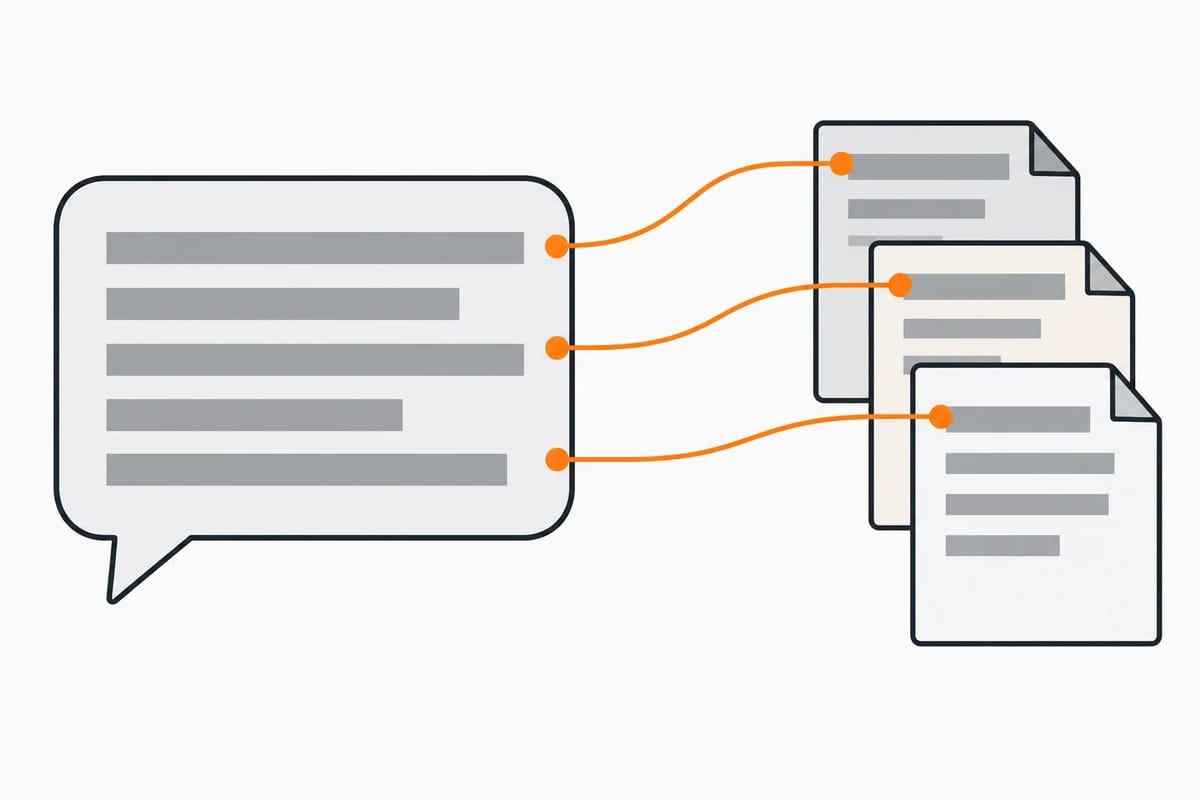
Cloudflare's Radar data shows Googlebot caused over 28% of Verified Bot traffic in 2025, with OpenAI's GPTBot next at about 7.5%; search crawlers made up 40% of Verified Bot traffic and AI crawlers half as much at 20%. Crawling for model training reached as much as 7 to 8 times search crawling at peak, and AI training rose from 22% of crawler requests in spring 2025 to 52% by June 2026, by the crawlers' stated purpose. Cloudflare also reports that the user agents most often fully disallowed in robots.txt are AI crawlers, including GPTBot, ClaudeBot and CCBot, and that Googlebot alone accounted for 4.5% of HTML request traffic against 4.2% for all other AI bots.
What people say they do
About four in ten US adults say they use chatbots for information searching, and six in ten say they read AI search summaries, in Pew's survey. In the UK, Ofcom finds 21% of adults used an AI app or service for news in the past month, with ChatGPT the most used at 13%.
The table below gives the AI-versus-search figures in full.
Figure | Source and date | Sample or method | Checked |
|---|---|---|---|
Google AI Overviews has over 2.5 billion monthly active users | Google, Sundar Pichai, I/O keynote, May 2026 | Company statement | 31 October 2026 |
Google AI Mode has surpassed 1 billion monthly active users | Google, Sundar Pichai, I/O keynote, May 2026 | Company statement | 31 October 2026 |
Google's year-over-year query growth rate is the highest in five years | Google, Sundar Pichai, Q3 2026 earnings call remarks, 28 October 2026 | Company statement; growth rate, no query count given | 31 October 2026 |
Search 91.01%, social 8.6%, AI chatbots 0.4% of referrals worldwide | Statcounter Global Stats, September 2026 | Referrals to websites, not searches | 31 October 2026 |
Google Search used by 82% of UK adults; 3 billion searches a month | Ofcom, 2025 | UK regulator's online habits report | 31 October 2026 |
AI platforms drove an average of 770.7 million referral visits a month worldwide, up 117.4% on the year before | Similarweb, 3 September 2026, data June 2025 to May 2026 | Desktop and mobile web | 31 October 2026 |
AI referrals flat from January 2025 to January 2026 while visits to AI platforms kept climbing | Similarweb, 17 September 2026 | A different window from the row above | 31 October 2026 |
AI-influenced visits arrived as search 55.9%, direct 19.9%, other referrals 13.5%, AI referral 8.8% | Similarweb, 17 September 2026 | AI-recommended brand journeys, US desktop, July to December 2025 | 31 October 2026 |
Traditional result clicked in 8% of visits with an AI summary, against 15% without | Pew Research Center, data March 2025 | 900 US adults; 68,879 Google searches, 12,593 with a summary | 31 October 2026 |
Where they appear, AI Overviews cut outbound organic clicks by 39.8% and raised zero-click searches by 34.5% | Agarwal and Sen, SSRN working paper, revised 8 July 2026 | Randomised field experiment; working paper | 31 October 2026 |
Organic CTR on queries with an AI Overview rose from a floor of 1.3% in December 2025 to 2.4% in February 2026 | Seer Interactive, 24 April 2026 | 53 brands, 5.47M queries; Seer calls its data directional | 31 October 2026 |
88% of Google AI summaries cited three or more sources; 1% cited one | Pew Research Center, data March 2025 | Same panel as above | 31 October 2026 |
Five major AI engines agree on only 9% of their most-cited domains | Vercite, 25 June 2026 | 5.31 million citations, vendor's own user data, March to June 2026 | 31 October 2026 |
Citations in US ChatGPT prompts rose from about 1.6% in June 2025 to roughly 6.8% by May 2026 | Similarweb, 29 July 2026 | US prompts | 31 October 2026 |
AI training rose from 22% of crawler requests in spring 2025 to 52% by June 2026 | Cloudflare, 30 September 2026 | By the crawlers' stated purpose | 31 October 2026 |
AI crawlers carry the most full-disallow directives in robots.txt | Cloudflare Radar, 2025 Year in Review, 15 December 2025 | User agents fully disallowed in robots.txt files | 31 October 2026 |
FAQ
How many people use AI?
Microsoft's telemetry measure puts 18.8% of the working-age population worldwide using generative AI in June 2026. Survey measures differ: 49% of US adults say they ever use AI chatbots (Pew Research Center, February 2026), and 54% of UK adults say they use AI tools (Ofcom, 2026).
How many people use ChatGPT?
OpenAI's own count is 1.2 billion weekly users, given at its DevDay event on 29 September 2026. Sensor Tower, a measurement firm, counts over 1.1 billion monthly users. The Sensor Tower count is for the end of May 2026.
Which AI chatbot has the most users?
ChatGPT, on every measure we print. Sensor Tower's monthly user count at the end of May 2026 puts ChatGPT over 1.1 billion, ahead of Gemini at 662 million and Claude at 245 million.
What share of businesses use AI?
Ramp's card and bill-pay data shows 55.9% of US businesses on Ramp paying for AI in September 2026. The Census Bureau's survey, which asks about use in the past two weeks, put US firms between 17% and 20% from December 2025 to May 2026.
How much will the world spend on AI?
Gartner's forecast, published 16 September 2026, puts worldwide AI spending at $2.7 trillion in 2026, up 49.5% on the year before. That is a forecast, and most of it is infrastructure.
How much revenue does OpenAI make?
Reuters reported on 8 October 2026 that OpenAI told investors its annualised revenue for September was almost $50 billion. The figure comes from one anonymous source and leaves out sales through cloud partners.
How we check these figures
We trace each figure to the company's post, filing or call, the survey or measurement firm, or the news report that carries it, and copy its sentence. We keep a company's own statement, a measurement firm's estimate and a figure the press reported from unnamed people apart, and each row says which it is. We left out figures we could not open at their source: a company figure for Perplexity monthly users, paid AI subscription shares of US households, and Codex weekly users. We republish this report every month with the month in the title.
Our sister data page covers link building statistics, and readers new to search can start with what is SEO.
related Blog Posts


Join 7,000+ Clients Growing with Rhino Rank
Sign Up


Stay ahead of the SEO curve
Get the latest link building strategies, SEO tips and industry insights delivered straight to your inbox.