
 Back to all posts

Outsource link building: when to hire a provider
Outsource link building when you already know which pages matter, but you do not have the time, publisher access or QA process to earn links well. Keep strategy in-house if the work needs deep product judgement, daily technical context or direct control over risk. The best model is often hybrid: you own strategy, a provider handles fulfilment.
Disclosure: Rhino Rank sells link-building services. This guide uses published pricing pages, case studies and service details for commercial claims, so the Rhino Rank section should be read as a worked example of what to check in any provider.
Key takeaways
- Outsourcing link building works best when you have a clear SEO strategy and need expert fulfilment.
- Hiring in-house is usually better when link building is central to your daily marketing work.
- A good partner should make publisher vetting, anchor rules, replacement terms and reporting visible before you buy.
- Full outsource suits teams that want a managed campaign. Hybrid suits teams that want to keep strategy and pass over outreach, placement and QA.
- If a vendor cannot show what it rejects, how it reports and what happens when a link is removed, do not buy from them.
What outsource link building actually means
Outsourcing link building means paying a freelancer, agency or expert provider to handle part of the backlink process. That may include prospecting, publisher outreach, content writing, anchor checks, link QA and reporting.
It does not mean handing over your whole SEO strategy by default.
That distinction matters because most failed vendor relationships start with a loose handover. The buyer asks for "more links", the provider guesses which pages matter, and the campaign drifts into whatever placements are easiest to fulfil. The links may go live, but they do not support the sales pages you care about.
A cleaner setup starts with ownership. You decide the target pages, acceptable anchors, risk tolerance, rivals to avoid and how performance will be judged. The provider then explains how it will source, qualify, place and report on links within those limits.
When outsourcing beats hiring in-house
Outsourcing usually beats hiring when link building is important, but not enough to justify a full internal team. Outreach staff need tools, lists, publisher contacts, content support, quality control and someone senior enough to reject weak placements. That is a lot of fixed cost if your demand rises and falls by campaign.
It also works when your team can set strategy but cannot spare the work hours. Prospecting, follow-ups, publisher replies and link QA are slow jobs. An expert link-building partner can turn that work into a more stable queue.
The strongest use case is clear but narrow: you know the pages and keywords, you have linkable content or sales pages worth supporting, and you need safe fulfilment at a steady pace.
That is a good reason to outsource. It is not a reason to stop thinking.
When you should not outsource link building
Keep the work in-house if link building is the main thing your team sells, the campaign needs daily product context, or the brand risk is high. Sectors with strict rules, sensitive YMYL topics and founder-led brands often need more control over publisher fit and surrounding content than a hands-off order form can give.
You should also avoid outsourcing if no one on your side can judge the work. If a provider sends a placement report and nobody can spot a thin site, a strange anchor pattern or a poor topical match, you have bought dependence rather than leverage.
The catch: outsourcing exposes unclear strategy. It does not repair it. If target pages, search intent and anchor rules are vague before the order, the vendor will fill the gaps for you.
Full outsource or hybrid?
Full outsourcing means the provider plans and delivers the campaign. This can suit a business that wants a managed link-building plan, monthly reporting and less internal workload. The trade-off is control. You need to trust the provider's judgement on campaign shape, not only its skill at placing links.
Hybrid outsourcing keeps strategy in-house and passes fulfilment to a specialist. Your team chooses the target pages, priority terms, internal link support, anchor guardrails and campaign pace. The provider handles prospecting, outreach, placement and reporting.
For most competent marketing teams, hybrid is the safer first step. It keeps commercial judgement near the business while giving the slow work to a specialist. If the provider proves it can think well, you can hand over more planning later.
Full outsource makes more sense when you have no internal SEO lead, or when link building is part of a wider managed campaign. In that case, ask exactly what the provider controls, what you approve and how often strategy is reviewed. Monthly reports show work done. They do not make the calls for you.
How to choose a link building provider
Do not start with a price sheet. Start with the work model.
First, ask how the provider finds publishers. A useful answer names real outreach, existing publisher contacts, search checks, manual review and rejection rules. A weak answer talks about a large database but says little about quality control. A reliable link building agency should make this clear before you order.
Second, ask what the provider rejects. The answer should cover PBN footprints, traffic manipulation, spun content, AI content, excessive outbound links and off-topic sites. You do not need a perfect supplier. You need one that can say no before you pay for the wrong placement.
Third, check how much control you keep. If you want to outsource link building as fulfilment only, you should be able to specify target URLs, anchors and niche needs. If you want a managed campaign, the provider should explain how it chooses those inputs for you.
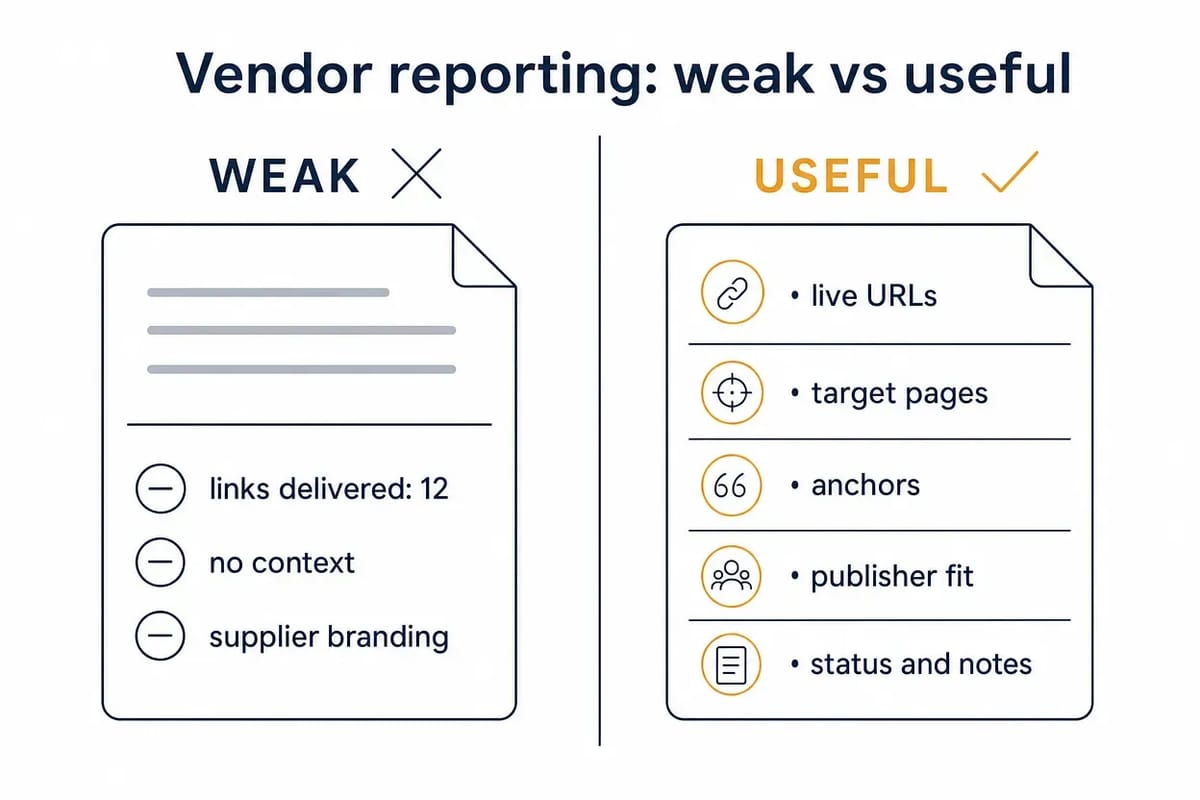
Fourth, ask for reporting before the first order. A good report should show live URLs, target pages, anchors, publisher fit, placement type, status and any notes that affect meaning. Agencies also need white-label reporting that can reach a client without supplier branding or awkward edits.
Finally, compare proof. Reviews are useful, but case studies are better when they name the service used and the movement achieved. If you are comparing backlink services, treat case studies as evidence to inspect rather than gloss.
How outsourced link building works with Rhino Rank
Here is how those checks look in our own service model.
We publish fixed tiers so a team can budget before ordering. Our curated links start at $60 per link by RD tier, and guest posts start at $75 per post by DA tier — each one includes the 750+ word article, the outreach and one contextual dofollow link in that price.
That pricing structure suits agencies and in-house teams that need margin control. You can cost a campaign before it reaches the client or finance team, rather than waiting for a custom quote on every placement.
We keep the ordering model deliberately loose: no minimum orders and no long-term contracts, because a fulfilment partner should earn the next order rather than lock it in. For hands-off campaigns, our managed service starts at $250 per month and covers backlink audits, keyword research, competitor analysis, manual outreach and monthly white-label reporting.
Our process is plain by design:
- Research the niche and your target page.
- Run manual outreach to real publishers.
- Pitch and agree the placement.
- Secure, publish and QA the link.
- Deliver the report.
We publish what we reject, too: PBN footprints, spun or AI content and traffic manipulation all fail our curated-links screening before a placement is offered.
Every order ships with a placement report you can export unbranded for white-label delivery. We back placements with 12-month replacement cover, and we put the early risk on ourselves: first orders carry a money-back guarantee up to $550.
Who should not use us? If you need a link-building team in daily product meetings, or you want legal review for every publisher, a standard fulfilment model will feel too narrow. That is fine. The right outsource model depends on how much control you need to keep.
What breaks in vendor handoffs
The handoff is where good intentions become weak links.
A provider cannot read your sales pipeline from a target URL. If the brief only says "build authority to this page", the fulfilment team has to guess the page's role, the right level of anchor risk and the kind of publisher that will make sense. Those guesses may be reasonable. They are still guesses.
A useful brief gives the vendor boundaries. It names the page, keyword theme, acceptable anchors, excluded topics, country or language needs, competing sites to avoid, content needs and approval rules. It also says whether the campaign is meant to support rankings, protect a launch, widen the anchor mix or build topic authority.
Brief drift is subtle. A partner starts with sensible anchors, then repeats a phrase because it worked once. A publisher looks relevant at category level, but the article angle is thin. A placement is technically live, but the surrounding page has no chance of being read. These are small misses until they compound.
Good providers reduce that drift by reporting the details and inviting correction early.
How to measure outsourced link building
Measure delivery first. Are the links live, indexed, dofollow where promised, placed on relevant pages and reported clearly? Are anchors varied within the agreed range? Are replacements handled when a placement drops?
Then measure SEO movement with restraint. Google Search Console, Google Analytics, Ahrefs, Semrush and similar tools can help you track organic clicks, rankings, referring domains, page movement and crawl behaviour. None of those tools can prove that one single link caused one single ranking change.
Use monthly reporting to build a pattern. Look at whether priority pages are gaining visibility, whether non-brand queries are moving, whether anchors remain natural and whether the provider is still placing links on sites you would be comfortable showing a client.
The commercial measure is simpler: does the work save enough time, reduce enough hiring pressure or create enough campaign movement to justify the spend? If the report creates more questions than answers every month, the vendor is exporting admin back to you.
What to avoid when outsourcing backlink building
Avoid any provider promising instant ranking movement, guaranteed positions or a fixed result from a fixed number of links. Link building can influence rankings, but the result depends on the site, query, rivals, content, technical health and time.
Avoid vague quality language. "High DA" is not enough. Ask whether the site has real organic traffic, relevant content, clean outbound linking, no obvious network footprint and a page that makes editorial sense.
Be careful with very cheap links. A low price is not always bad, but it usually means something has been removed from the process: manual outreach, quality checks, content review, replacement cover or reporting. Find out which one before you buy.
Most of all, avoid spammy links that exist only to manipulate metrics. PBNs, link farms, hacked placements and irrelevant guest posts can create a short-term graph movement and a long-term clean-up problem.
Case-study proof to ask for
Case studies are useful when they connect the link-building method to a real campaign outcome. They are weak when they show a chart without showing the service, time period or business context.
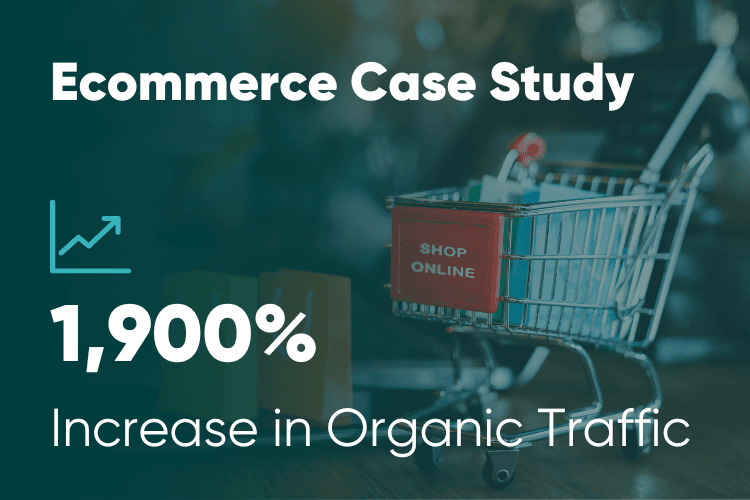
Rhino Rank's Ecommerce case study ties Curated Links to 1,900% organic traffic growth, a 177% increase in orders for the best-selling product and a 6-month campaign length.
The FinTech case study reports 374% traffic growth and page-one rankings for 16 of 25 target keywords.

Those numbers are proof points, not promises. Use them the same way you would use any provider case study: check the industry, campaign length, method, target pages and whether the result sounds relevant to your own starting point.
Where agencies should add white-label controls
If you resell link building under your own brand, the provider choice has an extra layer. Your client does not only judge the placement. They judge your explanation of it.
That makes white-label reporting, replacement terms and predictable pricing more important. A clean report should help your account manager explain what changed, what went live and what happens next. It should not expose supplier language that forces a rewrite before every client update.
Agencies that want a broader fulfilment model should compare SEO reseller services on its own, apart from one-off link orders. Reselling adds client ownership, margin, reporting cadence and support questions that a simple pay-per-link order does not cover.
Frequently asked questions
What is link building?
Link building is the process of earning or placing links from other websites to your own pages. In SEO, those links can help search engines find pages, read trust signals and assess topic fit. Common approaches include editorial outreach, guest posts, curated links, digital PR and partnerships built through different link building methods.
Does link building still work?
Yes, link building still works when the links are relevant, placed by editors and part of a wider SEO strategy. It works badly when the campaign chases metrics without regard for publisher quality, anchor risk or the page being supported.
How much should I pay for link building?
There is no honest single price. Costs vary by service model, publisher quality, content needs, niche difficulty and whether strategy is included. For reference, Rhino Rank's published tiers start at $60 per curated link and $75 per guest post, while its managed service starts at $250 per month.
How do you outsource link building?
Start by choosing the model: managed campaign, pay-per-placement or hybrid fulfilment. Then prepare target pages, anchor rules, excluded topics, quality standards and reporting needs before speaking to providers. Ask each vendor how it sources publishers, what it rejects, what happens if a link drops and what the final report looks like.
What are the key benefits of outsourcing link building?
The main benefits are time saved, access to publisher outreach experience, clearer fulfilment room and less pressure to hire before demand is stable. The value depends on the provider's vetting, updates and reporting. A cheap order with poor QA is not a saving.
What other SEO services can you outsource?
You can outsource audits, technical checks, content briefs, on-page optimisation, local SEO, citation work, reporting and wider campaign management. Outsourced SEO only works when ownership is clear: your team should know which decisions stay internal and which tasks the provider can perform without slowing the campaign.
Every fact and commercial claim in this guide was fact checked and verified on 8 July 2026.
related Blog Posts



Join 2,600+ Businesses Growing with Rhino Rank
Sign Up
Stay ahead of the SEO curve
Get the latest link building strategies, SEO tips and industry insights delivered straight to your inbox.