
 Back to all posts
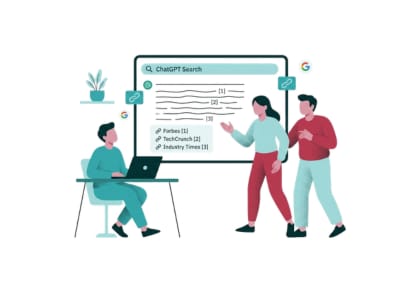
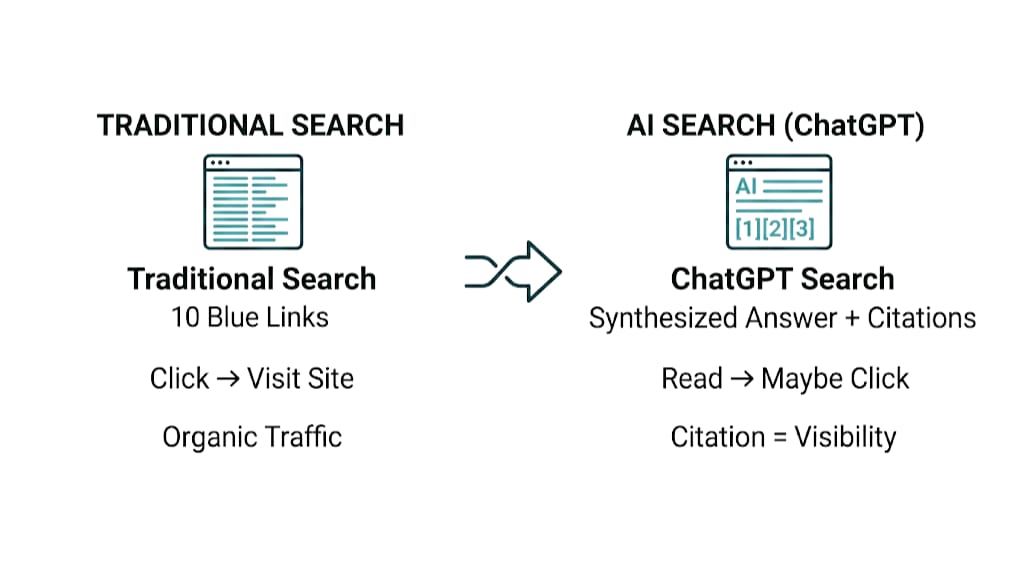
The way people discover websites is shifting faster than most SEO teams have adapted to. ChatGPT Search - OpenAI's live web-connected search product - now handles millions of queries per day, and it doesn't return a list of ten blue links. It synthesizes an answer and cites a handful of sources directly. If our site isn't among those cited sources, we're invisible to an entire category of searcher. That's not a future scenario. It's happening now, and most link building strategies haven't caught up.
The bottom line: Link building remains the foundational infrastructure for search visibility in the AI era - but the game has expanded. A strong, relevant backlink profile now determines whether we rank on Google and whether ChatGPT Search can even access and trust our content. This article covers both directions: how link building influences AI citation, and how to use ChatGPT inside a link building workflow without buying into the hype.
Most pieces miss the infrastructure argument. Competitors focus on ChatGPT as a link building tool - prompts for outreach, templates for pitching. That's useful. It also skips the commercially urgent point: how ChatGPT Search decides what to cite, and what our link profile has to do with it. We'll answer that in full.
ChatGPT Search Has Changed How People Find Websites - Here's What That Means for Link Building
Search in 2024 and 2025 looks different from what it did three years ago. Google's AI Overviews now sit at the top of the results page for a lot of informational queries. Perplexity AI has carved out a loyal user base among researchers and professionals. And ChatGPT Search - launched to all users in late 2024 - has brought AI-generated responses to one of the world's most visited platforms. Put together, that's a structural shift in how organic traffic gets created and where it gets distributed.
That distribution is the part that hits marketing managers and agency owners. Traditional click-through from a ranked result gets replaced, in many query categories, by a synthesized response that cites two or three sources and moves on. A mid-market SaaS company spending $3,000 per month on content might rank on page one and still see declining organic sessions because the AI answer resolved the query before the user clicked anything. This is the zero-click problem scaled up and accelerated.
The citation layer doesn't sit apart from rankings. Being cited by ChatGPT Search is not a separate goal from ranking on Google. The signals that determine citation eligibility overlap heavily with the signals that drive traditional rankings, and backlinks sit in the middle of both. A site with a strong, trusted, topically relevant link profile is more likely to rank on Google, more likely to be indexed and trusted by Bing, and - because of that Bing relationship - more likely to be surfaced by ChatGPT Search when it pulls sources for a response.
That same link profile is now table stakes. Link building isn't becoming less important in the AI era. It's becoming the prerequisite infrastructure for visibility across multiple search surfaces at once. Agencies and in-house teams that treat link acquisition as optional, or as a nice-to-have after content production, are going to find themselves invisible not just on Google, but across the wider AI search ecosystem.
Infrastructure also includes content quality signals, and Google has been explicit about where it draws the line. Google's March 2024 core update targeted AI-generated spam at scale, with the Google Search Central blog confirming manual and algorithmic actions against sites using automation to produce low-quality content in bulk. The flood of AI-generated content has made the web noisier. When the web gets noisier, trust signals that cut through it - editorial backlinks from real, authoritative sources - get more valuable.
That trust signal is the starting point for any serious link building strategy in 2025 and beyond. Build links to rank on Google. Build links to be visible to Bing. Be visible to Bing, and we become citable by ChatGPT Search. The chain is direct, logical, and backed by how these systems actually work. Understanding how link building helps SEO across all these surfaces is the first step toward building a program that holds up.
How ChatGPT Search Decides Which Sources to Cite (And Why Backlinks Still Matter)
Most SEO professionals understand that Google uses backlinks as a core ranking signal. Google Search Central's own documentation says links help Google discover new pages and understand a site's authority within its subject area. The part that gets missed is how that same logic carries into the AI retrieval layer - and why your backlink profile now shapes citation outcomes in systems that don't run on Google's index.
ChatGPT Search doesn't pull from Google. It retrieves live web content through a separate mechanism, and that mechanism runs through Bing. That one detail changes how we should think about link building in AI search.
When ChatGPT generates a response that cites external sources, it isn't making an independent call on which sites "feel" trustworthy. It pulls from a source set that has already moved through Bing's indexing and ranking filters. Bing's algorithm, like Google's, treats backlinks as a trust and authority signal. Stronger backlink profiles lift rankings in Bing's index. Higher rankings in Bing make those pages easier for ChatGPT's retrieval system to reach. The chain from link acquisition to AI citation isn't theoretical - it's structural.
The Bing Connection: Why ChatGPT's Source Selection Isn't Random
The Microsoft-OpenAI partnership is the infrastructure piece most link building writeups skip. Microsoft's $13 billion investment in OpenAI came with a core technical arrangement: ChatGPT Search uses Bing as its web retrieval layer. This isn't a throwaway detail. It's confirmed in Microsoft's own partnership documentation, and you can see it in how ChatGPT Search citations show up in practice.
Bing's retrieval layer is where link building shows up. The Bing Webmaster Guidelines spell out that Bing evaluates sites using signals that include inbound links, anchor text relevance, and the authority of linking domains. Those signals determine where you land in Bing's organic results. And because ChatGPT Search retrieves from Bing's index, a site that performs well in Bing - partly due to its backlink profile - is far more likely to be available in ChatGPT's source pool than a site Bing doesn't trust or hasn't indexed deeply.
This is the piece most competitor articles leave out. You can't optimize for ChatGPT Search citations in isolation. You optimize for Bing. And you optimize for Bing the same way we optimize for Google: earn high-quality editorial backlinks from relevant, authoritative domains. That's the same principle behind generative engine optimization for link building - the fundamentals haven't changed, but the surfaces they apply to have multiplied.
E-E-A-T, Trust Signals, and AI Citation: The Overlap You Need to Understand
Google's Search Quality Evaluator Guidelines introduced E-E-A-T - Experience, Expertise, Authoritativeness, and Trustworthiness - as the human-readable framework for what high-quality content looks like. E-E-A-T is a Google concept used by human raters, but the signals behind it line up with what AI retrieval systems use to screen credible sources from noise.
Authoritativeness, in practice, comes down to who links to you. If your site earns backlinks from established publications, industry bodies, and topically relevant domains, you get third-party validation from editorial gatekeepers. Both Google's quality process and Bing's algorithm can read that as trust. And when ChatGPT's retrieval layer decides what to surface, it works with content that's already cleared that trust bar inside Bing.
The trust loop works like this: AI systems cite sources that other authoritative sources already cite. A strong backlink profile is the measurable proof of that citation authority. Links from high-quality, relevant domains aren't just "SEO." They're how you enter the trust system that AI search engines pull from. That's what we mean when we call link building the infrastructure for GEO (Generative Engine Optimization). It's not a separate track. It's the base layer.
The AI Content Flood Is Making High-Quality Backlinks More Valuable, Not Less
Semrush's data on AI-generated content volume paints a blunt picture. The number of AI-assisted articles published each month has grown at a pace that would have sounded unrealistic in 2021. Estimates suggest AI-generated content now makes up a meaningful and rising share of new pages indexed each month. The result: the web gets louder by the day. And both readers and ranking systems need clearer trust signals to sort anything worth showing.
Google didn't ease into this. The March 2024 core update didn't just hit obvious spam - it went after content made mainly to push rankings instead of help users, including pages produced with AI as a scaling tactic without real editorial value. Sites that cranked out big AI libraries without matching authority signals - real backlinks from real publications - took ranking hits.
Those ranking hits point to a link building reality we can't ignore. When content becomes cheap to produce, the scarcity value shifts to trust. Any site can publish 500 AI-generated articles in a week. Not every site can earn 50 backlinks from authoritative, editorially independent domains in that same window. That gap isn't an accident. Editorial links require relationships, a story an editor will run, and topical credibility. You can't pump them out the way you can pump out content.
For a B2B SaaS company in a crowded vertical, the link profile becomes the separator. Two sites can look equal on content, technical SEO, and publishing velocity, then split hard in rankings and AI citation frequency based on backlink quality and relevance. The winner is the site that invests in link acquisition over time - guest posts on relevant industry publications, curated placements on authoritative domains, and digital PR that earns editorial mentions. The loser is the site that treated link building as optional.
That same link profile keeps paying after the campaign ends. A strong backlink base doesn't just help you rank now; it speeds up how new pages get evaluated. When ChatGPT Search or Bing's crawler finds a new page on your site, it reads that page in the context of your domain's existing authority. A domain with 300 high-quality referring domains gets new content indexed faster, trusted sooner, and surfaced more often than a domain with 30 referring domains of mixed quality. Links compound.
Some agencies see the compounding and act on it. They double down on link acquisition because the AI content flood has pushed the content layer toward commodity status. Others keep shipping more pages and watch client traffic slide, because nobody - human or AI - has a reason to trust what they're publishing.
Signal | Pre-AI Era Importance | AI Era Importance |
|---|---|---|
High-quality backlinks | High | Very High |
Content volume | Medium | Low-Medium |
Topical authority (link-backed) | Medium | Very High |
Technical SEO | High | High |
E-E-A-T signals | Medium | Very High |
AI-generated content (unlinked) | Low | Very Low |
Using ChatGPT as a Link Building Tool: What Actually Works vs. What Wastes Time
We need to be blunt. ChatGPT helps inside a link building workflow. It doesn't replace the workflow. Treating it like a full link building system leads to busywork: outreach that reads like template soup, prospect lists that still need manual checks, and polished briefs that miss what editors want.
Most SEO managers and agency owners reading this have tested ChatGPT for link building tasks already. Some tests worked. Others produced emails that felt generic, lists that required heavy verification, or briefs that missed the editorial angle. That gap - between real speed and fake progress - is the difference between using AI as a tool and letting it steer the work.
Prompts That Actually Accelerate Link Prospecting and Outreach
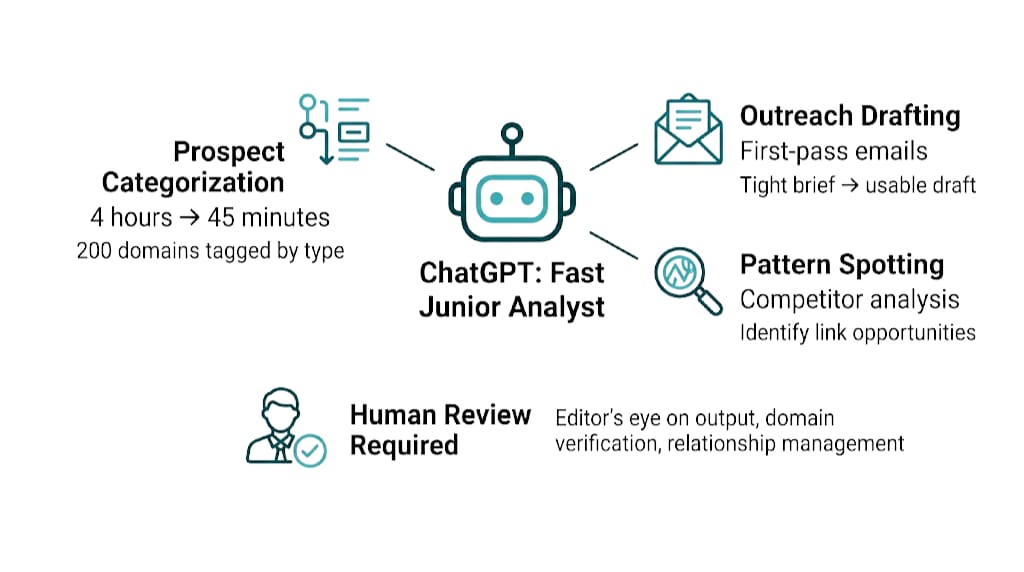
ChatGPT saves real time in link building when you keep it on pattern spotting, first-pass drafting, and structured outputs based on inputs we've already pulled. Treat it like a fast junior analyst, not a source of truth.
Prospect categorization is one of the cleanest wins. Export 200 domains from Ahrefs or Semrush, drop in batches of domain descriptions, About pages, or content summaries, and have ChatGPT tag them by editorial type (news publication, niche blog, industry directory, resource hub), likely contact path, and fit for a given client vertical. It won't nail every call. But it turns a four-hour manual sort into 45 minutes of review and fixes.
Outreach email drafting works as long as the brief is tight. Feed it the target, the angle, and the proof point. "Write a guest post pitch email for a cybersecurity blog, referencing their recent article on zero-day vulnerabilities, positioning our client as a penetration testing firm with original research on SME attack surfaces" gives you a draft you can ship after edits. "Write a link building outreach email" gives you the same stale template every editor has ignored a hundred times.
Useful prompt structures for link building workflows include:
- "Here is the target site's most recent article: [paste]. Write a personalized pitch for a guest post that references a specific point they made and proposes a complementary angle our client can cover with original data."
- "Here are five competitor backlink profiles from Ahrefs. Identify patterns in the types of sites linking to them and suggest three prospecting strategies based on those patterns."
- "Draft a broken link building outreach email for [target site], referencing a dead link to [topic], and proposing our client's [specific resource] as a replacement. Keep it under 120 words."
- "Review this outreach email draft and identify any phrases that sound templated or generic. Suggest more specific replacements."
These prompts work because the task is bounded and the inputs are real. You still need an editor's eye on the output. But you start from something usable instead of a blank page. For a deeper look at how to structure these campaigns end to end, the guide on successful blogger outreach covers the relationship and sequencing side that ChatGPT can't handle alone.
Where ChatGPT Falls Short: The Tasks That Still Require Human Expertise
ChatGPT has hard limits in link building. Calling them out isn't a knock on the tool - it's how you avoid bad decisions and wasted outreach.
ChatGPT cannot verify live domain metrics. It doesn't connect to Ahrefs, Moz, Semrush, or any live backlink index. If it recommends a domain, it's relying on training data that could be months or years old. The "authoritative site" it names might have been penalized, sold, or converted into a link farm after its cutoff. Every domain that comes out of ChatGPT needs a real metric check before it touches a prospecting list.
It cannot assess editorial quality in real time. Whether a site places links editorially, whether the editor replies to cold outreach, whether there's a pattern of paid placements - ChatGPT can't see any of that. Those calls come from looking at the live site, scanning recent publishing, and knowing how that outlet behaves in practice.
It cannot maintain webmaster relationships. Follow-up cadence, placement back-and-forth, and the rapport that turns one link into a repeat channel all sit with humans. ChatGPT can draft emails. It won't build trust.
Optimising Your Link Profile to Be Cited by AI Search Engines, Not Just Ranked by Google
Ranking in Google and getting cited in ChatGPT Search overlap more every quarter, but they aren't the same target. Certain link-profile traits seem to make retrieval systems more willing to surface a source, and those traits should influence how we pick targets and pace acquisition.
Start with source diversity. AI retrieval systems, including the one powering ChatGPT Search, appear to prefer sources that get cited across independent contexts. A site that earns backlinks from 15 different publication categories - news sites, academic references, industry blogs, professional associations, niche directories - reads as broader authority than a site with 50 links from one content type. That matches how people validate claims: independent references beat a pile of citations from the same circle. A solid backlink profile built across varied, independent sources is one of the clearest signals of genuine editorial authority.
Source diversity only matters if the links make sense on-page, which brings us to anchor text and contextual relevance. Links inside real, topically aligned content - a 2,000-word article on cloud security that links to your site while discussing encryption standards - carry more weight than footers, sidebars, or thin resource lists. Retrieval systems parse language context. A link placed in a relevant paragraph does more to confirm topical authority than a link sitting outside the discussion.
Then there's recency and publishing cadence. A link profile that grows steadily over 18 months signals ongoing editorial interest. A profile that spikes and then flatlines looks like a one-off push or, in the worst case, manipulation. AI systems and the search engines they pull from reward consistency over bursts.
Ahrefs' research on how domain authority and referring domain diversity correlate with ranking performance reinforces the same idea: sites that rank in competitive niches tend to show consistent growth, a mix of referring domain types, and tight topical clustering around the core subject. Those same link-profile traits that correlate with Google performance also correlate with AI citation eligibility.
Topical Authority and AI Citation: Why Niche Relevance Beats Raw Domain Rating
Domain Rating (DR) is a useful proxy, but it's not the whole picture. A DR 70 domain that covers 40 different topics is less valuable as a linking source for a specialist cybersecurity firm than a DR 45 domain that publishes exclusively about enterprise security. That's the topical authority argument. And in the AI era, it carries more weight than it did back when pure PageRank signals did most of the work.
AI retrieval systems try to surface the most relevant, authoritative source for a given query. A query about SIEM implementation doesn't need a citation from a general technology news site - it needs a citation from a source that has shown deep, consistent coverage of enterprise security. That depth shows up in the backlink profile. If the top cybersecurity publications link to your site in the context of security content, that sends a stronger topical authority signal than a handful of links from high-DR generalist domains.
That signal changes how we should build links.
Prioritize link acquisition from topically relevant domains over raw DR. A guest post on a niche industry publication with DR 40 and an engaged professional readership is worth more - for both Google rankings and AI citation probability - than a link from a DR 80 generalist site where your content sits next to thousands of unrelated articles.
This is a shift from how many agencies have historically sold link building. The "we'll get you links from DR 50+ domains" pitch sounds impressive, but it skips the relevance piece that drives ranking and citation outcomes. Relevance is what ties the link to the topic, and that connection is what retrieval systems keep rewarding. The better pitch - and the better strategy - is "we'll get you links from DR 40+ domains that stay editorially focused on your niche."
The Link Velocity and Consistency Argument: Why Stopping Your Campaign Is the Biggest Risk in the AI Era
One of the most common mistakes we see from in-house SEO teams and agency clients alike is treating link building as a project rather than a program. They run a campaign for three months, see some ranking movement, and then pause to move budget elsewhere. Six months later, rankings slide. Competitors move up.
That pause costs more now.
Search algorithms - both Google's and Bing's - interpret link velocity as a trust signal. A steady cadence of backlinks over time suggests your site keeps earning editorial attention in its niche. Bursts followed by long gaps look less organic. For any site trying to become a citable authority in ChatGPT Search responses, consistent link acquisition feeds into the trust signals the retrieval system weighs. Understanding what constitutes a good link velocity and how to maintain it without triggering penalties is one of the most underrated parts of a sustainable program.
Competitors don't pause. A mid-market competitor running a sustained program of 8-10 quality link placements per month will, over 12 months, build a backlink profile advantage that's hard to claw back quickly. In competitive verticals, that gap compounds like compound interest - slow at first, then hard to ignore.
The AI content flood makes the fight for links tighter. As more sites publish more content, editorial attention from authoritative linking domains gets scarcer. Scarcity rewards the teams that keep relationships warm - through guest posting programs, curated link placements, and digital PR. And it punishes the teams that stop and restart, because they're pitching from a cold start while competitors keep the pipeline moving.
Sustained link building isn't a nice-to-have for well-funded enterprises. It's table stakes for holding and growing search visibility in an environment where content production keeps getting cheaper, and the trust layer - backlinks, editorial authority, topical credibility - does most of the sorting.
A Practical Framework: How to Build Links That Work for Both Google and ChatGPT Search
This article lands on a practical takeaway: a link building program in 2025 has to do two jobs at once. It needs to support Google rankings and increase the odds your site gets cited by AI search engines.
That doesn't require a brand-new playbook. It requires tightening the fundamentals, then applying them with a clear view of how the AI retrieval layer changes which signals carry the most weight.
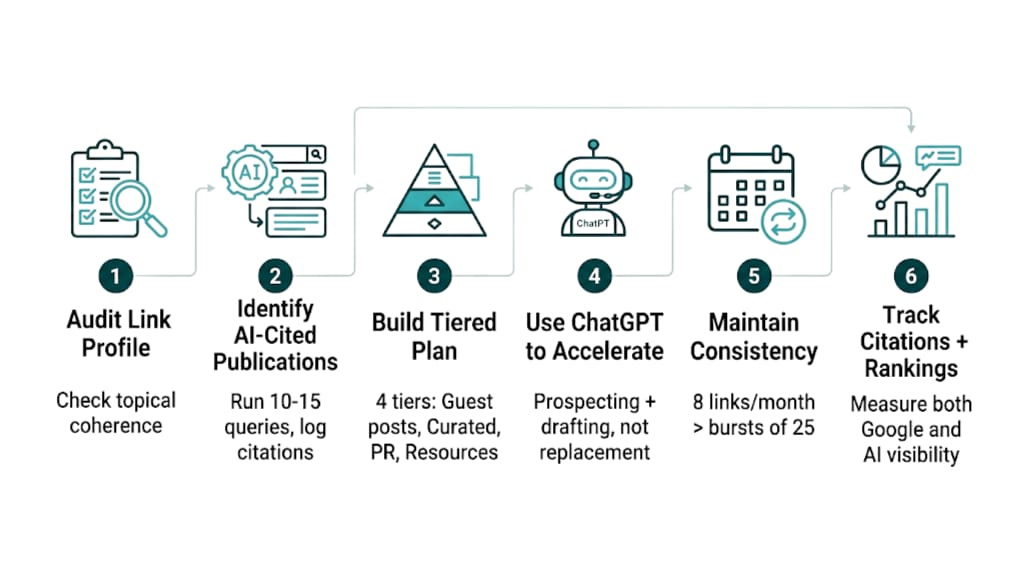
Step 1: Audit your current link profile for topical coherence.
Before we chase new links, we need to know what the current profile is telling Google and AI systems. Export referring domains in Ahrefs or Semrush, then bucket them by topical relevance to your core subject.
Here's the issue we see a lot: a B2B fintech brand where 60% of backlinks come from general tech blogs, generic marketing sites, and unrelated directories. That mix weakens topical authority. Priority one is shifting the balance toward finance- and technically relevant domains so the overall profile aligns with what you actually sell.
Step 2: Identify the publications that AI search engines are already citing in your niche.
Those relevant domains aren't always the ones we think of first. They're the ones the AI systems already trust enough to cite.
Run 10-15 representative queries in ChatGPT Search around your core topics, then log which domains keep showing up as cited sources. Those sites have cleared the retrieval layer's trust filter for your category. A backlink from one of them - or, better, a guest post placement that makes your site a co-cited source - sends a strong signal that you belong in the same authority tier.
Step 3: Build a tiered link acquisition plan.
Not all links do the same job. Treating them like they do is how teams end up with a messy profile and no clear momentum. A tiered plan keeps the purpose clear:
Tier | Link Type | Primary Purpose | Target Volume |
|---|---|---|---|
Tier 1 | Guest posts on niche-relevant publications | Topical authority, direct traffic | 2-4 per month |
Tier 2 | Curated placements on authoritative domains | Domain authority, Bing trust signal | 4-8 per month |
Tier 3 | Digital PR and data-led content | Brand mentions, high-DR citations | 1-2 per quarter |
Tier 4 | Resource page and broken link placements | Link profile diversity | Ongoing |
Step 4: Use ChatGPT to accelerate prospecting and outreach drafting - not to replace editorial judgment.
We've already covered this in the workflow section. ChatGPT saves time on categorizing prospects, drafting personalized outreach, and producing anchor text variations.
Time saved only matters if we keep quality high. Use it as an acceleration layer, then keep human review for domain quality, editorial fit, and relationship management. That's where campaigns win or lose.
Step 5: Maintain consistency over campaigns.
Consistency beats bursts. Every time.
Set a monthly link target you can fund and maintain, then keep it steady. Eight quality links per month, every month, for 12 months will outperform three bursts of 25 links separated by dormant periods. That steady pace compounds domain authority growth and raises AI citation probability - and most teams still underweight that compounding effect.
Step 6: Track citation performance alongside ranking performance.
That compounding effect won't show up if we only track Google rankings.
Add a monthly check for ChatGPT Search and Perplexity AI citations alongside rank tracking. Run your target queries in both platforms and record which sources get cited. Over time, this gives you a directional read on whether link building is translating into AI search visibility, not just Google positions. Search Engine Journal's coverage of AI search citation tracking outlines emerging approaches for measuring this kind of visibility as the discipline matures.
This is exactly the kind of program that Rhino Rank's curated links and guest post services are built to support. Our curated link placements go through editorial review, get categorized by topic, and run on domains with real Bing and Google trust signals - not link farms or private blog networks. Our guest post service puts your content in front of real editorial audiences on niche-relevant publications, which drives the contextual, topically coherent backlinks that both Google and AI retrieval systems weight most heavily.
The framework above isn't theoretical. It's the operating model we use for clients across competitive verticals, built on the same principles that have driven link building for the past decade - now tuned for a search market where AI citation is commercially as important as organic ranking.
Frequently Asked Questions About Link Building and ChatGPT Search
Does ChatGPT Search use backlinks as a ranking or citation signal?
Not directly. ChatGPT Search doesn't run its own ranking system that evaluates backlinks.
Bing still matters here. ChatGPT Search retrieves sources through Bing's index, and Bing weights backlinks as a trust and authority signal. Strong backlink profiles push pages higher in Bing, which makes them easier for ChatGPT's retrieval layer to pull in and cite. That backlink-to-citation chain stays indirect, but it's structurally reliable.
How does ChatGPT decide which websites to cite in its search responses?
ChatGPT Search pulls live web content via Bing, then picks citations based on query relevance, Bing's interpretation of authority, content recency, and contextual trust signals.
Those trust signals show up in predictable ways. The sites that show up as citations over and over tend to have topically aligned backlink profiles, clear E-E-A-T cues, and pages that answer the query with specific, on-topic coverage. There's no published formula, but the output matches what we'd expect from a Bing-weighted retrieval system.
Can you use ChatGPT to automate link building outreach?
You can use ChatGPT to speed up outreach work - draft personalized emails, bucket prospect lists, and generate pitch angles. It saves time on the first pass.
But full automation is a mistake. ChatGPT can't verify live domain metrics, judge editorial quality, or handle the relationship side that decides whether outreach converts. Use it for drafting and categorization, then keep humans in charge of targeting, QA, and follow-through.
Will AI search engines like ChatGPT replace Google, and what does that mean for SEO?
Replacement is unlikely in the near term. Google still takes the majority of global search volume, and AI search tools mostly supplement traditional search for most query types.
The shift is attention, not total search. More informational queries now end at AI-generated answers that cite a small set of sources, so SEO teams need to plan for two outcomes: ranking visibility in Google and citation visibility in AI search. Citation visibility still runs on the same fundamentals, and links remain one of the few signals that travel cleanly across both systems.
What types of backlinks make a site more likely to be cited by AI search engines?
The links that move AI citation eligibility share three traits.
- Topical relevance beats generic DR. A niche industry domain with the right audience wins over a high-DR generalist site.
- In-content placements matter. Links inside substantive, relevant articles carry more weight than thin pages, footers, or sidebars.
- Bing trust and crawl depth. If Bing already trusts and indexes the linking domain deeply, that vote counts more in the retrieval chain.
Guest posts on niche industry publications and curated placements on authoritative, editorially independent domains outperform high-volume, low-relevance link acquisition for AI search visibility.
Is link building still worth investing in now that AI overviews dominate search results?
More than ever. The AI content flood has commoditized content production, so the signals you can't fake at scale - editorial backlinks from genuine, authoritative sources - now separate the sites that get cited and ranked from the ones that don't.
That same trust pool powers both AI Overviews and ChatGPT Search citations. Backlinks signal trust, and trust drives selection. Pausing link building because AI search is growing is the wrong move. Teams that keep a steady, quality link acquisition program will lead traditional rankings and AI citations over the next three to five years.
related Blog Posts


Join 7,000+ Clients Growing with Rhino Rank
Sign Up
Stay ahead of the SEO curve
Get the latest link building strategies, SEO tips and industry insights delivered straight to your inbox.