
 Back to all posts

Teams with a structured tool workflow find more link opportunities and lose fewer links than teams without one. The gap shows up at every stage, from competitor research to outreach to monitoring. AI search surfaces such as Google's AI Overviews and Perplexity cite sources, and a Semrush study of 1,000 domains published on 16 October 2025 found that domains with higher Authority Scores were more likely to appear in AI-generated answers.
The tool market has matured too. There are now purpose-built platforms for every stage of the link acquisition workflow: from crawling competitor backlink profiles and identifying link gaps, to finding verified contact emails, managing outreach sequences, and monitoring whether the links you've already earned are still live. Choice creates its own problem. Most guides either list tools alphabetically with surface-level descriptions, or they push the priciest platforms while ignoring the reality that a solo SEO and an agency team need different setups.
The short answer: the best link building tools in 2026 are the ones that fit your workflow, budget, and team size, not the ones with the most features. For backlink analysis and competitor research, Ahrefs and Semrush lead; for outreach, BuzzStream fits relationship-first campaigns and Pitchbox suits high-volume agency work; Hunter.io is the default for contact discovery; and Google Search Console is the best free monitoring tool. This guide organises tools by function, explains how they connect into coherent stacks, and gives you specific cost-estimated combinations for three different team types. It also covers when a managed link building service is the better fit than a stack you run yourself.
Why link building tools are non-negotiable for SEO in 2026
In a survey of 131 SEOs published by Zyppy on 9 September 2026, 54.8% named backlinks as a top-three ranking factor, second only to relevance at 57.1%. The logic is simple: a link from a relevant site with real readers is another editor vouching for your page. That part hasn't changed.
The context has. AI-generated search results add a second layer of backlink value that most SEO teams still haven't priced in. Semrush's study of 16 October 2025 looked at 1,000 domains and found that domains with higher Authority Scores were more likely to appear in AI-generated answers; it calls the effect moderate overall. The ROI case for link building now extends beyond classic SERP positions into AI citation probability, a dynamic explored in depth in our guide to link building for AI overviews.
Working without dedicated link building tools means doing by hand what the tools do in minutes.
Manual competitor research through Google's search operators will surface some opportunities, but it won't scale. Ahrefs' Site Explorer page lists 35 trillion live backlinks. Manual prospecting can't compete with that kind of coverage. The teams winning competitive link profiles aren't grinding harder. They run better infrastructure, and it shows in output, speed, and quality control.
Tools also tell you what you already have. Links get removed, pages get redirected and sites change hands. Without a monitoring tool you find out when traffic moves, which is the worst time to start investigating.
Rankings aren't the only target anymore. The SEO teams building links at scale aren't chasing domain authority scores for the sake of it. They are building an authoritative, well-cited presence that AI systems treat as a credible source. That takes volume, quality control, and consistency, and you don't get any of those without structured tooling.
How to choose the right link building tool stack (without overspending)
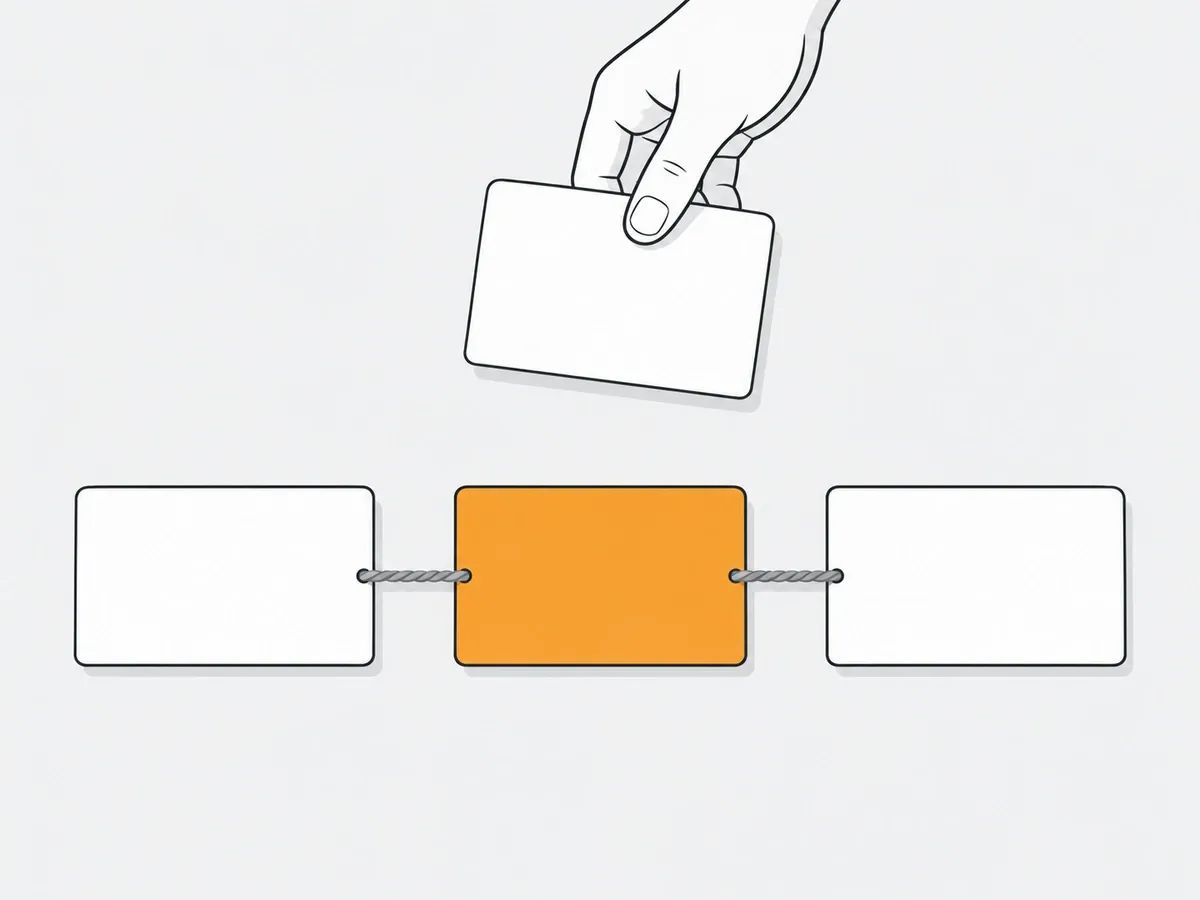
The most common mistake in choosing tools isn't picking the wrong platform. It's buying tools one at a time instead of building a system. Pay $424 a month for BuzzStream's Professional plan and feed it weak prospects, and that spend goes nowhere. Buy a top-tier backlink tool and skip the workflow that turns its data into targets, and you only get half the value.
Think in three functional layers. Simple as that.
Layer 1: Analysis. This is where you map the link graph: where links exist, which competitors outrank you on referring domains, and which sites are worth a pitch. Ahrefs and Semrush run this layer. Moz and Majestic fit better in narrower use cases.
Layer 2: Prospecting and contact discovery. Once you have target domains, you still need real, verified contacts. Hunter.io is the default for email discovery and verification. Pitchbox blurs the lines by bundling prospecting with outreach, which works well for teams that want one workflow instead of a stitched-together stack, and Respona now goes further and sells the finished placement.
Layer 3: Outreach and monitoring. BuzzStream is built for relationship-driven outreach at scale. Monitoring comes from Google Search Console's Links report for free, or Linkody if you want a paid tracker that watches link status, surfaces new referring domains, and flags drops.
Those layers only matter if they connect.
Our pick as the best value stack for most in-house teams is Semrush + Hunter.io + BuzzStream. The reasoning is direct: Semrush covers analysis and keyword research, and offers an outreach workflow in its separately priced AI PR toolkit; Hunter.io handles contact verification, which Semrush doesn't fully cover; and BuzzStream manages relationship history and outreach sequencing, which neither of the other two tools are designed to do.
That best value stack still isn't universal. Fit depends on the team and the work.
Team Type | Primary Need | Stack Priority |
|---|---|---|
Solo SEO / Freelancer | Low cost, multi-function | Free tools + one paid platform |
In-house team (2-5 people) | Collaboration, volume | Mid-tier analysis + dedicated outreach |
Agency / Enterprise | Scale, reporting, client separation | Full-stack with CRM integration |
Budget discipline matters more than tool quality early on. A mid-market SaaS team spending $3k/month across four tools they run at 20% capacity gets worse ROI than a freelancer on Ahrefs Lite at $129 a month plus Google Search Console for free.
Capacity is the point. Before you add anything to the stack, define the exact workflow step it solves and confirm that step is a real bottleneck right now.
Tool evaluation cycles deserve the same discipline. Pricing and feature sets move fast in link building. Semrush's own pricing page shows its entry plan, now called SEO, at $139 a month, or $117.33 a month billed annually, and the same page can show euros instead of dollars depending on where you open it. Always confirm current pricing on each vendor's pricing page before committing, and account for annual versus monthly billing, because annual billing is cheaper: Ahrefs and Semrush both advertise savings of up to 17%, and Hunter 30%. For a broader breakdown of what link building investment looks like across tools and services, our link building cost guide covers the full picture.
The best backlink analysis tools: Ahrefs, Semrush, Moz and Majestic compared

Backlink analysis sits at the base of every link building workflow. If your data is off on where links exist, who has them, and which ones carry authority, everything that follows (prospect lists, prioritisation, even your audit) turns into guesswork. These four platforms lead this layer for a reason, but best depends on what you need the tool to do inside your process.
Here's how the major platforms compare at a glance:
Tool | Database size | Unique strength | Entry price | Best for |
|---|---|---|---|---|
Ahrefs | 35 trillion live backlinks | Competitor research depth | $129/month (Lite) | Agencies, competitor analysis |
Semrush | 43 trillion backlinks | All-in-one workflow | $139/month (SEO plan) | In-house teams, full-funnel SEO |
Moz Pro | Large, curated index | Spam Score, DA metric | $99/month (Standard) | Screening linking sites |
Majestic | Focused backlink index | Trust Flow, Citation Flow | $49.99/month (Lite) | Link quality qualification |
Ahrefs: the gold standard for competitor backlink research
Ahrefs built its reputation on one thing: competitor backlink data you can actually use. Its Site Explorer page lists 35 trillion live backlinks, and Ahrefs says its backlink index is updated with fresh data every 15 minutes. Site Explorer is where most link builders live: drop in a competitor URL and you get referring domains, anchor text distribution, link velocity over time, and the exact pages pulling in the most backlinks.
That page-level view matters, and it feeds straight into Link Intersect, which is the cleanest way to run gap analysis. Add two or three competitor domains next to your own and it spits out every domain linking to them but not to you. That's a pre-qualified prospect list based on editorial decisions your competitors already won. Venchito Tampon, who runs the link building agency SharpRocket, wrote on Link Building Services IO on 11 August 2026: "Link Intersect against 3 to 5 competitors is the first move on every SharpRocket campaign." If you are running guest posting or digital PR, this saves hours. For a deeper look at how to action this data, our guide on how to do a backlink gap analysis walks through the full process.
Those opportunities don't stop at backlinks. Ahrefs also covers internal link analysis, broken link detection, and content gap research, so it supports more than one part of the SEO workflow. Lite is $129 a month and includes most core features, with tighter crawl and report limits. Standard is $249 a month, removes most of the friction, and fits teams where link building is a primary growth channel.
There's still a gap: Ahrefs doesn't send or sequence outreach. It finds the openings and then hands off to other tools for contact discovery and campaign management. If the goal is one platform for the whole workflow, that handoff becomes a real constraint.
Semrush: best all-in-one platform for link building workflows
Semrush takes the opposite approach from Ahrefs. Instead of going deepest in one area, it connects keyword research, site auditing, competitor analysis, and link building in a single system. That all-in-one setup is what makes it easier for in-house teams to defend one subscription to a budget holder.
The core backlink set holds up. Backlink Analytics covers referring domain analysis, anchor text reporting, and competitor comparisons in the same lane as Ahrefs. Backlink Gap mirrors the Link Intersect idea. The difference shows up in execution: Semrush's features page describes AI-powered PR workflows in its AI PR toolkit, which is priced separately from the SEO plans, where you find the right journalists, send personalised pitches from your authenticated domain and track coverage in one outreach workflow, without jumping tools. It's not as deep as Pitchbox, but it does the job for teams that want fewer moving parts.
Semrush reports a database of more than 43 trillion backlinks across 800 million domains; Ahrefs lists 35 trillion live backlinks, and the two vendors count differently. Database size isn't the decider, though: crawl frequency and filtering set the floor for what you can trust. The entry plan, SEO, is $139 a month. For serious link building workflows, Pro+ at $299 a month is usually the buy, because that is the plan that lists historical data and content optimisation.
That outreach workflow is the part most teams feel day to day, because prospects, pitches and replies sit beside the backlink data. If you're running moderate-volume outreach and don't have budget for Pitchbox, it's a workable middle ground.
The best outreach and prospecting tools: BuzzStream, Pitchbox and Respona

Backlink analysis tells you where to aim. Outreach tools decide whether you land the link.
This is where campaigns win or stall, not because the data is wrong, but because the process breaks down. Personalisation at scale. Follow-up timing. Relationship tracking. Response rate optimisation. Timing matters most at the start: in Newlead's benchmark, published on 10 August 2026, the largest single campaign sent 117,475 cold emails to financial services companies in the US and Canada, and 60.0 percent of all human replies came from the first email in the sequence. That is sales outreach, not link outreach, so treat it as a guide: put the work into the first email of a pitch to an editor.
Three platforms run this category: BuzzStream, Pitchbox, and Respona. They fit different team shapes, and they solve the same problem in different ways.
BuzzStream is the relationship-first option. It treats link building as a relationship management problem, and the CRM-style interface matches that. You can import prospect lists from Ahrefs or Semrush exports, enrich them with contact info, segment by campaign or domain type, and run personalised email sequences with automatic follow-ups. It also logs the full history per domain (emails sent, replies, links acquired), so when someone leaves a team, the relationship record doesn't walk out with them.
Pricing starts at $49 a month for the Starter plan with 1 user and 500 contacts. Growth is $174 a month for 3 users and 25,000 contacts, and Professional is $424 a month for 6 users and 100,000 contacts. For in-house teams doing guest posting, resource page link building, or digital PR outreach, Growth covers most needs.
BuzzStream's trade-off is simple: prospecting is light. Starter includes 30 prospecting searches, so it mostly manages outreach to lists you've already built. It pairs best with Ahrefs or Semrush for opportunity discovery and Hunter.io for contact verification, the same stack setup described earlier.
Pitchbox plays in a different weight class. Agencies and enterprise teams use it for high-volume outreach across multiple clients. It combines prospecting (including searching for opportunities directly, not only managing imports), contact discovery, outreach sequencing and reporting in one place. Its pricing page lists AI personalisation, an email finder and verifier, a CRM and link monitoring, and having them in one place saves time when you're juggling hundreds of active prospects.
Pricing sits on the higher end. Pro is $300 a month, or $210 billed annually; Advanced is $600 and Scale is $1,200. That makes it a tough sell for solo SEOs or small in-house teams, but agencies billing link building across multiple clients get the efficiency back. If a team closes 15-20 links per month across client campaigns, the subscription pays for itself fast.
Respona sat between BuzzStream and Pitchbox as an all-in-one outreach platform. Its public pricing page now sells something different: placement packages, where the content, the outreach and the publishing are included, from $100 per placement on Starter to $500 on Elite. For a small agency or a content-led in-house team that would rather pay per result than run sequences, Respona fits the middle. If you would rather hand over the outreach and the article together, that is also what our Guest Posts service does.
Here's how we pick between them:
- Solo SEO or freelancer: BuzzStream Starter. Or Respona if you would rather pay per placement than run outreach.
- In-house team (2-5 people): BuzzStream Growth works well; Respona fits if you want placements delivered alongside your own outreach.
- Agency managing multiple clients: Pitchbox for scale, or Respona if you would rather pay per placement than scale your own outreach.
One practical note: whichever platform you choose, the prospect list sets the ceiling. A tight list of 200 domains run through BuzzStream will beat a sloppy list of 2,000 pushed through Pitchbox. Tools amplify the process. They don't replace it.
Email finder and verification tools: Hunter.io and alternatives

Contact discovery is the unglamorous middle layer of link building, the step between identifying a target domain and reaching a real person at that domain. It's also where campaigns stall. Finding a site worth targeting is straightforward with Ahrefs or Semrush. Getting a verified email address for the right person at that site is a different problem.
Hunter.io is the default for good reason. Enter a domain and it returns every email address tied to that domain that Hunter has found across the public web, along with a confidence score for each one. The Email Finder feature lets you search by name and domain when you already know who you want to reach. The Email Verifier checks whether an address is deliverable before you send. That protects sender reputation on outreach campaigns.
Hunter's free plan includes 50 credits per month, which covers light prospecting; finding an email costs one credit and verifying one costs half a credit. The Starter plan is $49 a month, or $34 billed yearly, and includes 2,000 credits, which fits freelancers and small teams. The Growth plan is $149 a month, or $104 billed yearly, for 10,000 credits and covers most agency-level outreach volumes.
Those plans matter because Hunter offers integrations and an API, so contacts move into your outreach tool without retyping. That integration is a big reason it fits cleanly into the Semrush + Hunter.io + BuzzStream stack. The handoff stays simple: export prospects from Semrush, find verified contacts in Hunter, import into BuzzStream for campaign management.
Hunter.io isn't the only option. Depending on your workflow, one of the alternatives below can be a better fit.
Snov.io combines email finding with basic outreach sequencing, so you can run contact discovery and email campaigns in one place. Its Starter plan is $39 a month for 1,000 credits. For a solo SEO trying to keep the stack small, Snov.io can replace both Hunter.io and a basic outreach tool.
Apollo.io goes deeper on the contact database side, with detailed professional profiles, company data, and CRM-style features. It reads more like a sales intelligence platform than a pure email finder. It has a free plan for light use; its pricing page showed no public prices on 4 October 2026, so confirm the paid rates there. For teams where link building outreach overlaps with partnerships or business development, Apollo's contact data can justify the cost.
Voila Norbert keeps things simple: its Valet plan is $49 a month for up to 1,000 leads, with a focus on email finding and verification. It's less feature-rich than Hunter, but it works well for teams that want a focused tool instead of a platform.
One rule applies across all of these: always verify before you send. Saleshandy's analysis of 53.1 million cold emails sent between January and June 2026 found that "verified email lists bounce at 1.53%, while unverified lists hit 2.55%." Bounces hurt your sender reputation and waste the time you spent building the list.
Free link building tools that deliver results
Not every link building tool needs a subscription. Several free tools pull their weight for specific parts of the workflow. For solo SEOs, bootstrapped startups, or teams still building a link building programme, they give you a solid starting point before you commit to paid platforms.
Google Search Console is one of the most underused free tools in most SEO stacks. Its Links report shows a sample of the external links Google has found to your site over time, with tables for top linking sites, top linking text and top linked pages, each limited to 1,000 rows. It doesn't match the depth of Ahrefs or Semrush, but it costs nothing and it is first-party data. For monitoring your own link profile and spotting sudden drops in referring domains, start here.
What to do with that data once you have it is covered in our guide to managing a backlink profile.
Google Search Operators are still one of the best free prospecting methods. Searches like "write for us" + [niche keyword] or intitle:"guest post" + [topic] surface guest posting opportunities without a paid tool. Pair that with site: searches to sanity-check a domain's existing content and you can build a qualified prospect list with nothing but a browser. It's slow compared to Ahrefs' Link Intersect. It costs nothing.
Ahrefs Webmaster Tools, which Ahrefs now calls Ahrefs Free, gives site owners their own backlink data without a paid subscription. You verify ownership of your domain and can see up to 1,000 backlinks at once, plus broken link data, on an unlimited number of verified websites. It won't help you analyse competitor domains, but for monitoring your own profile and finding internal link opportunities, it delivers real value at zero cost.
BuzzSumo's free trial lets you run content research searches before you pay; its paid plans start at $199 a month. For identifying high-performing content in your niche, the kind that attracts links, it's a useful signal. Content that earns hundreds of social shares often earns editorial links too, so BuzzSumo can act as a proxy for link opportunity identification even when you're not pulling backlink reports.
HARO (Help A Reporter Out) connects journalists with expert sources. It continues as a free newsletter sent three times a day, alongside the relaunched Connectively. If you respond to relevant queries with real expertise, you can earn editorial links from major publications. It takes time and the bar for response quality is high, but the links you earn this way sit among the most authoritative you can get. Zero cost. Not zero effort.
Our assessment: free tools handle monitoring, basic prospecting, and reactive link building. They won't scale for competitive markets or high-volume campaigns. Use them to build process discipline before investing in paid platforms.
Backlink monitoring tools: how to protect the links you've already earned

Acquiring links isn't the end of the workflow. Links get removed when sites redesign pages, editors refresh older posts, domains expire, or for no stated reason. A link building programme that doesn't monitor its existing portfolio runs a leaking bucket, adding new links at the top while losing existing ones at the bottom.
Backlink monitoring needs its own layer in the stack. Most teams still underfund it.
Google Search Console's Links report is the free baseline. It won't alert you in real time when a link disappears, and it can still list links that have since been removed, but regular manual checks catch meaningful drops. Check weekly during active campaigns. For maintenance, monthly is enough. If your link profile is modest, under a few hundred referring domains, this gets the job done.
Ahrefs' Alerts sends email notifications when your site gains or loses backlinks, or when new keywords rank. Set up alerts for your domain and key competitors. Then changes surface without someone logging in to hunt for them. Alerts are available on paid Ahrefs plans for ongoing campaign oversight.
Semrush's Backlink Audit goes further. Its overview report puts your top 100 referring domains on one screen with an Authority Score for each, a Lost & Found report tracks new and lost backlinks over time, and it can pull in data from Google Search Console, Google Analytics and Majestic. If you have taken over a site whose links were built by someone else, that is the quickest way to see what is there.
Linkody is a dedicated backlink monitoring platform. It checks each link every 24 hours, emails you when you gain or lose one, flags links that point to broken pages, and reports on anchor text and domain authority metrics. Pricing starts at $14.90 a month for 2 websites and 500 monitored links, and the Agency plan is $99.90 a month for 50 websites and 20,000 links. If you want dedicated monitoring without paying for a full Ahrefs or Semrush subscription, Linkody covers the monitoring layer at a lower cost.
The practical workflow looks like this:
- Set up Google Search Console as the free baseline
- Configure Ahrefs or Semrush alerts for meaningful swings
- Run a quarterly full audit of your referring domain profile
- Pull lost links from high-authority domains into a reclamation list
Link reclamation, reaching out to sites that previously linked to you but have since removed or broken the link, is one of the cheapest links you can get back. You're not asking for a new link. You're reminding an editor about a link that already existed. The effort per recovered link stays low. For a full breakdown of how to execute this, our link reclamation guide covers the process step by step.
But reclamation only works if you know what you lost. That puts monitoring back at the centre of the process.
When a link building tool stack isn't enough: the case for managed services
Every tool in this guide makes the same implicit promise: give them your budget and your time, and they'll give you the infrastructure to build links. That's true. It also has a ceiling. Knowing where that ceiling sits is one of the most useful budgeting exercises an SEO manager can do.
That ceiling shows up in three situations.
First: when your team's time is the constraint, not the tooling. A mid-market SaaS company with a two-person SEO team and a full content calendar doesn't have a tool problem. It has a bandwidth problem. Adding Pitchbox to the stack won't help if nobody has time to run campaigns at the volume required to move the needle. In that case, the ROI maths changes. The cost to compare is not the subscription, it is the hours. A Rhino Rank Curated Links order starts at $60 a link and a Guest Post at $75, and our managed service starts at $250 a month with a dedicated account manager, competitor research, manual outreach and monthly white-label reporting, with no contract. Weigh that against the fully loaded internal time it takes to operate the tools and keep outreach moving.
Second: when vetting sites is the constraint. A tool gives you a list of domains; someone still has to judge each one. Before we place a link we look at who owns and runs the site, its organic traffic and its trend, and Domain Authority cross-checked against Domain Rating and referring domains. We turn away sites whose metrics look impressive but whose traffic doesn't hold up. After publication we check that the page is live, the link is in the body copy, the anchor and target URL match the order and the page is indexable, and only then is the URL reported to the dashboard. The full standard is on our quality assurance page.
Third: when you need predictable output, not variable effort. Tool-based link building produces uneven results: a team might close 15 links one month and 4 the next, depending on response rates, editorial cycles and team capacity. An order has a stated delivery target, 14 to 21 days for Curated Links, and each delivered link carries 12-month replacement cover. If you're reporting link building KPIs to stakeholders, that consistency matters.
This isn't an argument against tool stacks. Teams with the bandwidth, the expertise, and the right niche can run a DIY stack and pull strong ROI. The decision between tools and managed service comes down to the real constraint. If the constraint is data and infrastructure, tools fix it. If the constraint is time, vetting or predictable delivery, a managed service makes more sense. Understanding the key link building metrics that matter to your stakeholders can help frame that decision clearly.
Many teams land on a hybrid: tools for monitoring, analysis and their own outreach, and a managed service for the higher-authority placements.
How to build a link building tool stack by budget and team size

Concrete stack recommendations beat abstract principles. Below are three specific configurations, real tool combinations with rough monthly cost estimates, mapped to common team setups. Prices are the monthly prices on each vendor's pricing page on 4 October 2026, at the monthly-billing rate where the page shows both; yearly billing is cheaper on most of them.
Stack 1: solo SEO / freelancer ($200-250/month)
This setup aims for coverage without extra overhead. Pick one paid platform for analysis, then fill the gaps with free tools.
Tool | Function | Monthly cost |
|---|---|---|
Ahrefs Lite | Backlink analysis, competitor research, alerts | $129 |
Google Search Console | Link monitoring | Free |
Hunter.io Starter | Contact discovery and verification | $49 |
BuzzStream Starter | Outreach management | $49 |
Google Search Operators | Prospecting | Free |
Total | $227/month |
This stack hits the three functional layers. Ahrefs handles analysis and monitoring alerts. Hunter.io covers contact discovery. BuzzStream runs outreach. Google Search Console gives you a free baseline for monitoring.
The workflow stays simple. Ahrefs surfaces opportunities, Hunter.io finds contacts, and BuzzStream manages campaigns.
Scale is the trade-off. BuzzStream Starter caps at 500 contacts and 1 user. For a freelancer managing 2-3 client sites or a solo in-house SEO, that limit holds up. Past that, move to BuzzStream Growth. With Hunter Starter billed yearly at $34, the stack comes to $212.
Stack 2: in-house team ($500-700/month)
A team of 2-5 needs shared access, higher volume limits, and a platform that ties analysis to outreach in one workspace.
Tool | Function | Monthly cost |
|---|---|---|
Semrush Pro+ | Full-funnel analysis, outreach workflow (AI PR toolkit, priced separately), historical data | $299 |
Hunter.io Growth | High-volume contact discovery | $149 |
BuzzStream Growth | Multi-user outreach management | $174 |
Linkody Advanced | Dedicated backlink monitoring | $24.90 |
Total | $646.90/month |
Semrush Pro+ earns its cost here. Historical data access and content marketing features matter when the team runs content-led link building alongside technical SEO. Semrush's outreach workflow, sold separately in its AI PR toolkit, also lets the team run basic outreach for lower-priority campaigns, while BuzzStream stays reserved for relationship-driven outreach where process and history matter.
Those volume limits matter, too. Hunter.io Growth includes 10,000 credits per month, which supports active prospecting across multiple campaigns at once. Linkody then handles monitoring without forcing an extra Ahrefs subscription.
Stack 3: agency / enterprise ($1,200-1,800/month)
Agencies running link building across multiple clients need clean client separation, high-volume outreach operations, and analysis across several domains at once.
Tool | Function | Monthly cost |
|---|---|---|
Ahrefs Standard | Deep competitor analysis, multiple projects | $249 |
Semrush Advanced | Client reporting, API access | $549 |
Pitchbox Advanced | High-volume outreach, AI personalisation, multi-client | $600 |
Hunter.io Scale | Enterprise contact discovery | $299 |
Total | $1,697/month |
Running both Ahrefs and Semrush makes sense at this level if you're billing link building across accounts. The two platforms prioritise different crawls and sometimes surface different backlink sets, so using both closes gaps and reduces blind spots. That becomes more valuable as your client count grows and you can't afford missed competitors, missed links, or skewed reporting.
That same scaling pressure is why Pitchbox shows up here. Pitchbox supports the volume and client separation that BuzzStream can't match. Hunter.io Scale, with 25,000 credits a month, covers the contact discovery volume needed for agency-scale outreach without the team rationing searches.
At this tier a hybrid model usually wins: $1,697 a month in tools for analysis, monitoring and your own outreach, and a managed service for the higher-authority placements. Agencies looking to extend their capacity further may also want to explore white-label link building as a complementary model. For the software that automates the outreach steps themselves, see our guide to automated link building tools.
One principle applies across all three stacks: audit your tool usage quarterly. The biggest waste in SEO tooling isn't picking the wrong platform, it's paying for features nobody touches. If your team uses Semrush for 30% of what it offers, switch to a tighter, cheaper setup that matches the workflow. The best link building tool stack is the one your team uses end to end, not the one that looks best in a slide deck.
Frequently asked questions about link building tools
What are the best link building tools for SEO in 2026?
The best link building tools in 2026 depend on where your workflow breaks down. For backlink analysis and competitor research, Ahrefs and Semrush lead the pack. For outreach management, BuzzStream fits relationship-first campaigns, while Pitchbox suits high-volume agency ops. Hunter.io remains the default for contact discovery. Google Search Console is still the best free monitoring tool.
Most teams get the best result by pairing 2-3 tools across analysis, contact discovery, and outreach instead of betting on one platform to do everything.
Is Ahrefs or Semrush better for link building?
Both work. The right pick comes down to what you need the tool to do day-to-day.
Ahrefs wins for pure competitor backlink research. Link Intersect plus crawl depth makes it the quickest route to link gaps. Semrush wins as an all-in-one platform: the outreach workflow, Backlink Audit, and tighter connection to keyword and content workflows make it easier to run a single system across SEO.
Plenty of agencies run both: Ahrefs for deep analysis, Semrush for workflow management and client reporting.
What is the best free link building tool available?
Google Search Console is the most valuable free tool for link building. Its Links report shows a sample of the links Google has found to your site, and, unlike the paid tools, it is first-party data.
Ahrefs Free, formerly Ahrefs Webmaster Tools, is close behind, since it gives free access to your own site's backlink data after domain verification. For prospecting, Google Search Operators cost nothing and surface guest posting opportunities, resource pages, and broken link targets. HARO is the best free option for earning high-authority editorial links, but it demands consistent time investment.
How much do link building tools cost per month?
Pricing changes with tiers and team size. Entry-level paid plans start at $49 a month for Hunter.io and $49.99 for Majestic. Mid-tier analysis platforms like Ahrefs Lite and Moz Standard sit in the $99 to $129 range, and Semrush's SEO plan is $139. Outreach software spans a wider range: BuzzStream Starter is $49 a month, while Pitchbox runs from $300 to $1,200.
That spread turns into predictable stacks:
- A solo SEO stack runs about $200-250/month.
- An in-house team stack runs $500-700/month.
- Agency setups with multiple platforms reach $1,200-1,800/month or more.
Can link building tools help you audit a backlink profile?
Yes, but tools don't make the call for you. Semrush's Backlink Audit is the most useful paid option here: it shows your top referring domains with an Authority Score for each and tracks new and lost backlinks. Ahrefs sends email alerts when you gain or lose links, and Linkody checks each link every 24 hours. The first stop is still Google Search Console's Links report, which is free. Tools show you what is there. They don't replace judgement.
What is the difference between a backlink analysis tool and an outreach tool?
A backlink analysis tool, like Ahrefs, Semrush, or Majestic, crawls the web to map link relationships between domains. It shows who links to competitors, which pages earn links, and which referring domains look like real opportunities.
An outreach tool, like BuzzStream, Pitchbox, or Respona, runs the communication work. Email sequencing. Follow-ups. Response tracking. Relationship history.
They solve different problems. Analysis tools find targets, outreach tools run the campaign. You get the best output when you use both.
Do I need both Ahrefs and Semrush, or is one enough?
For most teams, one is enough.
Semrush is the better single-platform choice when you need keyword research, site auditing, and link building under one subscription. Ahrefs is the better choice when backlink analysis and competitor research drive the work.
Running both makes sense at agency scale. The cost makes sense when you need fuller coverage across multiple client campaigns and you want to cross-check crawler differences. For solo SEOs and most in-house teams, pick one and put the saved budget into a dedicated outreach tool.
related Blog Posts




Join 7,000+ Clients Growing with Rhino Rank
Sign Up



Stay ahead of the SEO curve
Get the latest link building strategies, SEO tips and industry insights delivered straight to your inbox.