
 Back to all posts
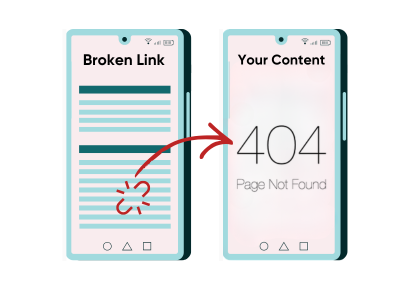
If you've run link building campaigns before, you already know not every tactic holds up. Guest posting gets saturated. Digital PR lives or dies on the hook. And niche edits often turn into a black box.
Broken link building services sit in a different bucket. They fix a real issue for webmasters - dead links drag down user experience - and you earn a relevant backlink in exchange. Everyone wins.
Bottom line up front: A quality broken link building service finds dead pages with existing backlinks, creates or matches replacement content on your site, and runs personalized outreach to webmasters requesting the link swap. The best providers stand out with transparent prospecting methodology, Wayback Machine-verified content matching, realistic conversion benchmarks (expect 5-15% outreach-to-placement rates in most niches), and reporting that ties placements to domain authority and traffic metrics. This guide gives you the evaluation framework to separate providers who deliver from those who waste your budget.
Most service pages skip the messy part: outcomes swing hard. Data from Editorial.link shows one campaign can land 20 links from 50 outreach emails, while another squeezes out only 1-2 placements from 100. That gap doesn't come from luck—it comes from process. And if you're spending $2,000-$5,000 per month on a manual link building service, you need clarity on what actually drives results before you sign.

What Broken Link Building Services Actually Do (And What They Don't)
A broken link building service runs the full workflow: finding dead links on third-party sites, checking whether those links are real SEO opportunities, creating or sourcing replacement content, and reaching out to the people who can update the page. That's the job.
The misses matter too. Knowing what a service won't do keeps expectations in check and keeps your team from buying a promise nobody can keep.
What's included in a legitimate service:
- Prospecting and discovery. Crawling target sites and using tools like Ahrefs, Screaming Frog, or custom scrapers to find 404 pages that still have backlinks from authoritative referring domains.
- Opportunity qualification based on Domain Rating (DR), page-level organic traffic, dofollow status, and topical fit.
- Content creation or matching: write new content that mirrors the dead page's original topic (confirmed via the Wayback Machine) or map an existing page on your site as the replacement.
- Personalized outreach to site owners, editors, or webmasters. Real emails, not mail-merge fluff.
- Reporting and placement verification - confirm live placements, log linking page metrics, and show campaign performance over time.
What a broken link building service does not do: It doesn't guarantee placements. No agency can force a webmaster to edit their page. It also doesn't replace your broader link building strategy. Broken link building is one channel in a mix. Providers that sell it as a silver bullet are either new to this or overselling.
Content depth still decides whether this works. If a provider can't find or build a real topical match for the dead resource, the pitch dies in the inbox. That's why the best broken link building services put time into the content matching phase instead of sending templated outreach at scale.
This is editorial work. Judgment beats automation.
Why Broken Link Building Works in 2025: The Psychology and the Data
The web decays faster than most teams expect. Ahrefs ran a large-scale study on backlink lifespans and found that over 66% of links to sites in their index eventually point to dead pages. That's not a small cleanup issue. It's baked into how the internet functions. Companies rebrand. Sites restructure. Domains expire. Pages get deleted. Each one creates a broken link inventory.
The psychology is straightforward. Webmasters don't want broken links on their site. A 404 hurts user experience, signals neglect to visitors, and clashes with Google's helpful content guidance, which pushes for a satisfying page experience. When your email says, "this link is broken and here's a working replacement on the same topic," you're handing them a fix. You're not asking for a favor.
That "fix" framing changes outreach math. Guest post pitching asks a stranger to publish you, usually with thin upside on their side. Broken link outreach swaps that around. The webmaster cleans up the page. Readers get a working citation. You get a contextual backlink from a page that already has authority flowing through it.
The data supports this. Analysis from LaGrowthmachine across 47 broken link building campaigns found that campaigns built on personalized outreach and strong content matches beat generic outreach by 3-5x on placement rates. Volume didn't win. Speed didn't win. Relevance, personalization, and prospect quality did. Understanding what makes a good backlink profile helps explain why these contextual placements carry so much weight.
Prospect quality also creates a compounding effect. A placement on a page with 15 referring domains isn't the same as a link on a new guest post that has no traction yet. You're inserting your content into a page that search engines already trust, and some of that equity flows through to you.
And this channel won't dry up. Sites will keep restructuring, rebranding, and shutting down, which means broken links will keep showing up. Execution is the separator.
The 5 Metrics That Separate a High-Value Broken Link Opportunity from a Waste of Time
Not every broken link is worth pursuing. A dead URL on a DR 12 blog with 3 monthly visitors and a nofollow link won't move rankings. The difference between a profitable campaign and a money pit comes down to how hard your provider qualifies opportunities before they spend time on content creation and outreach.
Here's the five-metric vetting framework we recommend. Any serious broken link building service should run prospects through something close to this.
Metric | Minimum Threshold | Why It Matters |
|---|---|---|
Domain Rating (DR) | 30+ (ideally 50+) | Indicates the overall authority of the linking domain. Below DR 30, the SEO value of most placements drops fast. |
Page-Level Organic Traffic | 100+ monthly visits | A page with real traffic signals that Google still values it. Zero-traffic pages often get deindexed or sit on the edge of quality. |
Dofollow Status | Must be dofollow | Nofollow links pass minimal (if any) ranking equity. Your provider should confirm the link attribute before outreach. |
Topical Relevance (via Wayback Machine) | Strong content match | The dead page's original topic has to line up with your replacement content. Irrelevant swaps get rejected or ignored. |
Referring Domain Count to Dead URL | 5+ RDs preferred | A dead page with many referring domains is disproportionately valuable. One placement can redirect equity from dozens of links. |
The referring domain count deserves extra attention. This is the metric most providers miss. Imagine a resource page on a DR 65 education site that links to a dead URL. That dead URL has 40 referring domains pointing to it. If the webmaster replaces the broken link with yours, your page now sits in the exact position where 40 other sites were sending authority.
That's not one link. That's a node in a link graph that boosts your placement's value. The concept of link equity explains exactly why these high-referring-domain targets are worth the extra prospecting time.
A mid-market SaaS team spending $3k/month on broken link building should expect their link building service to surface opportunities where at least 2-3 of these metrics hit the higher thresholds at the same time. A DR 55 page with 200 monthly visits, dofollow links, and a dead URL carrying 12 referring domains is a high-value target worth the content creation time. A DR 35 page with 50 visits and a single referring domain is acceptable filler, but it shouldn't hold up the campaign.
How to Assess Topical Relevance Before You Build Replacement Content
Topical relevance needs human judgment, and it's where lazy providers cut corners. You can't automate this with a basic keyword match and call it done. You have to look at what the dead page used to be.
The Wayback Machine is non-negotiable here. A competent provider pulls the archived version of the dead page on web.archive.org and compares the content, structure, and intent against your proposed replacement. If the dead page was a comprehensive guide to "email marketing automation for nonprofits" and your replacement is a generic post about "digital marketing tips," it won't land. The webmaster will clock the mismatch, and even if they don't, the link loses context.
The context is the whole point.
Here's what a real relevance check looks like in practice:
- Check the dead page's title, headings, and main topic via Wayback Machine snapshots.
- Review the surrounding content on the linking page so you know what role the link played.
- Depth check: If the dead page was 3,000 words of in-depth analysis, a 500-word blog post won't cut it.
- Verify the anchor text used in the original link. Your replacement should fit that anchor naturally.
Some providers skip the Wayback Machine and match off URL slugs or broad site topics. That's a red flag. The slug "/email-marketing-guide" could have been anything from a beginner overview to an advanced technical walkthrough. Without checking the archived content, you're guessing.
And guessing wastes outreach emails.
What a Broken Link Building Service Should Include: The Non-Negotiable Deliverables
When you're evaluating broken link building services, you need a clear picture of what you're actually buying. Too many providers describe their offering in vague terms like "we find broken links and reach out." That tells you nothing about methodology, quality control, or accountability. Here are the deliverables that should be explicitly included in any service worth paying for.
1. A documented prospecting methodology. Your provider should be able to explain exactly how they find broken link opportunities. Do they start with competitor backlink analysis? Do they crawl resource pages in your niche? Do they use tools like Ahrefs' Broken Backlinks report, Screaming Frog, or proprietary scrapers? The method matters because it shapes the quality of the opportunity pipeline. Ask for specifics. Real specifics.
2. Opportunity qualification with transparent criteria. Before any outreach happens, you should receive a qualified prospect list showing the linking domain's DR, the page's traffic, dofollow/nofollow status, and the dead URL's referring domain count. If a provider can't or won't share this data, they're either not collecting it or they don't want you to see how weak their targets are.
3. Wayback Machine-verified content matching. As covered above, the provider should verify what the dead page originally contained and confirm that your replacement content is a real topical match. This step needs to show up in the campaign reporting, not live only in someone's spreadsheet.
4. Custom replacement content creation (or detailed content briefs). Some providers write the replacement content for you. Others provide briefs so your team can create it. Either approach works, but the content must meet Google's helpful content standards. Thin, keyword-stuffed pages won't earn placements, and even if they do, they won't hold value long-term. The content should be useful, well-structured, and at least as thorough as the dead page it replaces.
5. Personalized outreach (not templates). This is the biggest differentiator between providers who get results and those who don't. We'll cover this in depth below.
6. Transparent reporting with placement verification. Every placement should be verified with a live URL, a screenshot, and the key metrics of the linking page. Monthly reports should include outreach volume, response rates, placement counts, and the aggregate DR/traffic profile of secured links. If a provider only reports "we got you 8 links this month" without supporting data, you have no way to judge quality. A solid SEO reporting guide can help you understand exactly what metrics to demand from your provider.
7. Ongoing communication and strategy adjustments. Broken link building isn't set-and-forget. Niche saturation, seasonal content trends, and competitor activity all affect campaign performance. Your provider should adjust targeting, content angles, and outreach messaging based on what's working and what isn't - and tell you what changed and why.
A service that includes all seven of these deliverables runs like a professional operation.
Skip two or three, and the shortcuts will show up in your results.

Outreach Quality: The Variable Most Providers Won't Show You
Here's a scenario that plays out constantly. An agency signs up for a broken link building service, receives a report showing 200 outreach emails sent, and sees only 2 placements. They assume the tactic doesn't work. But the real problem is the outreach quality.
Data from Editorial.link highlights the extreme variance in broken link building outcomes: one campaign can yield 20 links from 50 emails, while another produces just 1-2 links from 100 emails. That swing almost always comes back to three factors: personalization quality, content match strength, and prospect selection.
What bad outreach looks like:
- Generic templates with "[WEBSITE NAME]" merge fields and no reference to the specific broken link or page context
- Emails sent to generic contact@ addresses instead of the actual editor or site owner
- No explanation of why the replacement content is relevant
- Pushy or transactional tone that signals the email is a link building play rather than a genuine suggestion
What good outreach looks like:
- References the specific page and the specific broken link by name
- Briefly explains what the dead resource used to cover (demonstrating the sender actually checked)
- Positions the replacement content as a natural fit, with a clear explanation of why
- Uses a conversational, helpful tone that respects the webmaster's time
- Follows up once (maybe twice) without being aggressive
Ask your provider for sample outreach emails before you sign. Not templates. Actual sent emails (with identifying details redacted). If they won't share them, that's a signal. The Moz guide to broken link building offers a useful benchmark for what high-quality personalized outreach actually looks like in practice.
The outreach is the mechanism that converts all the upstream work into placements. It's the most important variable in the entire campaign, and it's the one most providers hide behind vague descriptions.
Broken Link Building Services vs. Other Link Building Tactics: When to Use Each
Broken link building isn't the right tactic for every situation. Knowing where it fits against other options helps you spend budget with intent and set expectations with your provider before the first email goes out.
Tactic | Best For | Typical DR Range | Scalability | Cost per Link |
|---|---|---|---|---|
Broken Link Building | Earning contextual links from established pages with existing authority | DR 40-80+ | Moderate (limited by opportunity supply) | $150-$500+ |
Guest Posting | Building links at scale with controlled anchor text and content | DR 20-60 | High | $80-$300 |
Digital PR | Earning high-authority editorial links from news sites | DR 70-90+ | Low (campaign-dependent) | $500-$2,000+ |
Niche Edits | Placing links in existing indexed content quickly | DR 30-70 | Moderate | $100-$400 |
Link Reclamation | Recovering links you've already earned but lost | Varies | Low (finite supply) | $50-$150 |
Broken link building shines when you need high-quality, contextually relevant backlinks from pages that already carry authority. This is a strong fit for B2B SaaS companies, financial services, education-adjacent brands, and any niche where resource pages and link roundups show up often. The backlinks usually last longer than guest posts because they're placed inside existing content that the site owner already maintains.
Durability is the upside. Supply is the limit.
It underperforms in niches where resource pages are rare or where the market is too new to have built up many dead links. A brand-new SaaS category with only a handful of competitors won't have enough broken link supply to sustain a full campaign. Guest Posts or digital PR often makes more sense for the same spend in those cases.
For agencies offering white label link building services, broken link building belongs in the service mix. It's manual work, and it tends to land real editorial placements. That makes it easier for our partners to defend placements to end clients who care about link quality. And because the process is transparent and defensible, it fits clients who want to review every URL before they sign off.
A blended strategy usually wins. Use broken link building for your highest-value targets where you need authoritative, contextual placements. Bring in guest posting or niche edits when you need volume. Digital PR sits on top when you have a real news angle to pitch. A good link building platform or agency partner should map the mix to your niche, competition level, and budget.
How to Evaluate a Broken Link Building Agency Before You Sign a Contract
This is the section that no competitor page covers adequately. You're about to commit budget to a provider. Run this 10-question evaluation before you sign anything.
1. "How do you find broken link opportunities?" Ask for specifics. Competitor backlink analysis. Resource page crawling. Niche-specific databases. If the answer stays vague ("we use our proprietary process"), don't let them off the hook.
2. "What are your minimum DR and traffic thresholds for prospects?" A provider without clear thresholds either doesn't filter or filters inconsistently. You should hear numbers, not opinions.
3. "Do you use the Wayback Machine to verify content matches?" If the answer is no, the content match check is surface-level.
4. "Can I see sample outreach emails from recent campaigns?" Not templates. Actual emails. This usually tells you more about conversion rates than any pitch deck.
5. "What's your average outreach-to-placement conversion rate?" Above 10% is strong. A 5-10% range is realistic. Below 5% points to poor prospecting or weak outreach. Treat 20%+ claims with caution unless the provider can show clean, niche-specific reporting.
6. "Who writes the replacement content, and what's the quality standard?" Content quality drives placement rates and the long-term value of the link. Get a straight answer on whether they use experienced writers or push work through content mills.
7. "What does your monthly reporting include?" Look for:
- Outreach volume and response rate
- Placement count
- Per-placement metrics like DR, traffic, and dofollow status
- Content match documentation
8. "How do you handle niches with limited broken link supply?" A straight provider tells you when your niche doesn't fit broken link building. A weak one promises results no matter what.
9. "Do you offer any guarantees, and what are the terms?" Guaranteed placement counts can work if they're realistic and tied to minimum quality. Guaranteed rankings are a red flag.
10. "Can I speak with a current client in a similar niche?" References matter. A provider that trusts its delivery will put you in touch with someone who can confirm the experience.
Google's own guidance on evaluating SEO providers emphasizes references, clarity on process, and caution around guarantees. Use the same bar here. The best broken link building services don't dodge scrutiny because their process holds up when you check it.
Red Flags That Signal a Low-Quality Provider
Some warning signs should end the call. Fast.
- "We guarantee X links per month" without specifying quality thresholds. Volume guarantees without DR or traffic minimums mean you'll get links from junk sites.
- No willingness to share outreach samples or methodology details. Opacity kills accountability.
- Pricing that seems too cheap. If a provider is charging $50 per broken link placement on DR 50+ sites, the math doesn't work. Either the links aren't DR 50+, or the placements are manufactured rather than earned through real outreach.
- They can't explain how they verify dofollow status. Basic stuff. If they're not checking, they're not qualified.
- All placements come from the same small pool of sites. That usually means a private blog network (PBN) dressed up as broken link building. Look at the linking domains - they should be independent sites with real traffic and a real content history.
- They promise results within 1-2 weeks. Broken link building takes time. Prospecting, content creation, outreach, and follow-up cycles run 4-8 weeks before the first placements land.
Trust your instincts here. If something feels off during the sales process, it gets worse once budget is committed. Familiarizing yourself with common link building mistakes to avoid will sharpen your ability to spot these warning signs before you commit.
Realistic Timelines and ROI: What to Expect from a Broken Link Building Campaign
Setting realistic expectations matters. Broken link building isn't fast. It's a quality play that compounds.
Timeline expectations:
- Weeks 1-2: Prospecting, opportunity qualification, and content matching. No outreach has been sent.
- Weeks 3-4: Replacement content creation or approval. Initial outreach begins.
- Weeks 5-8: Follow-up emails go out. First placements start landing. Expect 30-50% of your total campaign links to come in this window.
- Weeks 9-12: Remaining placements trickle in. Some webmasters take weeks to update pages. Reporting and campaign review happen here.
That 4-12 week window is normal. Plan around it.
A realistic monthly output for a well-run campaign targeting DR 40+ sites is 5-15 placements per month, depending on niche, budget, and content quality. Some niches with abundant resource pages (education, marketing, technology) skew toward the higher end. Competitive niches with fewer broken link opportunities (local services, narrow B2B verticals) skew lower.
ROI framing matters. Don't judge broken link building on cost per link alone. One placement on a DR 70 page with 500 monthly visitors and 20 referring domains pointing at the dead URL beats 10 placements on DR 30 pages with near-zero traffic. Good providers walk you through weighted value per placement, not just link counts.
That weighted value also explains the workload. LaGrowthmachine's analysis of 47 broken link building campaigns found that the average campaign required 40-60 hours of total work across prospecting, content creation, outreach, and follow-up to produce a meaningful batch of placements. It's a real time commitment, which is why outsourcing to a specialist makes sense for teams without a dedicated link building specialist. If you're weighing the full cost of building links this way, our breakdown of link building costs puts the investment in context.
For SEO results specifically, plan on 3-6 months before broken link placements start showing up in rankings. Google has to crawl and index the links, then fold them into ranking systems. That lag isn't unique to broken link building - it's how link-based SEO works.
How RhinoRank Executes Broken Link Building: The Process Behind the Placements
At RhinoRank, we've built our broken link building process around the same accountability standards outlined in this guide. We don't just list best practices. We stick to them.
Our prospecting starts with your competitive set. We analyze your top competitors' backlink profiles to find dead pages they used to attract links to, then cross-reference those opportunities against our qualification criteria. Every prospect meets minimum DR thresholds - usually DR 40+ and adjusted by niche - shows real organic traffic, and provides dofollow links. We also prioritize dead URLs with high referring domain counts because those targets tend to drive the most value.
Content matching is where we spend the most time. Our team uses the Wayback Machine to confirm what each dead page originally contained. No guessing from URL slugs. We review the archived content, pin down its depth and angle, and then either map it to existing content on your site or create a new piece that works as a true replacement. That replacement content aligns with Google's helpful content standards because that's what earns placements and helps keep them.
Our outreach is entirely manual and personalized. We don't run template blasts through mass email tools. Every email points to the exact page, the exact broken link, and the exact reason our replacement fits. We've seen this approach deliver outreach-to-placement conversion rates in the 8-15% range, in line with the benchmarks covered in this article.
Reporting is transparent and detailed. Every monthly report includes the full prospect list with qualification metrics, outreach volume and response rates, confirmed placements with live URLs and screenshots, and the DR and traffic profile of each linking page. We also include the Wayback Machine snapshots used for content matching, so you can verify relevance on your side.
We offer this as both a direct service and as part of our Managed Service for agencies that need to deliver broken link placements to their own clients under their brand. Same process. White-labeled reporting. Same quality bar.
Broken link building isn't the only tactic we run, but we take it seriously because compounding is the point. A placement earned today on a DR 60 resource page can keep paying off for years as that page picks up more backlinks and traffic. That's the type of link building that earns its keep.

Frequently Asked Questions About Broken Link Building Services
What is a broken link building service and how does it work?
A broken link building service finds dead 404 links on third-party websites, lines up a relevant replacement page on your site (or creates one), and reaches out to the site owner with a suggested swap. The exchange is simple: they fix a broken citation, and you pick up a contextual backlink.
Good providers run the full workflow end to end, from prospecting and content matching through outreach, follow-up, and placement checks.
Is broken link building safe according to Google's guidelines?
Yes, as long as it's run as editorial outreach. Google's spam policies on link schemes focus on manipulative tactics like buying links, excessive link exchanges, and automated link building. Broken link building sits outside that scope because you're offering a legitimate replacement for a dead resource and the webmaster chooses to update their page.
That editorial choice is the point. No payment to the webmaster. No reciprocal link arrangement. No change to the linking page beyond fixing a broken reference.
How many backlinks can I realistically expect from a broken link building campaign?
Results vary by niche, budget, and provider quality. A well-run campaign lands 5-15 placements per month on DR 40+ sites.
But the spread is wide. Editorial.link's data shows campaigns ranging from 20 links per 50 emails to 1-2 links per 100 emails. Content fit drives a lot of that. Prospect selection does too. Outreach personalization closes the gap.
Push your provider for niche-specific benchmarks instead of generic forecasts.
How long does it take to see SEO results from broken link building?
First placements usually show up 4-8 weeks into a campaign.
Those placements then need time to register. Ranking movement tends to follow 3-6 months later, which lines up with how long Google takes to process and weight new backlinks. Broken link building is a long-term play, not a quick fix.
Long-term is also why this channel works. The links tend to stick, so ROI stacks over time instead of fading out.
What should a broken link building service report include?
At minimum: outreach volume sent, response and placement rates, confirmed live placements with URLs, DR and organic traffic for each linking page, dofollow verification, and content match documentation, including Wayback Machine snapshots. Providers who only send link counts without the supporting metrics don't give you enough to judge quality or hold them to the work.
Start Your Broken Link Building Campaign: What RhinoRank Needs to Get Going
Getting started with our broken link building services is straightforward. Our onboarding keeps the lift light on your side, but still gives us what we need to run a campaign that targets real placements.
Here's what we need from you:
- Your target URLs or pages - Tell us which pages you want links to. If you're unsure, we'll prioritize based on keyword targets and current backlink gaps.
- Your niche and competitor list - Competitor backlink profiles are one of our main prospecting inputs. A clean list speeds up discovery.
- Content assets or willingness to create new content - Existing content that can serve as replacement resources helps. If you don't have them, we can create replacement content as part of the service.
- DR and quality preferences - Minimum thresholds, preferred site types, and any exclusions. Our default is DR 40+, and we adjust based on niche and goals.
- Monthly budget and timeline expectations - Budget sets scope. Timelines set expectations. Together they shape placement targets.
That intake lets us move fast. We handle prospecting, qualification, content matching, outreach, and reporting. Most clients get their first qualified prospect list within the first week, with initial placements in 4-6 weeks.
Those placements come from process, not luck. Whether you're an in-house SEO team supplementing link acquisition, an agency looking for a white label link building services partner, or a marketing director hiring a manual link building service for defensible results, our work stays editorial. Reporting stays detailed. And links get earned without shortcuts.
If you want to compare us to the framework in this guide, do it. Reach out to our team with your niche and goals, and we'll map out what a realistic broken link building campaign looks like for your situation.
related Blog Posts



Join 2,600+ Businesses Growing with Rhino Rank
Sign Up
Stay ahead of the SEO curve
Get the latest link building strategies, SEO tips and industry insights delivered straight to your inbox.