
 Back to all posts

Keyword density is the number of times a keyword appears on a page divided by the page's total word count, shown as a percentage. A keyword used 15 times in a 1,000-word page has a density of 1.5%. That is the whole measure: a count and a division.
This guide takes the question in order. First the formula and a worked example, then the reason two tools can give two different answers for the same page. After that, what two dated studies measured when they set density against where pages sit in organic search results, and what the familiar plugin thresholds actually are. Then a short section on checking a page, and finally the same question asked off the page: how the keyword appears in anchor text, the clickable wording of a link.
What keyword density is
Keyword density describes how often a phrase is repeated on a page relative to the page's length. A short page with a handful of mentions can show the same figure as a long page with many, because the word count does the levelling. Other names for it include keyword frequency and KW density, and when the keyword runs to several words, some tools call it keyphrase density. Whatever the label, the figure is a property of the text. A high figure is not good or bad in itself, and neither is a low one.
On its own, the number says nothing about whether the page answers the search. A page can repeat its phrase at any density and still miss what the searcher asked, and another page can answer well with the phrase barely repeated at all. How a search engine reads a page involves far more than counting repeated wording, so density is best treated as a description of the text, not a score to chase.
How to calculate keyword density
The formula is one line of arithmetic:
Keyword density = (number of times the keyword appears ÷ total words) × 100
Two worked examples. The two-word keyword content marketing, used 15 times in a 1,000-word page: (15 ÷ 1,000) × 100 = 1.5%. The three-word keyword search engine optimisation, used 8 times in a 500-word page: (8 ÷ 500) × 100 = 1.6%. Use the word count of the page's body text as the total.
Those examples count each use of the phrase once, whatever its length. Count the phrase's words instead and the answers change. A three-word phrase used 8 times is 24 of the 500 words, which is 4.8%. A two-word phrase used 15 times is 30 of the 1,000 words, which is 3.0%. Same pages, same phrases, two different answers.
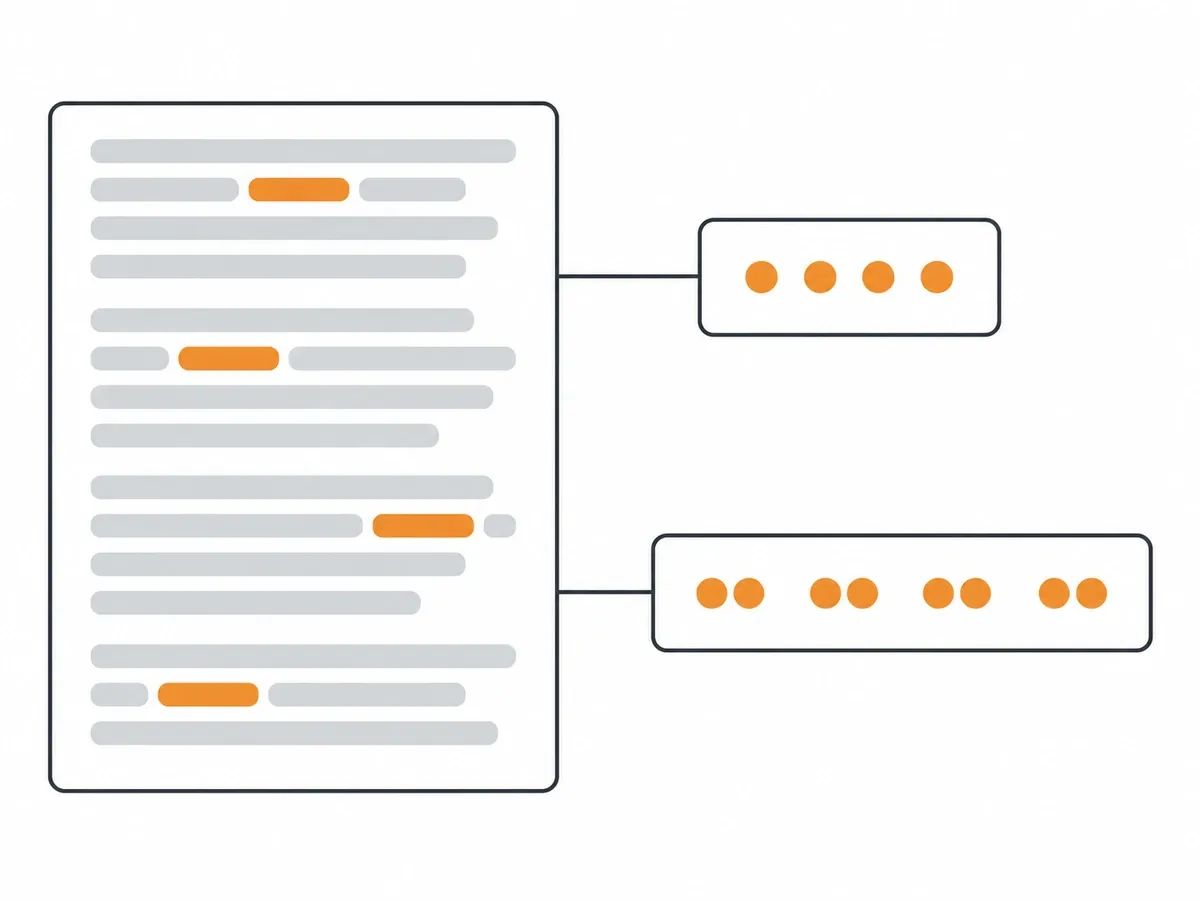
Tools do not all count the same way. Yoast says of its own check: "The length of the keyphrase also factors into how we calculate the keyphrase density." So a density figure from one tool is not comparable with a figure from another unless you know how each one counts. Before comparing two figures, check what each tool counted and what it divided by.
What the data shows about keyword density and rankings
Two dated studies say what they measured and how, so they anchor this section.
The larger one is Surfer's on-page ranking study, a page last updated on 9 September 2026. The sample, in the study's own words: "We analyzed 1 million unique search queries and pulled the top 20 organic results for each," and the measure: "We used Spearman’s rank correlation to measure the relationship between each on-page factor and ranking position."
The finding on exact-match wording: "In our analysis, exact-match keyword usage showed almost no correlation." The study attaches its own caveat to that result: "Spearman correlation doesn’t measure causation, but it does show how consistently two things move together."
The same dataset also looked inside headings: "We also see that factors like “Word Count in Headings”, “Keywords in Headings”, and “Keyword Density in Headings” all show low correlation with rankings." That sentence is about headings only.
The second study is Rankability's, on a page published 9 September 2026. Its conclusion: "Based on analyzing 1,536 Google search results, we found no consistent correlation between keyword density and ranking." On the sample behind it: "The table summarizes the original analysis of 1,536 results across 32 highly competitive keywords."
The study reports an average density for each band of positions:
Ranking positions | Average keyword density reported |
|---|---|
1–10 | 0.04% |
11–20 | 0.07% |
21–30 | 0.08% |
31–40 | 0.06% |
41–48 | 0.04% |
On that pattern, the study says: "The pattern is not monotonic: both positions 1–10 and 41–48 have a reported average of 0.04%, while the middle segments are higher." The percentages come from the study's own density measure, so read them as a comparison between positions inside that study, not as numbers to copy onto your own pages.
Taken together: both studies looked for a pattern between how often a keyword is repeated and where a page ranks, and neither found a consistent one.
Is there a keyword density to aim for?
The percentages an SEO plugin shows while you draft are settings inside a writing check, not measurements of pages that rank. These figures are from each tool's own page, read on 3 October 2026. Yoast states: "You need to have a keyphrase density between 0.5 and 3% to get a green bullet." Rank Math states: "To get full marks on this test, ensure your keyword density is between 1% and 1.5%." and it warns when a page goes above 2.5%.
All in One SEO (AIOSEO) says its check "aims for a frequency of 0.5% or higher."
So three tools set three different bands, and each counts density in its own way, as the calculation section shows. A green bullet or full marks means the page met that tool's setting; it does not mean the page matches anything measured in the studies above. A band is a prompt to re-read the page, not a measurement of what ranks. That is why this guide gives no percentage to aim for.
What to do instead. Use the phrase where a reader expects to see it: the title, the first paragraph, and a heading where it fits naturally. Then write the answer to the search. If a sentence reads oddly because the phrase was forced into it, rewrite the sentence. The same placement logic applies to keywords in a URL: the words belong where they tell the reader what the page is.
When repetition gets in the reader's way
There is a point where repetition stops helping and starts grating. A phrase repeated in every sentence makes a page harder to read, whatever density figure the page happens to show.
The fix is rarely deletion alone. Synonyms, related terms and plain pronouns do the same job without the echo: once the topic is set, a page about keyword density can say the measure, the figure, or simply it, and the reader follows. A simple test: read the page aloud. Repetition that sounds wrong to the ear is repetition to cut.
How to check keyword density
You can check a page by hand. Count how many times the keyword appears, divide by the total word count and multiply by 100, exactly as in the formula above. Most editors count the words for you, and the find function counts the phrase. Run the count on the published page if it differs from the draft.
Several tools show the figure while you work. The Yoast SEO, Rank Math and AIOSEO plugins each run a density check as you write, and AIOSEO says "AIOSEO’s analysis will update in real-time." Semrush says its "On Page SEO Tool" provides keyword density data. SmallSEOTools has a free checker that takes pasted text or a page URL. Keep the counting lesson in mind: two tools can give two answers for the same page.
For the numbers worth tracking month to month, see our guide to SEO metrics.
Keywords in anchor text: the same question off the page
On the page, the question is how often the keyword is repeated. Off the page, the same question applies to the links pointing at the page: how are those links worded? Anchor text is the clickable text of a link, on any of the types of backlinks a page can carry. This is the off-page SEO counterpart to density: the phrase in the text of links on other sites rather than in the text of the page. A reader who reaches the page through such a link has read the anchor first, so the wording sets an expectation the page then has to meet.
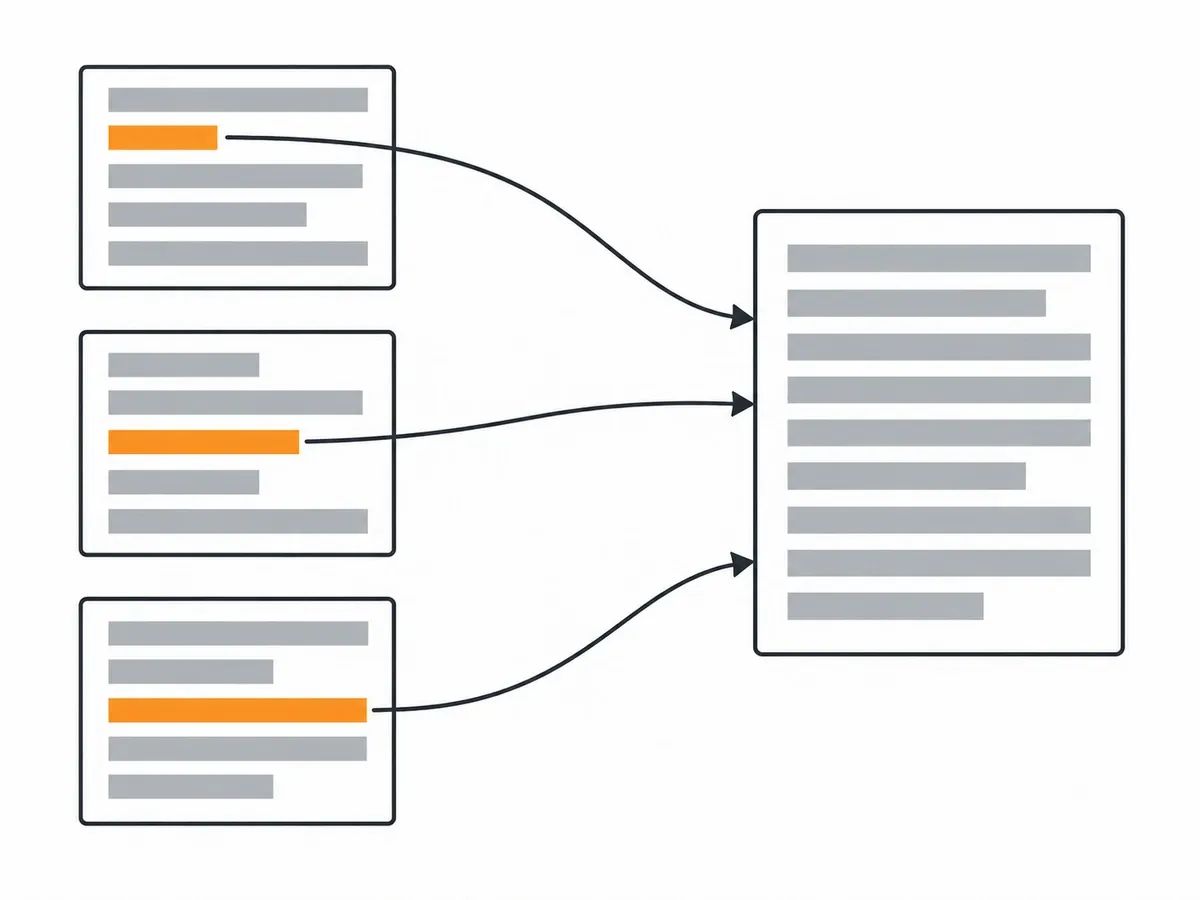
We see the anchor side first-hand. On a Rhino Rank Curated Links order, the buyer supplies the anchor text and the target URL. Our Curated Links FAQ says anchors are expected to be no longer than several words, and that branded and partial anchors are often the most suitable.
After publication we run our quality assurance checks: the page is live, the link sits in the body copy, the anchor and target URL match the order, and the page is indexable. Only then is the URL reported to the dashboard.
One dated study has measured the anchor side. Jeremy Rivera's "Anchor Text and Rankings: A 46-SERP Study" at SEO Arcade covers 46 search results pages and 303 ranking pages and is dated September 2026. Its summary finding: "Among pages that carry a real link profile of their own, how many referring domains describe them in the query’s own vocabulary tracks with where they sit — and how exactly those anchors reproduce the phrase does not." How the study measured exact-match anchors: "Normalised literal equality, counted as the number of distinct referring domains carrying such an anchor, entered as log(1 + count)." The study is a cross-section of ranking pages, not an experiment, and it counts referring domains, not a percentage of anchors.
We like anchor variety for the same reason we like varied wording on the page: it reads like people describing the page in their own words. Write the anchor a reader would click.
Frequently asked questions
What is keyword density?
Keyword density is the number of times a keyword appears on a page divided by the page's total word count, shown as a percentage. It describes how often a phrase is repeated relative to the page's length, and nothing more.
What is the keyword density formula?
Keyword density = (number of times the keyword appears ÷ total words) × 100. A keyword used 15 times in a 1,000-word page works out at (15 ÷ 1,000) × 100 = 1.5%.
What is a good keyword density?
There is no single figure to aim for. SEO plugins set different bands: Yoast checks for 0.5 to 3%, Rank Math for 1 to 1.5%. The two dated studies in this guide, Surfer's and Rankability's, each looked for a consistent link between density and ranking position and found none, so write for the reader.
Do keyword density checkers all give the same number?
No. Some tools count each use of a phrase once, while others count the phrase's words, so the same page can produce different figures in different tools. A three-word phrase used 8 times in 500 words is 1.6% on the first way of counting and 4.8% on the second.
related Blog Posts




Join 7,000+ Clients Growing with Rhino Rank
Sign Up



Stay ahead of the SEO curve
Get the latest link building strategies, SEO tips and industry insights delivered straight to your inbox.