
 Back to all posts
High quality backlinks are links you can describe by properties you can check before you pursue or order them. Look for a page on a relevant site that people visit and search engines can index, with your link in the body copy under a descriptive anchor. To get high quality backlinks, check those properties first and then choose a route.
This guide works through the eight properties twice: once in a single table, then one by one, each with who defines it and what a dated study measured. After that we cover what the vendor scores add, how we check a site before we place a link, and five ways to get links, with other people's own numbers. No single score decides any of it for you. As for why they matter for SEO: we hold that links from relevant sites people read are one of the strongest ranking levers a site has, and in a 2023 Ahrefs study only 2,997 of about 20 million pages with no referring domains got more than 1,000 search visits a month.
What makes a backlink high quality: eight properties you can check
The eight properties below are the checks behind every link worth having, with the source that backs each one.
Property | What to look at | Source behind it |
|---|---|---|
Topical relevance | Whether the linking site and page cover your subject | Ahrefs Help, 3 September 2026 |
Organic traffic | Whether the linking site and page get search visits, and the trend | Ahrefs Help, 3 September 2026; Ahrefs study, 19 February 2019 |
Referring domains | How many sites link to the linking site and page | Ahrefs studies, 2019 and 2023 |
Position in the page | Whether the link sits in the body copy or in the navigation, header, footer or sidebar | SEO Arcade, 8 September 2026 |
Anchor text | Whether the anchor describes the page it points to | Google's link documentation, 10 December 2025 |
Follow attribute | Whether the link carries nofollow, sponsored or ugc | Web Almanac 2025 |
Indexability | Whether the linking page can be crawled and indexed | Our post-publication check |
Outbound links | How many other sites the linking page links out to | Web Almanac 2025; Ahrefs Help |
None of these is a score; each is something you can check on the page itself or in a backlink tool.
The eight properties, one by one
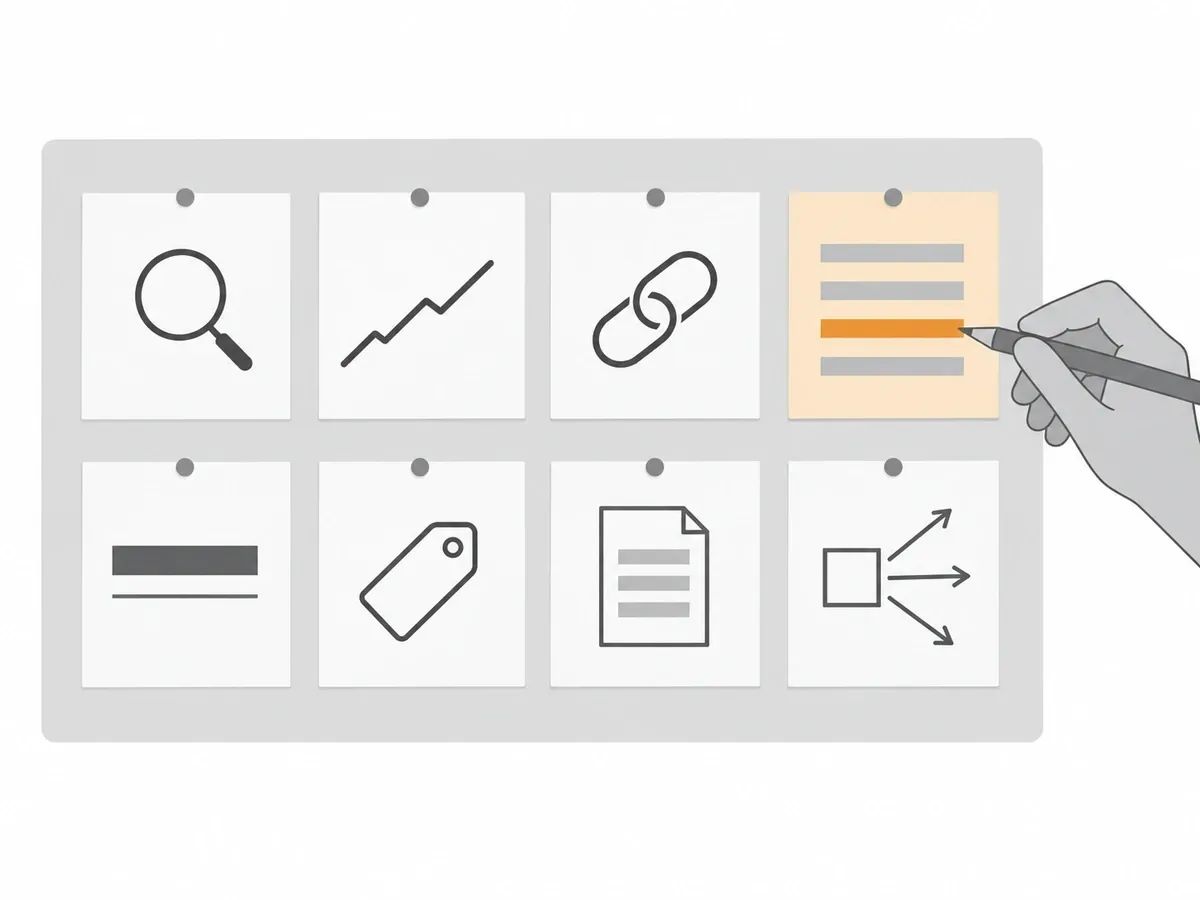
Here is what to check for each property, and the source behind it.
Topical relevance
Check whether the linking site, and the linking page itself, cover your subject. Ahrefs' help page on Domain Rating, dated 3 September 2026, says a website should not be judged on site-wide authority alone and lists whether the site is topically relevant to yours among the checks to make.
Read the page, not only the domain: a link from a page about your subject sits in front of readers who already care about it, while a page about something else gives the link no context, however strong the domain looks. The test is whether those readers would have a reason to click through to your page.
Organic traffic
Check whether the linking site and page get search visits, and which way the trend is moving. The same Ahrefs help page asks whether a site gets any organic traffic. The dated study behind this row is a 2019 Ahrefs study, published 19 February 2019. It took 44,589 non-branded keywords with monthly search volumes between 2,000 and 5,000, pulled the top 10 ranking pages for each, and measured how several link metrics correlate with ranking position.
It found that the sum of organic traffic to the referring pages correlated higher than the number of referring pages with traffic. The study is more than seven years old and uses Ahrefs' own data, and Ahrefs notes it only knows the organic search traffic of referring pages. A site can look strong on every score and still have no readers, so treat traffic as a sign that a page is read, not as a promise of what a link will do. Watch the trend as well as the level: a page losing search visits month on month is a different prospect from one that is growing.
Referring domains
Check how many separate sites link to the linking site and to the linking page. The same 2019 study counted the referring domains pointing at each ranking page, with and without traffic of their own, and reported: "Perhaps the most striking observation here is that the number of referring domains with traffic didn't correlate higher than the total number of referring domains."
A later Ahrefs study, published 1 December 2023, looked at around 14 billion pages from its own index and found about 20 million pages with no referring domains at all; only 2,997 of those pages got more than 1,000 search visits a month. That article is careful to note that correlation does not imply causation, and its sample is Ahrefs' own index rather than the whole web.
The 2023 figures suggest that a page with no referring domains rarely gets more than 1,000 search visits a month, so in our view a linking page with referring domains of its own is the stronger prospect. When you check a prospect, look at the links pointing to the exact page that would carry yours, not only the domain's total. How many links a page needs is a separate question, answered in how many backlinks you need to rank.
Position in the page
Check where on the page the link will sit: in the body copy, or in the navigation, header, footer or sidebar. SEO Arcade, a link building company, classified 233,845 backlinks to pages ranking in the top twenty and reported on 8 September 2026 that 4.34% of them sat in the navigation, footer, header or sidebar. That sample is pages that already rank, so the figure describes what ranking pages tend to carry rather than what causes a page to rank.
A link in the body copy sits inside the writing and carries the context of the sentences around it. Our own rule: the links we place go in the body copy, and our post-publication check confirms where each one sits. You cannot always control where a link sits when you pitch, but you can ask, and you can decline a placement that only offers a footer.
Anchor text
Check that the anchor, the clickable text of the link, describes the page it points to. Google's documentation page on link best practices, last updated 10 December 2025, puts it this way: "Good anchor text is descriptive, reasonably concise, and relevant to the page that it's on and to the page it links to."
When you order a placement you supply the anchor, so write one that tells the reader what the target page is about. Keep it short enough to sit inside the sentence without taking it over. If you cannot describe the target page in a few words, the link may be pointing at the wrong page. The same rule holds when you pitch: suggest an anchor that describes the page and let the editor adjust it.
Follow attribute
Check whether the link carries a nofollow, sponsored or ugc attribute, or none at all. The Web Almanac 2025 SEO chapter, published 15 January 2026 and updated 9 June 2026, reports that nofollow appears on 32.3% of the pages it crawled, and that the sponsored and ugc attributes appear on 0.5% each.
Those figures are the share of crawled pages carrying each attribute, not a measure of what any one link is worth. Ask about the attribute before you order or pitch. What each attribute means for a link is set out in dofollow vs nofollow backlinks.
Indexability
Check that the linking page can be crawled and indexed. In our view a link only counts once the page carrying it is live and indexable. This is the property people forget: a page can look perfectly good in a browser and still be excluded from indexing.
After a placement is published we check that the page is indexable as part of our standard process. We also use two indexing services as standard for every client, and between them we see roughly a 95% indexing rate. Left without a service, a page can take up to four weeks to be indexed. That rate is what we see across our work, not a promise for any one link.
Outbound links
Check how many other sites the linking page links out to. The Ahrefs help page asks whether a site links out to a lot of websites and advises that fewer tends to be better; its Domain Rating method splits a site's rating equally among the domains it links to. For scale, the Web Almanac chapter measured pages across the crawled web: "The median page included just six outbound links across both desktop and mobile, and even at the 90th percentile the numbers only reached 25 and 24."
That is a figure for pages on the crawled web, not for pages that carry placed links, but it shows what a typical page looks like. How a page's links share value between them is covered in link equity.
What DA, DR and the other vendor scores add
When people ask for high rank backlinks, these scores are usually the rank they mean. Each of these numbers is a vendor's own score, built from that vendor's own index. Moz describes Domain Authority, on a page last updated 18 March 2025, as a predictive metric developed by Moz that is not used by Google to determine search engine rankings. Ahrefs' Domain Rating measures the strength of a website's backlink profile against the others in its database, on a 100-point scale, and its URL Rating does the same for a single page. Majestic publishes Trust Flow and Citation Flow, and Semrush publishes Authority Score.
None of them is a search engine's number. Each vendor crawls the web on its own, so the same site can score differently from tool to tool. The scores are useful for sorting a long list of prospects quickly.
The dated evidence puts the page-level score ahead. In the 2019 Ahrefs study described above, URL Rating was the strongest correlating factor of those measured, and Ahrefs' help page says Domain Rating does not correlate with rankings as well as URL Rating. Both statements are Ahrefs judging its own scores, and the help page gives no sample, so read them as directional. The practical point holds: a score for the page that will carry your link tells you more than a score for the site.
If you want the detail behind each pair of scores, we have written it up separately. Domain Authority vs Domain Rating covers the two most quoted scores, and Trust Flow vs Citation Flow covers Majestic's pair. For a quick check on any prospect, our free DA and DR checker shows both numbers side by side. Check the page as well as the domain, because the page is where your link will live.
How we check a site before we place a link

Every site we place a link on goes through the same review, and the review is one you can run yourself. When we vet a site we look at relevance, referring domains, Domain Authority, organic traffic and its trend, and indexed pages, weighed together rather than any one number standing alone. Domain Authority sets the tier a site falls into, and Domain Rating and live traffic tell us whether that number is earned. We turn away sites whose metrics look impressive but whose traffic does not hold up.
Before a placement goes out, we check the HTTP status code your target URL returns. That way the link does not point at a dead page or travel through a redirect chain.
After publication we open the live page and check it properly: the page is live, the link sits in the body copy, the anchor and target URL match the order, and the page is indexable. Only then is the URL reported to the dashboard, where it can be exported as an unbranded file. Each delivered link carries 12-month replacement cover, so if a link is removed or its page is taken down inside that period, we replace it like for like.
The full list sits on our quality assurance page. You can run the same checks on any site before you pitch it.
Five ways to get high quality backlinks, with numbers
Getting high quality backlinks starts with the properties above, whichever route you take to a link. Here are five routes, in no order of merit, with numbers from people who ran them and wrote up what happened. None of them is the right answer for every page, and the order you try them in is yours.
Digital PR and original research
Digital PR means giving publications something worth covering and letting the link arrive with the coverage. Jan Suski, who runs outreach for tech and SaaS clients, described on 15 July 2026 how a 2024 fintech campaign worked: his team identified 40 industry publications, built one piece of original research, and pitched each publication individually. The campaign produced 11 placements inside two months.
One campaign is one campaign, but it shows the shape of the route: one strong asset, a defined list, and pitches written for each recipient. The properties still apply: a placement on a site nobody reads is a weak result however it was won. We compare this route with ordered placements in digital PR vs curated links.
Guest posts
A guest post is a new article on someone else's site with your link inside it, and there are two ways to get one: pitch the site yourself, or order the placement. Salman Mirza of Linktrixx, a link building company, wrote on 27 July 2026 that his team sent 1,451 cold outreach emails for guest post placements over five to six months, by hand. His tally: "153 emails resulted in closed deals, a 10.5% close rate." That is one company's campaign, and it gives an honest sense of the pitching maths. If you run the outreach yourself, plan for a workload on that scale.
The other way is ordering. A Rhino Rank Guest Posts order is a new article of 750 words or more, written by our team and placed on an independently owned site with one contextual link; you supply the target URL and the anchor text. Ordering shifts the work to the provider, which is why the vetting section above matters: you are relying on their judgement as well as their list. Either way, the article should be worth reading on its own, because the reader is the point of the placement. For how this route compares with niche edits, see guest posts vs niche edits.
Niche edits
A niche edit puts your link into an article that is already published, rather than into a new article written for the placement. The page already exists and may already have readers, so you can run every check above on the live page before your link goes in: read the page, look at its traffic and its outbound links, and make sure your link belongs in the paragraph it joins. Because the article is already written, the relevance check is quick: either the page is about your subject or it is not.
Our version of this product is called Curated Links: the site is vetted for relevance and traffic, and you supply the target URL and anchor text. A good host page is one that already covers your subject and already has readers. For a fuller definition, see what niche edits are.
Linkable assets
A linkable asset is a page other sites cite because it helps their readers: a dataset, a study, a calculator or a tool. Our guide to linkable assets carries three dated accounts with counts, so we will not repeat them here.
Journalist requests
Journalist request services connect writers looking for sources with people who can answer them. Ashmaad, who runs the small tech site epictechnews.com alone, wrote on 14 September 2026 about answering these requests: "Here is the honest tally after two months and four pitches. Zero published backlinks so far."
That is one site's count from four pitches over two months, so read it as one account, not a rate for the route. The properties apply here too: check the publication's relevance and traffic before you spend time on an answer. For how the format works, see HARO backlinks.
Whichever route you choose, most of the work is outreach, so it helps to know what normal looks like. Mentiohunt, an outreach software company, published Mentiohunt's outreach logs, updated 4 September 2026: 1,873 outreach emails to 2,742 tracked prospects across 63 customer products between 13 July and 4 September 2026. Of the 1,042 prospects contacted, 102 replied, a rate of 9.8%.
Broken down by the prospect site's Domain Rating, the reply rate was 14.3% for DR 60+, 10.4% for DR 20-40, 8.9% for DR 40-60 and 7.4% for DR 0-20. These are replies, not links or rankings, and each tier holds between 11 and 41 replies, so treat the pattern as indicative rather than exact. The properties decide which replies are worth having: a reply from a page that fails the checks is not a prospect.
Frequently asked questions
What is a high quality backlink?
In SEO, a high quality backlink, or high quality link, is a link you can describe by the eight properties in this guide: topical relevance, organic traffic, referring domains, position in the page, anchor text, follow attribute, indexability and outbound links. If you can check each one on the linking page before you pursue or order the link, you know what you are getting.
How do you get high quality backlinks?
Check the eight properties on any prospect first, then pick a route: digital PR, guest posts, niche edits, linkable assets or journalist requests. Pitching a site yourself and ordering a placement are both normal routes, and the same checks apply to both.
Does a high DA or DR mean a backlink is high quality?
Not on its own. Domain Authority and Domain Rating are vendor scores, and Ahrefs' own help page of 3 September 2026 says not to judge a site on site-wide authority alone and to look at its organic traffic and topical relevance as well. We do the same: when a site's metrics look strong, we check whether the traffic holds up before we place anything.
How do you find high quality backlinks to go after?
Run the property checks on any prospect: open the page and read it, look at the site's traffic in a backlink tool, check where on the page links sit, and count how many sites the page links out to. A page that passes those checks is worth pursuing, whichever route you take to the link.
Do high quality backlinks need to be indexed?
In our view, yes: we only report a link to the dashboard once the page carrying it is live and indexable, so indexability is one of the eight properties. After a placement is published we check the page is indexable, and we use two indexing services as standard for every client; between them we see roughly a 95% indexing rate, though that is not a promise for any one link.
related Blog Posts



Join 7,000+ Clients Growing with Rhino Rank
Sign Up



Stay ahead of the SEO curve
Get the latest link building strategies, SEO tips and industry insights delivered straight to your inbox.