
 Back to all posts


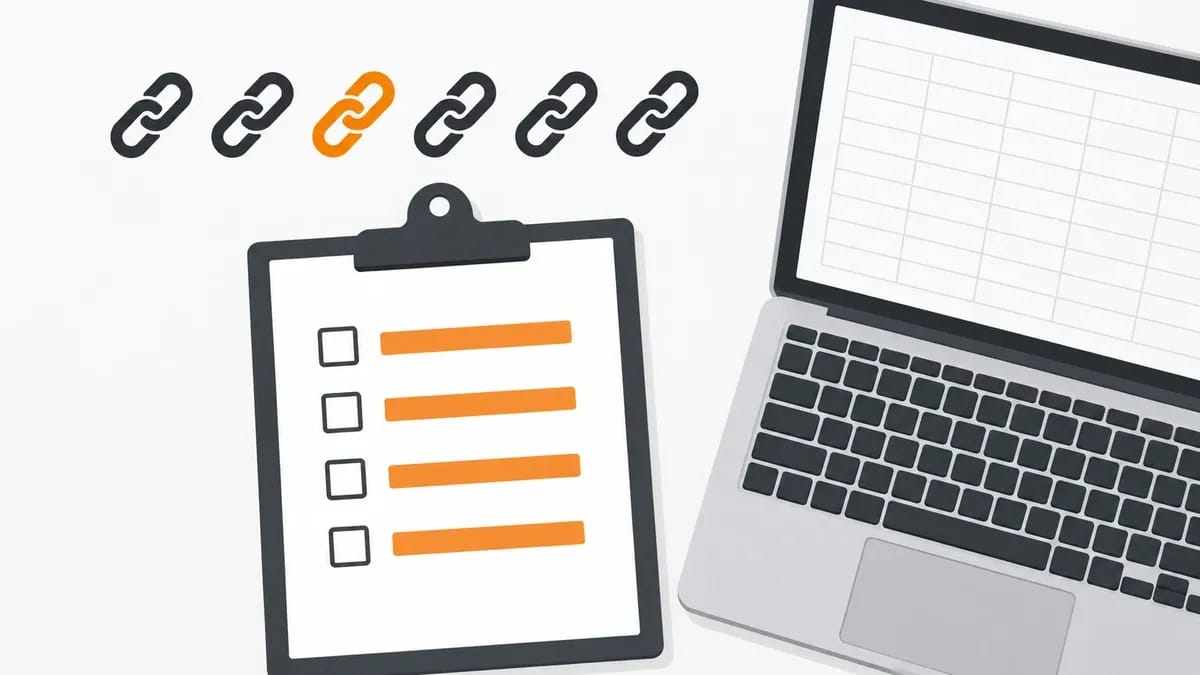
Testimonial link building is writing a testimonial for a product or service you use, so that the company publishes it on its site with a link to yours. The company decides whether to publish it, whether to link, and what the link says. You write the words; the publisher controls the link.
We read ten companies' testimonial pages in October 2026 and counted which ones link to their customers. Below are the counts, then the steps to get a testimonial link, then what the US and UK rules on testimonials say, and finally where testimonial links sit beside links you order.
Do testimonial pages link to customers? Ten pages, counted
We read the testimonial or customer page of ten software companies in October 2026 and counted the links to customers' own sites. A link counted only when it pointed to a customer's own site; links to the company's own pages, to posts on X and to review sites did not count.
Company | What the page shows | Links to customers' sites | Link attribute |
|---|---|---|---|
Basecamp | About 1,000 customer quotes | None | n/a |
Gravity Forms | 10 testimonials | 4 of 10 | noopener noreferrer |
WPForms | Reviews under names or usernames | None | n/a |
Lemon Squeezy | 61 cards on a "wall of love" | 9 of 61 link the author's site; 52 link a post or profile on X | None set |
Ahrefs | Customer quotes with a link each | 24 | nofollow noopener |
Postmark | Customer logos and quotes | 15 customer sites | nofollow on text links |
Ghost | 98 quotes | 98, each linked | noopener noreferrer |
Mintlify | Two named quotes and four customer sites | 4 | noopener noreferrer |
Resend | A grid of customer logos | About 152 | noopener noreferrer |
Slack | 16 customer stories | None | n/a |
Ten pages are a read, not a sample of all companies.
What the ten pages show

Of the ten pages, seven link to at least one customer site: Gravity Forms, Lemon Squeezy, Ahrefs, Postmark, Ghost, Mintlify and Resend. Three do not: Basecamp, WPForms and Slack publish the words without a link. The share of entries that carry a link runs from none of about 1,000 quotes on Basecamp to 98 of 98 on Ghost. A customer link is common on these pages, but not a given.
The link text is the publisher's choice. On the seven pages that link, the link sits on a company name, the customer's domain, a logo or a button to the customer's site, not on a keyword. Two of the seven pages that link add a nofollow attribute: Ahrefs on each customer link, Postmark on its text links but not its logo links. The other five do not.
Two of the ten pages we read invite customers to share their words in public. Lemon Squeezy's page says: "We’d love to hear what you have to say and feature you on the wall of love too." Postmark's says: "Help us spread the word about Postmark by sharing your story", and the links under it go to review pages on G2, Capterra and TrustRadius.
Of the ten homepages, nine carry customer quotes, and only one of them, Ahrefs, links a customer's own site from its homepage; Postmark's homepage quotes link to posts on X. Every one of the ten companies keeps the fuller set on a dedicated page. For more on links from homepages, see our page on homepage backlinks.
How to get testimonial links: five steps

To get testimonial links, work through these five steps in order.
- List what you already use. Write down the software, tools and services your business pays for and has used. A testimonial for something you have not used is not one to write; the rules section below gives the wording on that.
- Check the page before you write. Open each company's testimonial or customer page, which may be called customers, reviews, testimonials, customer stories or wall of love, and look at whether its entries link to customers' sites, as in the table above. A page like Basecamp's or Slack's publishes the quote without a link. If none of the existing entries link out, expect yours to appear without a link too.
- Find who takes testimonials. Some pages carry an invitation, as Lemon Squeezy's does; Postmark's points to review sites instead. Where there is none, write to your account contact or the support address. Ask in a short email whether the company publishes customer testimonials.
- Write something specific. Say what you used the product for and what changed. Give your name, role, company and site address, so the publisher has everything needed without a second email.
- Send it and leave the link to them. The publisher decides whether to publish, whether to link and what the link says.
One practitioner has published a count. Kahl Orr, founder of the web agency Rise, wrote on 10 June 2020 that the agency sent long-form testimonials to eight vendors it used and got a backlink from each. Orr writes that a backlink was never asked for or mentioned as a condition of providing them, and that 90% were accepted on the first draft. That is one agency's own count of vendors it chose, not a rate anyone can promise.
When the testimonial is published, open the page and check whether it links to you and where the link points.
What the rules on testimonials say
A testimonial is an endorsement, and both the US and the UK have written rules that cover endorsements and reviews. We quote the texts here. This is not legal advice.
In the US, the Federal Trade Commission's Endorsement Guides (16 CFR 255.1) say: "Endorsements must reflect the honest opinions, findings, beliefs, or experience of the endorser." The guides also say: "When the advertisement represents that the endorser uses the endorsed product, the endorser must have been a bona fide user of it at the time the endorsement was given."
Alongside the guides, the FTC's rule on consumer reviews and testimonials (16 CFR Part 465) went into effect on 21 October 2024. It covers a testimonial that materially misrepresents, among other things, that the person "used or otherwise had experience with the product, service, or business that is the subject of the review or testimonial".
In the UK, Schedule 20 of the Digital Markets, Competition and Consumers Act 2024, paragraph 13, in force from 6 April 2025, lists submitting or commissioning "a fake consumer review" or "a consumer review that conceals the fact it has been incentivised". The same paragraph defines the first as one "that purports to be, but is not, based on a person’s genuine experience".
Read together, the three texts tie a testimonial to the writer's own use of the product and to what they experienced. None of them says whether a link that a company adds to a published testimonial counts as an incentive.
Why companies publish testimonials
Buyers read what other customers say. BrightLocal's Local Consumer Review Survey 2026, published 11 February 2026 from a panel of 1,002 US adults, reports: "In 2026, 41% of consumers “always” read reviews when browsing for businesses, a huge jump from last year (29%)." That survey is about reviews of local businesses, not testimonials on a company's own page; it is the nearest dated figure.
Testimonial links and placed links
In a testimonial link the publisher decides: whether to publish, whether to link, which page the link sits on and what text it carries. You can do a handful of these, one for each product you use, and each one starts from something you already pay for. A testimonial link is also a one-way link, as long as your site does not link back to the company.
In the links we sell, you choose where the link points and what it says. With Curated Links and Guest Posts you supply the target URL and the anchor text. After publication we check that the page is live, that the link is in the body copy, that the anchor text and target URL match the order and that the page is indexable, and then we report it to your dashboard. Delivered links have 12-month replacement cover. The standard is on our quality assurance page.
The two run side by side: testimonials for the products you already use, placed links for the pages you choose. For a comparison of the two products see guest posts vs niche edits; for links an editor chooses to place, see editorial links.
Frequently asked questions
What is testimonial link building?
Testimonial link building is writing a testimonial for a product or service you use, so that the company publishes it on its site with a link to yours. The company decides whether to publish the testimonial, whether to add the link and what the link text says.
How do you use testimonials for link building?
Using testimonials for link building takes five steps: list the products and services your business has used, check each company's testimonial page to see whether its entries link to customers, find who to send a testimonial to, write something specific with your name, role, company and site address, and send it. The publisher decides on the link. After the testimonial is published, check the page to see whether it links to you and where the link points.
Do testimonial pages link to the customer's website?
Seven of the ten testimonial pages we read in October 2026 linked to at least one customer site, and three did not. The share of entries carrying a link ran from none of about 1,000 quotes on Basecamp to all 98 on Ghost.
What are testimonial backlinks?
Testimonial backlinks are another name for testimonial links: links to your site from a testimonial you gave. Where the ten pages we read in October 2026 linked a customer, the link sat on a company name, a domain, a logo or a button to the customer's site, chosen by the publisher.
What should a testimonial say?
A testimonial should say what you used the product for and what changed, and it should carry your name, role and company. Write a testimonial only for a product you have used, which is what the FTC's guides and the UK Act's wording both come to.
related Blog Posts




Join 7,000+ Clients Growing with Rhino Rank
Sign Up

Stay ahead of the SEO curve
Get the latest link building strategies, SEO tips and industry insights delivered straight to your inbox.