
Wikipedia backlinks: how to get a site cited on Wikipedia
Wikipedia's own counts put the openings at 585,687 articles with unsourced statements and 205,464 with permanently dead links, as of 4 October 2026. Both routes end at the same place for a business: a talk page proposal that an uninvolved editor accepts or declines.

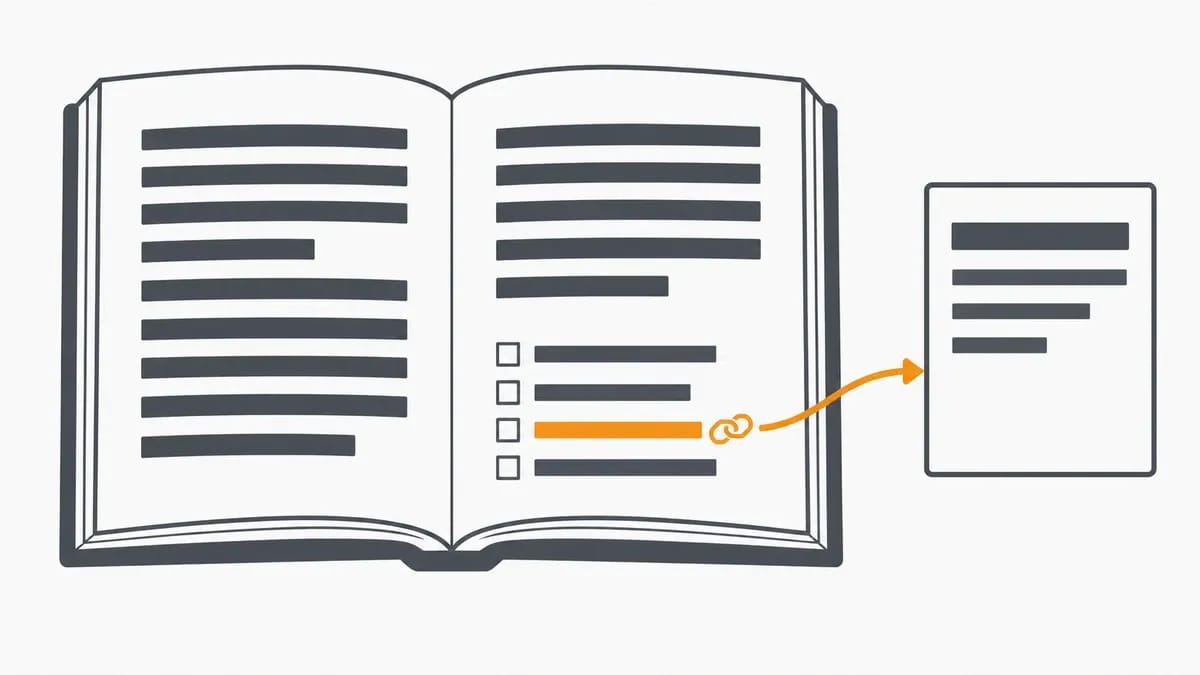
Wikipedia backlinks are links from a Wikipedia article to your site, added by Wikipedia's editors under Wikipedia's own published rules. A site gets one when an editor cites a page of yours as a source in the numbered references, or lists it in the External links section at the end of an article.
This page sets out how that works, taken from Wikipedia's and Wikimedia's own pages, each named with the date it was last edited. It covers what a Wikipedia backlink is, what Wikipedia's rules say about adding one, what kind of page gets cited, three routes with the counts Wikipedia publishes, how to find the Wikipedia links you already have, and what a "Wikipedia backlinks service" has to disclose. Every rule quoted on this page is in the words of Wikipedia or the Wikimedia Foundation, attributed to the page it comes from.
What a Wikipedia backlink is
Apart from rare exceptions and the infobox, the summary box that can carry a subject's official website, a Wikipedia article links out in two places.
- The numbered references that support the article's statements.
- The short External links section at the end of the article.
A Wikipedia backlink is a link in one of those two places.
Links in both places carry the same attribute. Wikimedia's Meta-Wiki page "Nofollow", last edited 27 July 2024, states: "Currently, external links on all Wikimedia wikis are tagged with rel="nofollow"."
The same Meta-Wiki page dates the change for English Wikipedia articles: "On January 20, 2007, it was activated in the main namespace at the request of Jimbo Wales."
On Wikimedia's own account, external links in English Wikipedia articles carry the nofollow attribute, which was switched on for articles on 20 January 2007. Our guide to what the nofollow attribute is covers the attribute itself.
The size of Wikipedia gives the context for the counts Wikipedia publishes. Wikipedia's Statistics page, last edited 2 October 2026, says that as of October 2026, the English Wikipedia includes 7,247,505 articles.
Wikimedia's analytics data records 6,271,394,362 page views of English Wikipedia in September 2026, counting the views Wikimedia's data labels as user traffic.
The same Statistics page says about half of articles have four or fewer references. A Wikipedia backlink means your page is one of those references, or one of the links in that short list at the end.
What Wikipedia's rules say about adding a link
Three pages speak directly to adding a link to Wikipedia: the External links guideline, the conflict of interest guideline and the Wikimedia Foundation's Terms of Use. The sentences quoted here are the ones that bear on a business.
The first page is Wikipedia's External links guideline, last edited 22 September 2026. The guideline uses the same standards for a business's site as for a non-profit's: "Links to potentially revenue-generating web pages are not prohibited, even though the website owner might earn money through advertisements, sales, or (in the case of non-profit organizations) donations." For a site that earns money, the test it sets is the reader: "Choose which pages to link based on the immediate benefit to Wikipedia readers that click on the link, not based on the organization's tax status or your guess at whether the website's owner might earn money from the link."
The guideline prohibits e-commerce and other commercial-sales links in External links but allows them in footnoted citations.
For a site you own or represent, the guideline is direct: "In line with Wikipedia policies, you should avoid linking to a site that you own, maintain, or represent—even if Wikipedia guidelines seem to imply that it may otherwise be linked. When in doubt, you may go to the talk page and let another editor decide."
The second page is Wikipedia's conflict of interest guideline (Wikipedia:Conflict of interest), last edited 16 September 2026. It sets out who the rule covers: "More generally, an editor has a financial conflict of interest whenever they write about a topic with which they have a close financial relationship. This includes being an owner, employee, contractor, investor or other stakeholder."
That list catches more people than you'd think. Most of us hear conflict of interest and picture someone paid to write a company's own article. The guideline's version runs from the site owner down to the freelancer brought in for the afternoon. If you want your own site cited on Wikipedia, you're almost certainly inside it. We'd plan from that position.
The conflict of interest guideline then sets out what it asks of those editors: "COI editors are strongly discouraged from editing affected articles directly, and can propose changes on article talk pages instead."
People read the first half of that sentence and hear a maybe. We wouldn't. Read the whole thing and it hands you a way in. You propose the change on the talk page, and an editor with no stake in the link decides whether it goes in. That's slower than editing the page yourself, and the same guideline says editors may decline to act on a request. It also says a verifiable, appropriate proposal is usually accepted. It's still the route Wikipedia offers a business, and it's the one we'd take.
The third page is the Wikimedia Foundation's Terms of Use, last edited 21 February 2026. The Wikimedia Foundation announced the paid-contribution rule on 16 June 2014. The Terms of Use put the requirement in one sentence. "You must disclose each and any employer, client, intended beneficiary and affiliation with respect to any contribution for which you receive, or expect to receive, compensation."
Wikipedia's conflict of interest guideline puts the same rule as disclosing who is paying you, who the client is and any other relevant affiliation.
Read together, the three pages ask three things of a business:
- Disclose its connection.
- Propose changes on the article's talk page rather than edit directly.
- Let another editor decide.
What kind of page gets cited on Wikipedia
Wikipedia's Reliable sources page, last edited 22 September 2026, describes the sources Wikipedia articles rest on: "Articles should be based on reliable, independent, published sources with a reputation for fact-checking and accuracy."
A business's own pages sit under a separate part of Wikipedia's rules. Wikipedia's Verifiability policy, last edited 6 September 2026, calls self-published material such as personal websites and blogs largely not acceptable as sources.
The same policy then sets out an exception. "Self-published sources may be considered reliable if published by an established subject-matter expert, whose work in the relevant field has previously been published by reliable, independent publications."
The Verifiability policy adds: "if the information in question is suitable for inclusion, someone else will likely have published it in independent, reliable sources."
Wikipedia's conflict of interest guideline adds that a company website is a primary source, so a page you publish about your own work is a primary or self-published source in Wikipedia's terms. The route those sentences describe runs through other publishers: original research or a dataset you publish, reported by independent publications, which an editor may then cite for the finding. This is the thinking behind linkable assets, pages built to be cited. The same reading of a site's own published rules is how we approach .gov backlinks and .edu backlinks.
How to get backlinks from Wikipedia: three routes
Wikipedia link building comes down to three routes, and each starts from a gap Wikipedia itself has marked. For a site you own, work for or represent, Wikipedia's pages send you to route 3. Wikipedia's page "Why create an account?", last edited 15 September 2026, says you do not need an account to read, edit or contribute to Wikipedia.
1. Statements marked "citation needed"
Wikipedia flags statements that lack a source. Template:Citation needed, last edited 23 February 2026, describes it as a template that marks claims in articles, particularly questionable ones, that need a citation to a reliable source. On 4 October 2026, Wikipedia's category "All articles with unsourced statements" had 585,687 members, a count read from Wikipedia's own category page.
Wikipedia has a tool for finding these statements. Wikipedia's Citation Hunt page, last edited 9 February 2026, describes Citation Hunt as a tool that helps find Wikipedia articles with unsourced statements. Use it. Reading articles at random and hoping to spot a tag is a slow way to spend an afternoon. What the tool won't do is tell you whether a statement is worth your time.
The fit to look for is a tagged statement in your field that an independent, published source supports. The tag is a public marker that a statement needs a citation. The work is to match it with a source that meets Wikipedia's description of a reliable source. If the source you have in mind is your own site, route 3 applies.
That last sentence is where this usually stalls. The tag is the easy part. The source is where it gets hard, because the page a business wants cited is its own, and its own site usually isn't the answer. So the hunt for a tag tends to end at the talk page, and we'd go in expecting that.
2. Dead links
Wikipedia marks links that no longer load. Template:Dead link, last edited 22 April 2025, says it is used to mark dead links, either in a paragraph or in a reference citation. On 4 October 2026, Wikipedia's category "All articles with dead external links" had 366,260 members, again a count read from Wikipedia's own category page.
Wikipedia repairs many of these itself. Wikipedia's Link rot page, last edited 18 September 2026, says that as of 2026 a bot and tool called WP:IABOT automates fixing link rot, checking articles for dead links and replacing them with an archived version.
So the opening is a dead link with no archived copy, where a live page covers the same statement. Under Template:Dead link's instructions, a link is marked "permanent dead link" once someone has tried and failed to find an archived copy. On 4 October 2026, 205,464 articles carried that mark. The same idea applied to sites outside Wikipedia is broken link building. If the replacement you have in mind is your own page, route 3 applies.
3. The edit request on the talk page
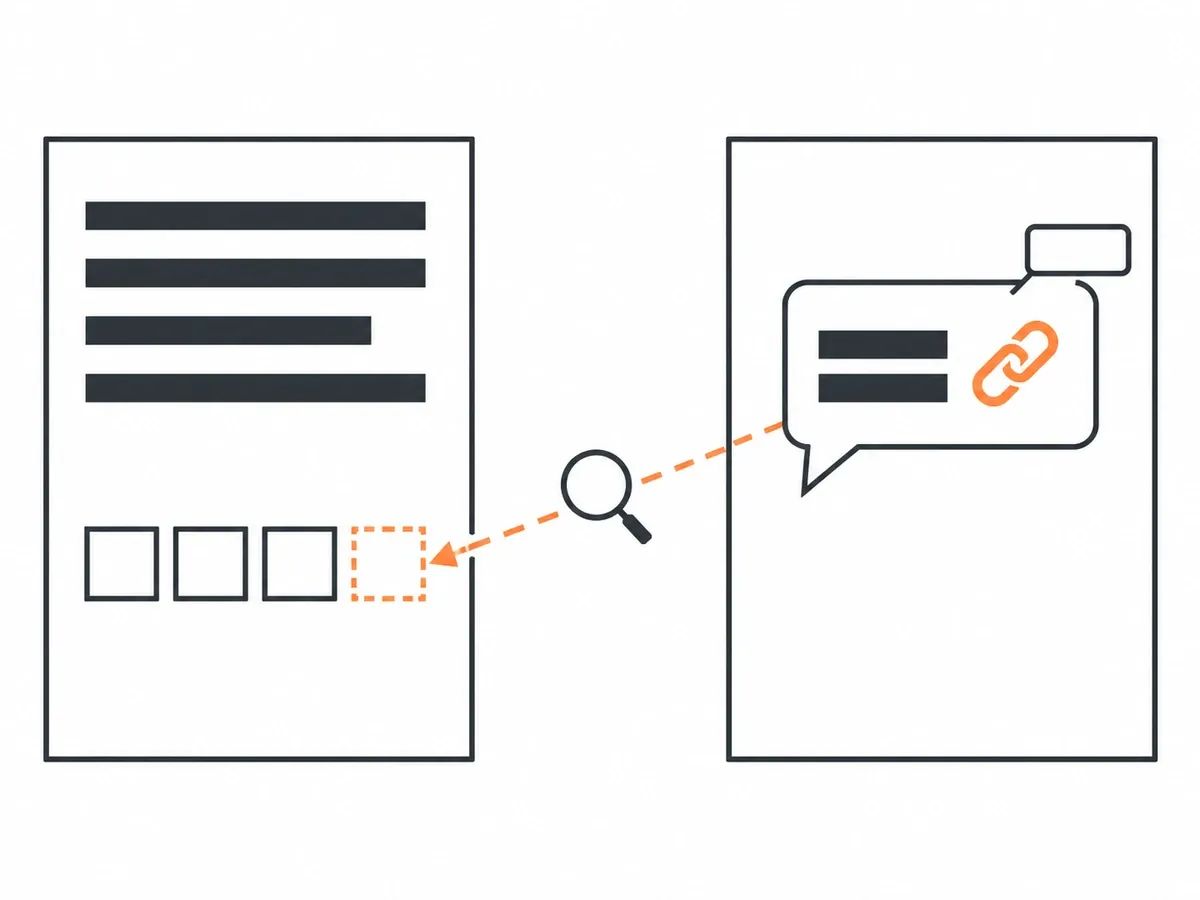
This is the route Wikipedia sets out for anyone with a stake in the link. Every Wikipedia article has a talk page. You post the change you propose on the talk page, with the source that supports it, and you disclose your connection to the site.
Wikipedia's conflict of interest guideline describes the process: "you may propose changes on talk pages (by using the {{edit COI}} template), so that they can be peer-reviewed". On what happens next, the conflict of interest guideline says: "If the proposal is verifiable and appropriate, it will usually be accepted." The conflict of interest guideline also states: "Requested edits are subject to the same standards as any other, and editors may decline to act on them."
Jörg Niethammer, a volunteer Wikipedia editor for almost 20 years, described what he sees when companies hire writers for their Wikipedia articles without reading the rules. In an interview updated on 20 October 2025, he said Wikipedians see the polished text on their watchlists as soon as it is online, and undo or rewrite many of those articles within seconds. Niethammer is talking about company articles, not links.
How to find the Wikipedia pages that already link to you
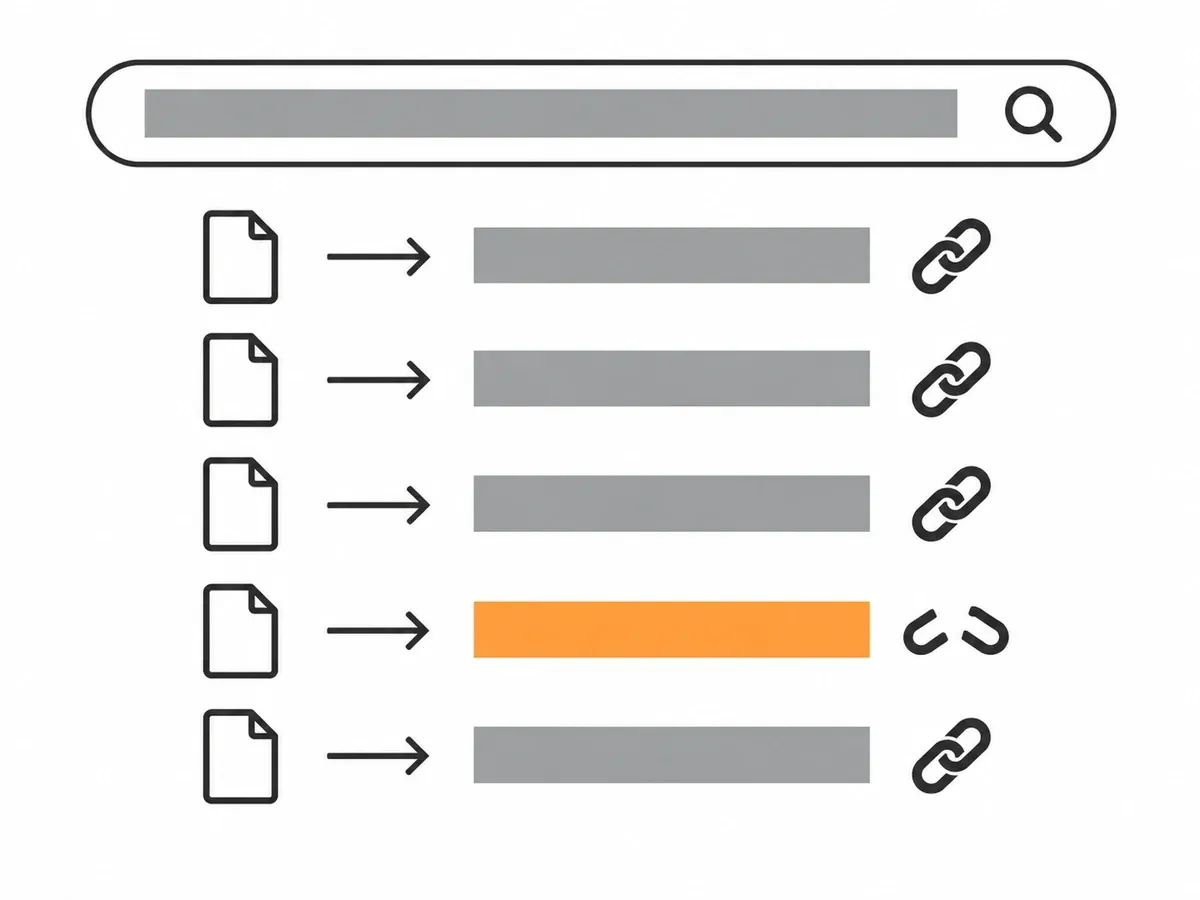
Wikipedia has a search for this. Wikipedia's Help:Linksearch page, last edited 24 June 2026, describes Special:Linksearch as a special page that searches for external links in Wikipedia. For each link, the same page says, the results list the Wikipedia page it is found on and the exact target URL.
You enter your domain and read the list. Each row is one link: the Wikipedia page it sits on, and the exact address it points to. The list has two uses.
- You see which of your pages Wikipedia already links to. The search covers talk pages too, so check whether each row's page is an article.
- You can check that each target URL still loads, because a link to a page you have since moved without a redirect is a dead link on Wikipedia's side.
We run the same check on every order we fulfil, reading the HTTP status code a client's target URL returns before a placement goes out.
Is there a Wikipedia backlinks service?
People search for a Wikipedia backlinks service, and for ways to buy Wikipedia backlinks. We get why someone types it. Wikipedia's rules treat a paid edit as something to disclose, though, and that changes what the service would even be. The core rule sits in the Wikimedia Foundation's Terms of Use: whoever is paid must disclose the employer, the client and the affiliation. The English Wikipedia's own page on the rule, Wikipedia:Paid-contribution disclosure, last edited 20 April 2026, adds: "Editors who fail to disclose paid contributions are prohibited from editing."
The ban there is for staying quiet about the money. A paid editor who discloses can still propose changes on the talk page. What isn't on offer is the quiet version, and the quiet version is usually what someone typing that search has in mind.
The Terms of Use also cover advertising the work: "if you make a public posting off the Projects advertising editing services on Wikipedia in exchange for compensation of any kind, you must disclose all Wikipedia accounts you have used or will use for this service in the public posting on the third-party service." So the questions to put to any Wikipedia backlinks service are which accounts it edits from, and where the disclosure is. Ask those before price or timelines. A service that advertises publicly should answer the first one from its own advert, because the Terms put its accounts in the posting. If the answer's vague, we'd walk.
What we place is a different thing. Our Guest Posts are new articles published on real, independently owned websites in your niche, each with one contextual link to the target URL and anchor text you supply. The split, for us, is who's deciding. On Wikipedia the decision sits with an editor who has no stake in your site and no reason to hurry. With a guest post the publisher says yes and the page goes up where we can see it. We know which one we'd rather put in a report.
After publication we check that the page is live and that the link is in the body copy. We check that the anchor and target URL match the order, and that the page is indexable. Only then is the URL reported to the dashboard. We don't report a link and hope it's fine. This post-publication check is part of the quality assurance we run on every link.
If a delivered link is removed or its page is taken down within 12 months, we replace it like for like under our 12-month replacement cover. To us that's what buying a link should look like. A page you can open and check yourself, with a replacement if it disappears.
Frequently asked questions
Are Wikipedia links nofollow?
Yes. Wikimedia states that external links on all its wikis carry the nofollow attribute, and it was switched on for English Wikipedia articles on 20 January 2007.
How do you get backlinks from Wikipedia?
An editor cites your page as a source in the numbered references, or lists it under External links. The three openings are a statement marked citation needed, a dead link, and an edit request on the article's talk page. If the site is yours, Wikipedia's pages send you to the edit request whichever opening you start from.
Do you need an account to edit Wikipedia?
No. Wikipedia's own page on accounts says an account is not required to read, edit or contribute to Wikipedia.
Can you buy Wikipedia backlinks?
Paid editing on Wikipedia must be disclosed: Wikimedia's Terms of Use require anyone paid for a contribution to disclose the employer, the client and the affiliation, and anyone advertising paid editing to disclose the accounts used. Wikipedia's conflict of interest guideline also asks paid editors to propose changes on the talk page rather than edit articles directly. The questions to put to a service are which accounts it edits from and where the disclosure is.


Stay ahead of the SEO curve
Get the latest link building strategies, SEO tips and industry insights delivered straight to your inbox.